Online Reporter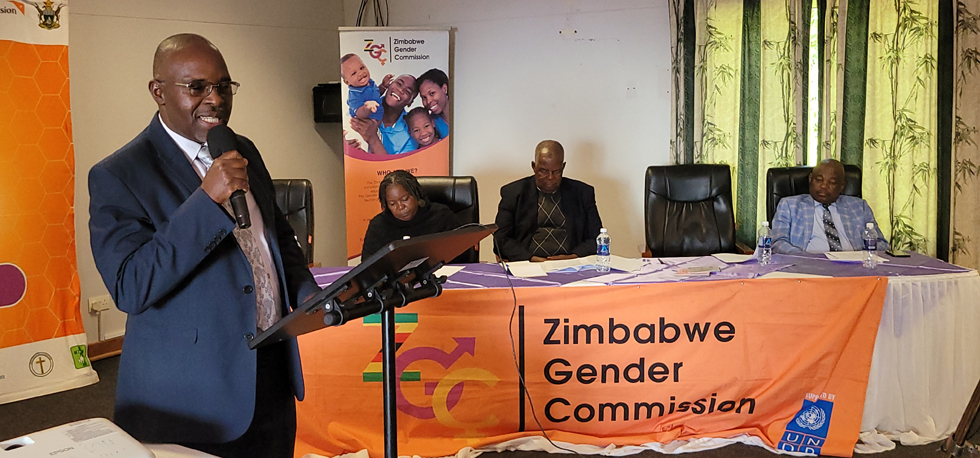
Lovemore Kadzura
Post Reporter
TRADITIONAL leaders wield significant influence, respect, and authority within their communities – playing a vital role in promoting gender equality and empowering women and girls to access equal opportunities as their male counterparts.
Despite being a patriarchal society, Zimbabwe has made notable strides in advancing gender equality, eliminating harmful traditional and religious practices, and reducing Gender-Based Violence.
Traditional leaders, including chiefs, headmen, and village heads, have been identified as key stakeholders in influencing their communities to embrace gender equality and drive positive change.
However, gender equality is sometimes viewed with scepticism in communities that perceive it as a threat to long-established values and norms that emphasise masculinity.
As a result, promoting gender equality has been a challenging task in some areas, where concerns persist that equal rights for men and women could lead to the breakdown of marriages and the family unit.
Zimbabwe Gender Commission vice-chairperson, Mr Obert Machalaga emphasised the crucial role traditional leaders must play in promoting equality for community development during the Manicaland chiefs indaba.
He urged them to take the lead in promoting equality and offer guidance on achieving it.
“Traditional leaders are pivotal in promoting equal opportunities for men and women, and ensuring that constitutional laws on gender equality are upheld. They must investigate rights abuses related to gender equality, and report serious cases of Gender-Based Violence to the police and criminal courts. Additionally, they should advise Government and development partners on achieving gender parity,” said Mr Machalaga.
He acknowledged the significant contributions of traditional leaders, including their role as custodians of culture and tradition, and their position as a link between communities and political leaders.
“Chiefs are playing a vital role in promoting gender parity by giving women a voice during court sessions. Through the Traditional Leaders Act, chiefs can facilitate women’s economic empowerment by allocating resources such as land,” he said.
Permanent Secretary in the Office of the Minister of State for Manicaland Provincial Affairs and Devolution, Mr Abiot Maronge said the nation cannot overlook the interconnectedness of tradition and equality, making the involvement of traditional leaders crucial.
“Gender issues are of paramount importance, as enshrined in our national Constitution, which necessitates the implementation of equality measures. Various policies, including gender policies, promote the mainstreaming of equality. Fulfilling this constitutional mandate to promote gender parity requires a collective effort from all stakeholders,” he said.
Mr Maronge said traditional leaders, as custodians of communities, frequently encounter gender-related issues, making it essential to equip them with the latest developments.
“Gender-Based Violence and inheritance issues remain prevalent in our communities led by traditional leaders,” he said, urging stakeholders to involve traditional leaders in addressing gender-related issues, enabling communities to fully embrace positive change.
“Chiefs play a vital role in promoting community development and stability through the preservation of our values, traditions, and culture. They must also promote new values and norms that benefit our people. Each chief can implement a set of values within their jurisdiction, aligned with the Constitution and other policies,” he said.
Mr Maronge stressed that traditional leaders must condemn issues like rape, intercourse with minors, and Gender-Based Violence to promote gender parity.
“Collaborating with agencies such as the police, courts, Government departments, and development partners will enable traditional leaders to champion positive change in their areas. Zimbabwe Gender Commission’s efforts in tackling gender-related issues are notable,” he said.
Chief Mutasa noted that gender equality issues are gradually gaining acceptance within communities.
However, he cautioned that gender equality should not be used to undermine the traditional family structure.
“Traditional leaders have no objection to equal opportunities for all genders. Nevertheless, when it comes to family dynamics, it is a different scenario. In our culture, the husband is the provider and the head of the family, while the wife ensures the smooth running of the home,” he said.
Chief Mutasa acknowledged that traditional leaders have identified areas where women have been disadvantaged, such as inheritance.
“A husband and wife jointly acquire assets and properties, but upon separation, the woman often leaves empty-handed. This is an area that requires change,” he said, emphasising that education and other opportunities should be equally accessible to both boys and girls, rather than being reserved for the boy child.
“Tradition should treat all children equally, regardless of sex. Furthermore, women are often denied land ownership and inheritance, contradicting the law. Even female children were previously excluded from benefiting from their parents’ estate and receiving a share of property,” he said.