Online Reporter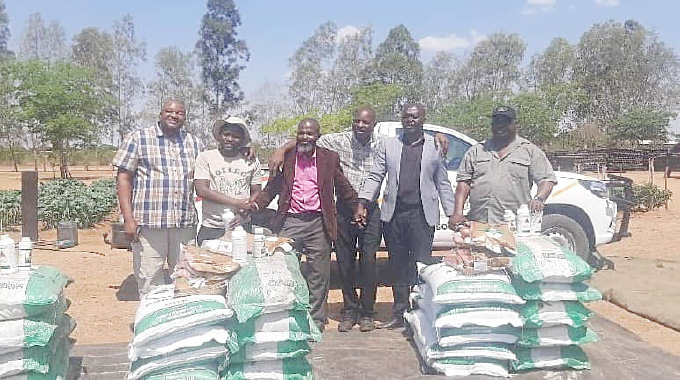
Patrick Chitumba, Midlands Bureau
TRADITIONAL leaders in Gokwe South District, Midlands Province, have received a substantial allocation of agricultural inputs under the Presidential Input Support Scheme, enabling them to lead by example in promoting climate-resilient and sustainable farming practices.
The inputs, distributed through the Zunde RaMambo/Isiphala SeNkosi scheme, comprise maize and traditional grain seed, fertilisers, herbicides and hydrogel for moisture retention — all aimed at enhancing productivity and ensuring food security at the community level.
Under the scheme, each chief will receive inputs for 10 plots, headmen for seven plots, and village heads for five plots.
Confirming the development, Gokwe South District Development Co-ordinator, Ms Netsai Mushauri, said the initiative is timely as farmers prepare for the 2025/26 summer cropping season.
“Seven chiefs and their headmen in the district have begun receiving farming inputs under the Zunde RaMambo/Isiphala SeNkosi scheme. This positive development comes as farmers are preparing for the 2025/26 summer cropping season,” she said.
The Agricultural and Rural Development Advisory Services (Ardas) provincial director for Midlands, Ms Busiso Olga Mavankeni, said the support package provides all the essentials for a productive season under the Pfumvudza/Intwasa model.
“The traditional leaders received 25kg of maize seed, 250kg of basal fertiliser, 250kg of top-dressing fertiliser, 10kg of hydrogel for moisture retention, as well as pre- and post-planting herbicides,” she said.
Ms Mavankeni added that the programme aims to bolster food security while promoting sustainable agriculture in line with Vision 2030.
“Zunde RaMambo/Isiphala SeNkosi seeks to enhance agricultural efficiency and sustainability. It promotes best practices in soil management, crop rotation and resource utilisation tailored to local conditions,” she said.
The Zunde RaMambo concept, which translates to “Chief’s Granary,” encourages traditional leaders to mobilise their communities around collective farming, creating reserves that can support vulnerable households during times of need. It also serves as a learning hub, enabling farmers to exchange knowledge and adopt innovative, climate-smart practices.
Nationally, the Government has launched the 2025/26 Summer Cropping Season Plan, targeting the planting of 1,8 million hectares of maize under the Presidential Inputs Scheme and other support programmes. Additionally, 516 000 hectares of sorghum and 280 000 hectares of traditional grains are being targeted this season.
With weather experts forecasting rainfall patterns similar to last year, prospects for achieving food self-sufficiency remain promising.