

 admin
admin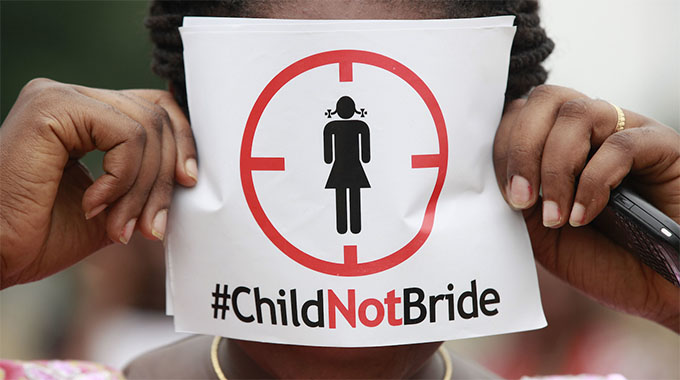
Precious Manomano-Herald Reporter
Traditional leaders have condemned the practice of marrying under-age children as a vice that is not just illegal, but also opposed by tradition and custom, and must be punished by law.
They are encouraging people in communities to report such marriages to the police and seek early treatment for the exploited child.
Currently in Gokwe, traditional leaders are running a programme in the fight against child marriages and sexual exploitation.
The programme is to protect girls from moving during the night, when they are most in danger, and also protecting them from early marriages.
Chief Katema of Jiri village in Gokwe North said they will be playing an integral role given that most of these marriages took place within customary communities.
“We encourage people to report child marriages. As traditional leaders we condemn in the strongest terms any child marriage. The practice is not just unlawful in terms of the laws of the country, but is not consistent with our traditional norms and values which we superintend.
Chief Katema said it was painful to see a grown up man marrying an under-age girl.
He is working with village heads in his area to ensure that sexual abuse of young girls is totally eliminated.
Another headman from the Matashu area, Mr Machengeta Matashu, said child marriages are a cause for concern in the area adding that parents should also implement strategies to protect their children.
“Child marriages are affecting development of the area and nation at large. We are doing a lot of campaigns, but still we need parental efforts to control the situation. This is not pleasing at all. We urge our children to concentrate on school work,” he said.
According to the Zimbabwe Statistics Agency (Zimstat), nearly 34 percent of girls under the age of 18 are married countrywide and two percent of boys also get married before reaching the age of 18.
In Zimbabwe, the Government is in the process of reviewing many laws to align them to the 2013 Constitution, which include the labour laws and introducing legislation aimed at ending child marriages and forced marriages.
Girls usually complete their primary school education when they are between 12 and 13 years old, a time when their bodies are not fully developed to carry a pregnancy, let alone go into labour.
Such girls are at a higher risk of birth complications that include obstetric fistula — a hole between the birth canal and rectum or bladder, that is caused by prolonged obstructed labour, leaving a woman incontinent of urine or faeces or both.
Other complications that may lead to death during or after giving birth have stalked the pregnant teens. Young girls engaging in early and unprotected sex are not just exposed to unwanted pregnancies, but are also at higher risk of HIV infection and sexually transmitted diseases.
In the SADC region, countries like South Africa, Namibia and Mozambique are also battling with teen pregnancies.



 Online Reporter