admin
admin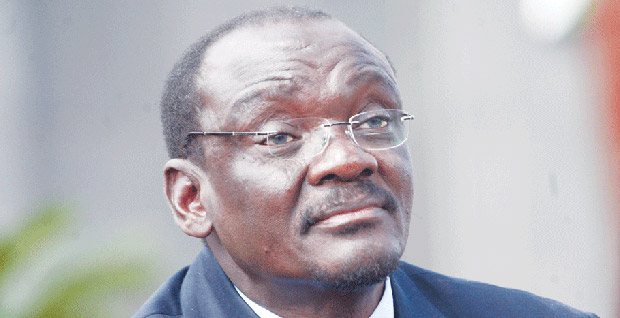

The Trafficking in Persons Bill which seeks to domesticate the protocol to prevent, suppress and punish trafficking in persons, especially of women and children, was tabled before Parliament on Tuesday. Home Affairs Minister Kembo Mohadi presented the Bill in the National Assembly before it was read for the first time. Speaker of the House of Assembly Cde Jacob Mudenda referred the Bill to the Parliamentary Legal Committee for scrutinising to see if it is consistent with the Constitution.
The Bill would provide for the prohibition, prevention and prosecution of the crime of trafficking in persons and the protection of victims. It also seeks to appoint a committee on trafficking in persons with a mandate to formulate and implement a national plan of action against trafficking in persons.
There is also provision of an enabling framework for establishment and operation of centres for victims of trafficking.
Clause three of the Bill creates the crime of trafficking in persons and specifies certain instances in which the offence is to be considered as committed in aggravating circumstances.
“Penalties for the crime will vary in gravity depending on whether the accused person is the actual trafficker himself or herself, or simply an associate or assistant to the trafficker,” reads the preamble to the Bill.
In the first case, a mandatory sentence of 10 years’ imprisonment without an option of a fine is legislated and in the other case, the courts are given a broader discretion to impose fines, imprisonment or both.
“However, an associate or assistant to a trafficker will also be liable to the mandatory sentence of 10 years’ imprisonment if he or she is aware of the existence of certain aggravating features of the crime in the course of its commission,” reads the Bill.
Clause four provides for the powers of law enforcement agents that include the police, customs and immigration officers to question, search and detain persons entering or leaving Zimbabwe as well as seize property of suspected persons where there exists a reasonable suspicion that the crime of trafficking in persons is being or is about to be committed.
Clause five provides for protection of victims in connection with the prosecution
The sixth clause empowers the courts to order the confiscation of all proceeds derived from or property used in connection with trafficking.
Clause eight provides for the establishment of centres for victims of trafficking in persons and for the programmes that might be offered to them.


 Online Reporter