Chronicle Editor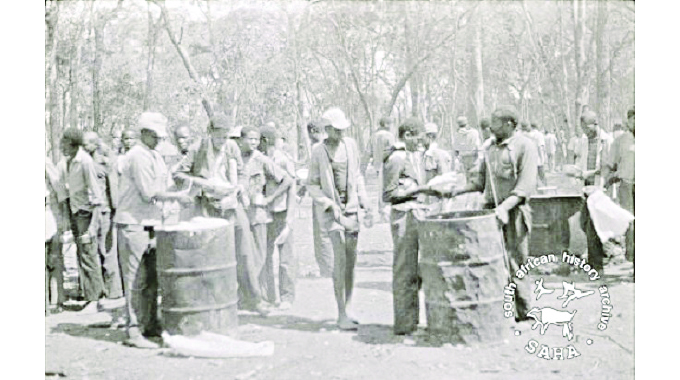
WE continue our interview with Cde Miller Mlilo pseudonym, Cde Masotsha Nkiwane who served as the battalion medical officer of the ZPRA’s First Battalion that was commanded by now Major-General (Rtd) Stanford Khumalo aka Madliwa. Of the four ZPRA battalions deployed in October 1979 along the Zambezi River across in Zambia, the one under Maj-Gen (Rtd) Khumalo came under fierce attack from the Rhodesian forces, but held its own. Even the Rhodesians acknowledged that they came second best in the five-day combat action. In our last week’s edition, Cde Mlilo now a councillor in Bubi District told our Assistant Editor Mkhululi Sibanda (MS) how he left then Rhodesia to join the armed struggle in Zambia via Botswana. He also spoke about his arrival at Nampundwe Camp in Zambia. He resumes his narration from the days he spent at Nampundwe. Below are excerpts from the interview. Read on . ..

MS: Last time you were still talking about your arrival at Nampundwe. May we resume our conversation from there.
Cde Mlilo: When we got to Nampundwe hayi ayii kwakunga somuntu lowana. There were thousands and thousands of people and as I said last time we were told that us the new arrivals we would the following morning go and meet Cde Joshua Mqabuko Nkomo, the then Zapu leader. As you have written before that was a ruse by the instructors at Nampundwe to initiate us into the military life. The instructors there included tough combatants such as Teddy, a Kalanga guy, Tonderai, Godfrey, Finish and others.
MS: So what happened the following day?
Cde Mlilo: We woke up very, very early in the morning and were taken to some mountainous area where we were subjected to different military drills. They took us through Number 9, which is the frog jump, Number 6 which is press-ups and they made us roll. It was tough. Teddy would be hurling obscenities at the nervous recruits. As a result of the tough military drills, some of the recruits would throw up as they were being subjected to the exercises. It was at Nampundwe that one was initiated into the military life. Because of the large number of people food was not adequate. The relish was mainly beans and matemba. Some of the comrades would try to eat twice which became commonly known as ukutshaya amawele, mawele refers to twins in isiNdebele. So some comrades would try and fool the system by going for the seconds. But when got caught one saw hell.

MS: What form of punishment was meted out to those who were caught?
Cde Mlilo: When caught going for amawele the instructors would bring a lot of isitshwala, a mountain of isitshwala was given to the culprit and a plateful of relish which was normally beans or matemba. The instructors would then order the culprit to eat and finish the food. The tricky part was that the culprit was ordered to use his mouth not hands in scooping the food from the plate. It was as if someone was a cow. That was a spectacle for those watching but an embarrassing moment for the caught comrade. By subjecting the comrade to such an uncomfortable situation the instructors were sending a clear message to other like-minded fellows, it was a deterrent move. As recruits, we were also given logs which we were told were our weapons. That was meant to familiarise us with the handling of weapons. We would be carrying those logs around as if they were an AK-47 rifle. However, if one lost that log, the punishment was very harsh. It was as if one had lost the real AK-47. You would be punished.
MS: What was the punishment?
Cde Mlilo: Ungalahla isigodo lesiyana, the instructors would say “woo awufuni kuthwala iAK, so ufuna ikatusha”. They will then look for a bigger and heavier log, inkalakatha yogodo and say here is the weapon that you have been crying for. One would then have to be seen moving around carrying a heavy and bigger log.
MS: You were at Nampundwe for how long?
Cde Mlilo: I stayed at Nampundwe for three months or so. After that, we were taken to the Freedom Camp (FC) and by that time people were pouring into Zambia as the war was hotting up. At the time we went to FC it was still the ZPRA Headquarters as the commander, Cde Alfred Nikita Mangena was staying there as well. Our group at FC was made up of nine companies and that’s where we were introduced to full-scale military training. However, when we thought we had completed our training our group was taken to CGT, emagojini as the commanders felt we had not been properly trained. In ZPRA they emphasised on training as Mangena used to say his soldiers had to train hard so that they could fight easy.
MS: So when you were taken to Camp Guerrilla Training (CGT) you had to start all over again?
Cde Mlilo: Yes, when we got to CGT we had to start afresh. We were disappointed as we thought soon after FC we were going to be deployed to the front.
To be continued next week


 Online Reporter