admin
admin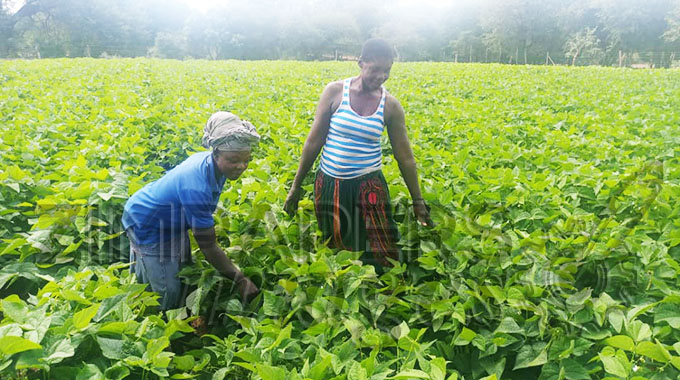
Agriculture Reporter
FARMERS involved in community nutrition garden projects have started reaping benefits from the Government’s push not to leave anyone or place behind in developmental programmes with Agritex training them on ways of boosting productivity and ultimately incomes.
This comes as the country journeys towards the attainment of its vision of becoming an upper-middle-income economy by 2030.
In an interview with The Herald yesterday, the acting deputy director of Training and Information Mrs Nester Gumbo said:
“We are training rural households on horticulture in all the country’s provinces so that they will take farming as a business. The objective of these nutrition gardens is to boost incomes as well as food security in line with the country’s Vision 2030. We are training farmers on nutrition sensitive agriculture. We are talking of diversified cropping to improve nutrition for households. Under this programme, we are also talking of bio-fortification, we have quite a number of bio-fortified crops, which we are promoting, for example, orange fleshed sweet potato and vitamin A rich maize. We have always been training them on nutrition.”
Lands, Agriculture, Fisheries, Water and Rural Development Services chief director responsible for Agriculture Advisory Services Professor Obert Jiri recently highlighted that training of farmers was the hallmark of Agritex, as the country moves towards ensuring food self-sufficiency at all costs.
Deputy director Strategic Policy Planning and Business Development in the Ministry of Lands and Agriculture Mr Freeman Gutsa recently said:
“As a Ministry, our aim is to ensure horticulture’s profitability and impact on livelihoods, that is, how it may contribute to increasing income levels for farming communities to reach a target of between US$4 000 and US$12 000 per annum.”
The Government initiated the horticulture recovery and growth plan to give impetus to the horticulture industry’s recovery after its performance dipped in recent years due to various economic issues.
Essentially, the Government aims to increase agriculture’s contribution to US$8, 2 billion to reverse the decline in food production through the Horticulture Recovery and Growth Plan and revive serious trade on both domestic and export markets.
President Mnagagwa has also pledged to resolve unsettled land tenure matters and place agriculture at the epicenter of Zimbabwe’s economy policy with particular focus on exports, aided by the relaxation of the exports procedures.
National food self-sufficiency is crucial to the Government’s economic development too-the National Development Strategy 1, which identifies food security and nutrition as key drivers of economic revival.



 Online Reporter