Online Reporter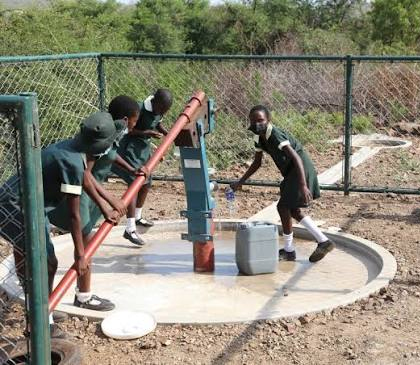
Lovemore Kadzura
Post Reporter
FOR thousands of school-going children across Zimbabwe, the simple act of drinking a glass of clean water, washing hands with soap, or using a safe toilet can determine whether they stay healthy, attend school consistently, and achieve their full academic potential.
Across the country, the Government, development partners and local communities are working together to ensure that every child enjoys these basic yet essential rights.
While significant progress has been made over the years, universal access to water, sanitation and hygiene (WASH) remains one of Zimbabwe’s most pressing development priorities.
Zimbabwe’s WASH story is one of resilience, commitment and gradual transformation.
Over the past decade, Manicaland Province has recorded notable improvements in WASH services in schools, helping to create healthier and more conducive learning environments for thousands of learners. New boreholes, improved sanitation facilities and hygiene education programmes have enhanced the daily school experience for many children.
Despite these achievements, challenges persist, particularly in remote rural communities where limited infrastructure, erratic water supplies and constrained financial resources continue to hinder progress.
Education experts agree that a child cannot learn effectively while worrying about where to find safe drinking water or whether a clean and functional toilet is available.
Access to quality WASH facilities has a direct impact on school attendance, academic performance, nutrition and overall well-being.
The issue is especially critical for girls. In many communities, inadequate sanitation facilities and lack of support for menstrual hygiene management contribute to absenteeism and, in some cases, school dropouts. Ensuring that schools provide safe, private and dignified sanitation facilities is therefore essential to promoting gender equality in education.
Recognising these realities, Zimbabwe has increasingly prioritised WASH within the education sector.
Through collaborative efforts involving Government ministries, local authorities, communities and development partners, many schools have gained access to safe water supplies, improved sanitation infrastructure and hygiene awareness programmes that encourage healthy behaviours among learners.
The importance of WASH in schools was recently highlighted by the newly elected Child Vice President of Zimbabwe, Honourable Cline Mutepfa, who secured the position during the recently concluded Child Parliament Session held under the theme: ‘Ensuring Universal Access to Water, Sanitation and Hygiene for Every Child in Africa.’
Honourable. Mutepfa said water, sanitation and hygiene issues must be prioritised in schools because they are fundamental in creating a comfortable and supportive learning environment.
“Water, hygiene and sanitation issues are very important areas that require detailed attention and solution as they are central to the provision of education. We still have learners who report to school late because they will be fetching water for household use way far from their homes. They attend school tired and exhausted because they would have carried large buckets of water sometime not consummate with their ages. We will also push that each school has a reliable and safe water source for use by learners and teachers. Unsafe water sources can hinder education provision in the event of outbreak of water borne diseases such as cholera, typhoid and dysentery,” she said.
Recent data released by the Ministry of Primary and Secondary Education revealed that although significant strides have been made in the provision of water in schools, challenges remain in ensuring safe water provision.
“The distribution of water sources among primary schools revealed notable disparities in access to safe and reliable water. Boreholes were among the most widely used source, serving 4 900 schools, followed closely by piped water, which supplied 3 909 schools. Protected wells accounted for 662 schools, while less secure sources such as streams/rivers and unprotected wells were used by 227 and 196 schools respectively. Dams and other sources were the least utilised, with 128 and 81 schools. Overall, the data indicated that while most schools relied on boreholes and piped water, a significant minority continued to depend on unsafe or less sustainable sources.
“In 2025, Zimbabwe had a total of 8 308 primary schools, of which 8 165 schools (98, 28 percent) had access to some form of water, leaving 143 schools (1,72 percent) without water access. Access was high in Bulawayo (100 percent), Manicaland (99,3 percent), Masvingo (98,98 percent) and Mashonaland East (98,78 percent), while Matabeleland North had the lowest coverage at 93,03 percent. Out of 3 485 secondary schools, 3 405 (97,70 percent) had access to a water source, while 80 schools (2,30 percent) lacked access. 2 832 secondary schools (81,26 percent) had water sources within 500 metres, while 653 schools (18,74 percent) had water sources located more than 500 metres away, highlighting accessibility challenges for nearly one in five schools. Regarding water quality and availability, 3 185 schools (91,39 percent) reported access to safe-to-drink water, while 2 767 schools (79,40 percent) had a sufficient supply to meet school needs. Consistent water availability was slightly lower, reported by 2 653 schools (76,13 percent). Water treatment was limited, with 1 526 schools (43,79 percent) treating their water to ensure safety,” revealed the ministry.
Turning to hygiene and sanitation, the ministry noted that almost all schools have toilets for use by both learners and teachers, but some are still using pit latrines with no slabs, which compromises health and safety for users. These are in rural areas.
“Primary school sanitation facilities for learners in Zimbabwe in 2025 were dominated by blair toilets, which accounted for the largest share across all provinces. Flush or pour-flush toilets were concentrated mainly in the urban provinces of Harare and Bulawayo. In contrast, rural provinces such as Manicaland, Masvingo, Mashonaland East and Midlands, relied heavily on blair toilets, reflecting disparities in infrastructure development between urban and rural areas.
“Pit latrines, both with and without slabs, constituted a relatively small share of facilities nationally (2 860 with slabs and 333 without slabs), but their presence in provinces such as Manicaland, Masvingo, Mashonaland East and Midlands highlights ongoing sanitation quality concerns. The existence of pit latrines without slabs, though limited, poses health and safety risks, particularly for young pupils.
“Overall, while Zimbabwe has made progress in expanding basic sanitation through blair toilets, the distribution and quality of facilities remain uneven, underscoring the need for continued investment in improved, gender-responsive and safer sanitation infrastructure, especially in rural primary schools,” noted the ministry.
Across the country, numerous schools now have boreholes fitted with solar-powered pumps through investments being made by School Development Committees (SDCs) and School Business Units spearheaded by Government, as well as interventions by development partners.
Hygiene clubs have become common in many learning institutions, empowering pupils to become ambassadors for good hygiene practices both at school and within their communities.
Regular handwashing campaigns and health education initiatives have also contributed in reducing the spread of diarrheal diseases and other preventable illnesses.
These interventions have produced measurable benefits. Improved access to safe water has reduced the time children spend fetching water, allowing them to concentrate on their studies. Better sanitation facilities have enhanced privacy and dignity, particularly for adolescent girls, contributing to improved attendance and retention rates. Healthier school environments also mean fewer disease outbreaks that disrupt learning.
Education Coalition of Zimbabwe Manicaland chapter chairperson, Mr Charles Musembwa said water and sanitation issues in the province have vastly improved in recent years, but some schools are still lagging behind due to financial constraints and climate-related issues such as poor rainfall.
“Water, sanitation and hygiene remains a critical issue affecting many schools in Manicaland Province, particularly those in rural and remote districts. Buhera and Mutare rural are the most affected due to hydrological drought. Although significant progress has been made through Government initiatives and support from development partners and the United Nations International Children’s Emergency Fund (UNICEF), several schools continue to experience challenges related to access to safe water, adequate sanitation facilities and hygiene services. Policy states that the ratio of toilet holes is 1:20 for girls and 1:25 for boys, with a urinal. However, many schools fail to meet this standard. At Matema Primary School in Nyanga, the girls’ ablution facility has very limited privacy.
“Some boreholes at schools are either non-functional, have low yields and are shared with the community, especially in Chipinge District. Worse situations are boreholes located far from schools, such as Tsvaira Secondary in Makoni. During prolonged dry spells, schools in districts like Buhera, Mutare rural, parts of Makoni, Chipinge and Chimanimani face water shortages. This affects drinking water availability, handwashing, cleaning of toilets and school gardens. Another challenge is lack of disability-friendly toilets in most schools. The majority of schools, including urban schools, have inadequate menstrual hygiene management facilities for girls,” said Mr Musembwa.