Herald Reporter
TRANSPORT operators and fleet owners have welcomed Government proposals to scrap customs duty on imported vehicle assembly kits and slash tariffs on electric vehicles (EVs), describing the measures as a critical step towards lowering fleet acquisition costs and modernising logistics and commuter networks.
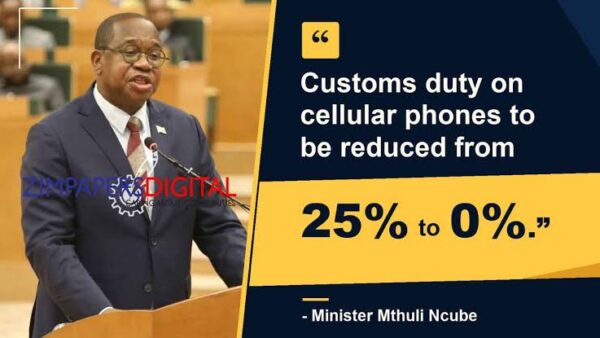
Presenting the ZiG358,3 billion (US$12,8 billion) 2027 National Budget to Parliament in Mt Hampden, Finance, Economic Development and Investment Promotion Minister Professor Mthuli Ncube announced that customs duty on Semi-Knocked Down (SKD) kits imported by approved local assemblers will drop to zero per cent from December 1, 2026.
The duty suspension expands existing assembly incentives—which previously covered only certain buses, tricycles and passenger cars—to include commercial trucks, motorcycles, trailers and electric vehicles. Treasury also proposed cutting customs duty on fully built EVs and charging infrastructure from 25 per cent to 10 per cent.
Zimbabwe Passenger Transport Organisation (ZPTO) chairman Dr Samson Nhanhanga commended Government for the reforms, saying they would lower capital expenditure barriers that have slowed fleet renewal.
“We welcome and commend Government for this Budget. This is a game-changer for transport operators,” said Dr Nhanhanga. “For years we have been buying buses and spare parts from China and other countries at a very high cost. The import bill has been killing our businesses. With duty on SKD kits now at zero percent, we will be able to assemble buses locally at a much lower cost. That means cheaper buses, cheaper parts and ultimately cheaper and safer transport for the travelling public.”
He added that local assembly would curb reliance on imported second-hand vehicles and grey imports while generating domestic employment.
“When we assemble here, we create jobs here. We need welders, spray painters, electricians, mechanics, upholsterers and engineers. Our young people who are graduating from colleges will now have somewhere to work. We do not want to keep exporting jobs to other countries while our own youths are unemployed,” he said.
“Local assemblers understand our terrain, our roads and our passengers. We can build stronger buses for rural routes and affordable vehicles for urban commuter transport. That is how we build a transport system that works for Zimbabweans, by Zimbabweans.”
Under the proposed tariff schedule, approved local assemblers will enjoy zero-rated Most Favoured Nation (MFN) duties on SKD kits across key categories:
• Light goods-carrying vehicles (up to five tonnes) and electric cargo motorcycles: reduced from 40 per cent to zero per cent
• Trailers, semi-trailers and purely electric passenger vehicles: reduced from 25 per cent to zero per cent
• Motorcycles: reduced from 15–25 per cent to zero per cent
• Medium-duty trucks (five to 20 tonnes): reduced from 10 per cent to zero per cent
Dr Nhanhanga said the incentives align with President Emmerson Mnangagwa’s Second Republic industrialisation and value-addition drive.
“His Excellency President Mnangagwa has always said Zimbabwe is open for business and that locals must be at the centre of economic development. This Budget gives local assemblers and local transporters a chance to own and grow the industry. We are not just consumers of other people’s products anymore; we are becoming producers,” he said.
Logistics and courier operators noted that scrapping the 40 per cent duty on light commercial trucks and electric cargo motorcycles will cut delivery fleet procurement costs, while passenger operators said the 10 per cent tariff on EVs and chargers—paired with lower fuel and maintenance expenses—will accelerate the transition to electric mobility.
Prof Ncube said the measures aim to stimulate domestic value addition, create jobs, position Zimbabwean assemblers to compete within the African Continental Free Trade Area (AfCFTA) and reduce the transport sector’s carbon footprint. The tax adjustments await parliamentary approval through the Finance Bill.