Chronicle Editor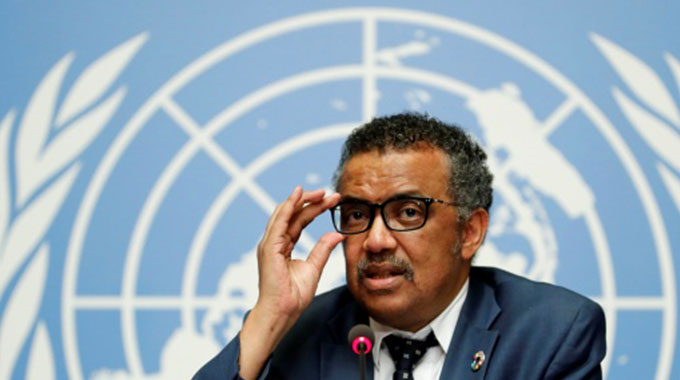
Thabiso Scotch Mufambi
Harare – On June 14 the UN World Health Organisation delivered some good news to pandemic-weary humanity.
WHO chief Dr Tedros Ghebreyesus said the number of new COVID-19 infections reported globally had declined for seven weeks in a row, the longest sequence of weekly declines since the pandemic began. The decline is likely due to vaccination campaigns.
But, Dr Ghebreyesus cautioned, a worrying trend was emerging in Africa.
A recent WHO Africa report noted a sharp rise in infections in at least 11 countries: SADC member states Angola, Comoros, Eswatini, Lesotho, South Africa and Zambia; as well as Eritrea, Mauritania, Niger and Uganda.
“The steep increase in Africa is especially concerning because it is the region with the least access to vaccines, diagnostics and oxygen,” Dr Ghebreyesus said.
The increase in cases in Africa has been attributed to a combination of the Southern Hemisphere winter cold, the emergence of more transmissible and deadlier variants of the virus, complacency on health protocols, and poor access to vaccines.
Dr Seth Berkley, the CEO of Gavi (a partner in the COVAX facility to supply vaccines to middle and low-income countries) said on June 11 that the rate at which COVID-19 was mutating required a quick solution to vaccine supply challenges.
COVAX has delivered about 82 million doses to 129 low income countries.
“By the end of June, we will be facing a shortfall of 190 million doses. The only way to plug this gap in the short term is for those countries that have doses to share them: not later in the year, when our own supplies pick up again, but now,” Dr Berkley said.
As of mid-May, Africa had received 38 million vaccine doses for a population more than one billion-strong. Further, 83 percent of doses administered in Africa are concentrated in Morocco (which accounts for more than 10 million administered doses), Nigeria, Ethiopia, Egypt, Kenya, Ghana, Zimbabwe, Angola, Tunisia and Senegal.
The dire situation saw several SADC countries instituting stricter health controls to tame the third wave of the pandemic.
In the DRC, President Felix Tshisekedi warned of imminent drastic action as hospitals in Kinshasa struggle to cope with the caseload.
The DRC, which has over 35 000 cases to date, recorded 254 new infections last Friday alone. A day earlier, 107 new cases were identified, including 102 in Kinshasa.
“I am going to take drastic measures to deal with this upsurge of the disease. We are talking about the Indian variant in particular,” President Tshisekedi said without specifying the measures he planned to take.
Low vaccination rates have left the country vulnerable to vicious variants.
The DRC only started vaccinations in mid-April after delays over concerns about the side-effects of the AstraZeneca vaccine.
The surge in cases has also been blamed on complacency.
“In Kinshasa,” said Pascal Lutumba of the Tropical Medicine Department at the University of Kinshasa, “they do not care about COVID-19, they do not believe in it, that is the big issue.”
At least 32 legislators have reportedly succumbed to COVID-19 to date.
Meanwhile, the DRC moved a planned tribute to founding Prime Minister Patrice Lumumba from yesterday this year to January 2022.
On June 15, Namibian President Hage Geingob announced tighter measures in response to a spike in infections.
President Geingob placed Windhoek – home to 52 percent of recorded cases – under a two-week lockdown to the end of June. Exit or entry into Windhoek, Okahandja and Rehoboth local authority areas is restricted, while face-to-face teaching and learning at all levels in these jurisdictions is suspended.
The president barred all contact sports and slashed the number of people allowed at gatherings to 10, while restaurants will from June 17 serve takeaways, while taxis can operate at a maximum of 50 percent capacity.
By mid-May, Namibia had recorded 116 COVID-19 deaths, representing an average of 38 deaths per week since the beginning of May.
The Health Ministry has said, “Of concern is the fact that (there are) more severe cases (and a) higher number of hospitalised cases and deaths. The increase in hospitalised cases has exerted pressure on the available capacity of intensive care treatment, both private and public.”
With the continent’s highest infection and death rates, South Africa’s COVID-19 fight has been dogged by vaccination false starts and graft allegations.
On June 15, President Cyril Ramaphosa moved the country into Level 3 lockdown as cases spiked, even as he expressed hope that vaccinations would win the day for South Africa.
Addressing the nation, he said: “Although we have reason to hope, we still have a mountain to climb. A third wave of infections is upon us.
We have to contain this new wave. Since I last spoke to you just over two weeks ago, the average number of daily new infections has doubled.
“Over the last seven days, we have recorded an average of 7,500 daily infections. Hospital admissions due to COVID-19 over the last 14 days are 59 percent higher than the preceding 14 days.
“The average number of people who die from COVID-19 each day has increased by 48 per cent from 535 two weeks ago to 791 in the past seven days. With the exception of Northern Cape, all provinces are experiencing rising infections. Four provinces – Gauteng, Free State, North West and Northern Cape – are officially in a third wave, while others are approaching that point.
The proportion of COVID tests that are positive – the so-called positivity rate – is continuing to rise in Gauteng, Limpopo, Western Cape, Free State and KwaZulu-Natal. Of these, Gauteng has been the worst hit.”
A curfew will be in effect from 10pm to 4am, non-essential establishments like restaurants, bars and fitness centres will close by 9pm, and gatherings will be limited to a maximum of 50 people indoors and 100 people outdoors.
A third wave of infections has seen isolation and treatment facilities, including private facilities, filling up rapidly in Zambia.
Last Tuesday, the country recorded 1,767 cases, three deaths and 88 new admissions, according to health officials.
Secretary for Health Dr Kennedy Malama warned of treacherous days ahead if complacency continued to reign.
“We therefore urge the public to be wary of hosting super spreader events such as weddings, kitchen parties, amatebeto, workshops, meetings, and other large gatherings which are all springboards of infection.
“We urge our local authorities and leaders in congregate settings to step up the efforts and ensure implementation of interventions at community level as well as enforce adherence to the public health guidelines including provision of accessible hand washing facilities particularly in markets, bus stations and trading places, correct and consistent wearing of facemasks and regular cleaning and disinfection of markets, bus stops and other public spaces,” he said.
Zimbabwe’s Vice-President, who doubles up as Health and Child Care Minister, Dr Constantino Chiwenga on June 12 announced measures to curtail the current surge.
He said over the past week, 596 new cases and 26 deaths had been recorded compared to the same period in May 2021 where the country had 132 new cases and six deaths.
“This is a more than four-fold increase in new cases and deaths. Sadly it has been noted that there has been a general complacency in adhering to the preventative measures both in the communities and work places. We are also witnessing a sharp increase in cases and deaths globally and in the SADC region,” he said.
Dr Chiwenga announced a ban on all gatherings except funerals, where a maximum of 30 mourners will be permitted. He ordered all public and private offices to decongest staff by 50 percent, except essential services.
Business operating hours were set at 8am-6pm, bars remain closed and liquor off-sale outlets were ordered to operate from 10am to 4pm.
“If the above measures fail to control the hotspot areas, targeted lockdowns will be effected in those areas,” Dr Chiwenga said.
Zimbabwe has had a relatively smooth vaccination programme thanks to doses supplied by China, India and Russia. To date, more than one million Zimbabweans have received at least one COVID-19 vaccine dose in a country of about 16 million people. – The Southern Times


 Online Reporter