admin
admin
Business Reporter
ZIMBABWE is confident of achieving the projected 3,8 percent Gross Domestic Product (GPD) growth next year despite the global economic headwinds, which continue to curtail business operations in many countries.
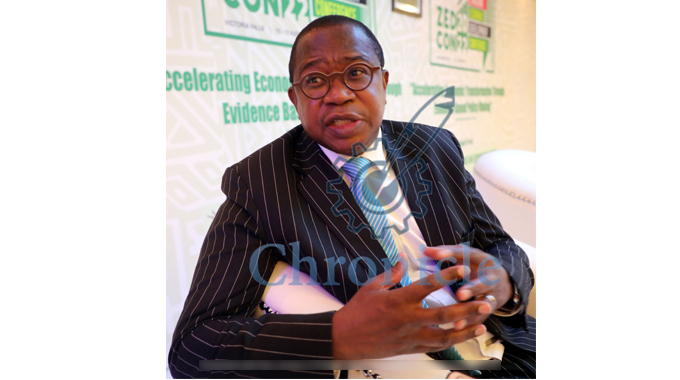
Finance and Economic Development Minister, Professor Mthuli Ncube, has said the set targets were informed by projections on the global economy and commodity prices of minerals. The minerals sector is one of the top economic earners in Zimbabwe.
Prof Ncube was responding to legislators in the National Assembly who sought clarity on the credibility of growth projections while steering the Finance Bill that is meant to give legal effect to the 2023 National Budget. “I must say that we’re alive to this growth projection having considered the key factors that are driving economic growth,” he said.
“First of all, we will get the projection for the global economy, that global economy is slowing down, the outlook is certainly headed downwards and, in some countries, you might end up in a recession — so we took that into account already,” said Prof Ncube.
“The second factor we took into account is the commodity prices for our mineral commodities, a key important factor. There is the growth in the Chinese economy but of course other economies too, India and so forth that absolved the bulk of our minerals.
“We see China growing at about four percent next year and increasing in 2024, India growing in the order of 78 percent, probably the fastest large economy globally. So, again in terms of our assumptions, according to our models, we feel that this will hold up commodity prices in the mining sector, which will grow next year above the growth rate of 10 percent.”
The minister acknowledged business concerns over the 200 percent interest rate, introduced to curtail speculative lending and money supply but is criticised by stakeholders for frustration lending from banks and slowing growth.
“We took that into account, even if we look at our growth projection for the manufacturing sector, it is just above two percent, which is due to the fact that we feel these interest rates will choke the demand for credit towards that sector and among other sectors, therefore, slows down economic growth. So, the 3,8 percent GDP growth rate includes that,” said Prof Ncube.



 Online Reporter