Online Reporter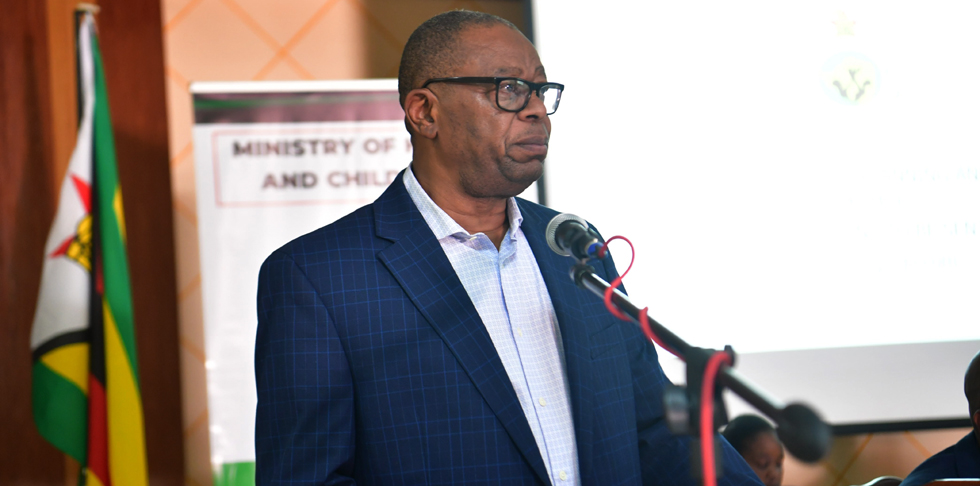
Tendai Gukutikwa
Health Reporter
THE Government has unveiled a major recruitment drive to strengthen Zimbabwe’s health sector, following Treasury’s approval of 14 000 new health worker posts.
Health and Child Care Minister, Dr Douglas Mombeshora, announced that 5 284 of these positions will be filled before year-end, underscoring the urgency of building a competent and motivated workforce.
Officially opening the Ministry of Health and Child Care’s Strategic Review and Planning Meeting in Mutare on Tuesday, Dr Mombeshora said Treasury has already approved 14 000 new posts for the sector.
He said 5 284 of these posts must be filled before December, calling it a non-negotiable deadline.
“We must build a workforce that is competent, professional and motivated. Deployment must be strategic, and we must ensure that staffing is equitable, especially in underserved areas,” he said.
Dr Mombeshora added that strengthening human resources is, not just about increasing numbers, but improving conditions of service.
“Retention, discipline, and equitable distribution will guide our approach,” he said.
Beyond staffing, Dr Mombeshora said the country’s health financing model must shift from heavy donor dependence to sustainable domestic funding.
He said the National Health Insurance Bill has now been finalised, and will be tabled before Parliament before the end of the year.
“The long-awaited National Health Insurance Bill is expected to be tabled in Parliament within weeks, and this marks one of the most ambitious overhauls of the health sector in years.
“It will provide a stable, sustainable funding base and protect families from catastrophic health expenses. In short, more health for the money, and more money for health,” he said.
He also highlighted digital health as a major policy direction for the sector.
“Telemedicine, electronic health records and digital reporting systems will be central to improve efficiency and evidence-based decision making. Digital health will increase geographic access to services and enhance operational efficiency,” he said.
Government is transitioning from National Development Strategy (NDS1) to NDS2, and from the National Health Strategy 1 to the second National Health Strategy 2.
Dr Mombeshora described the transition as significant and historic.
“The country has reached a turning point, and cannot afford to repeat approaches that have yielded slow change. We cannot keep repeating old strategies with new covers. We need bold, practical, and measurable actions.
“This year marks a turning point. We are closing the chapter on NDS1 and the National Health Strategy 1, and transitioning to NDS2 and NHS2. Our vision for the sector is clear: we will build a resilient, equitable, and high-performing health system, where resources are used efficiently, services reach every citizen, and quality care is a right, not a privilege,” he said.
The Minister acknowledged President Mnangagwa’s leadership towards Vision 2030, stating that the health sector reforms are aligned to the national development agenda.
“Allow me to acknowledge His Excellency, President, Dr E.D Mnangagwa, for his guidance and Vision 2030. His mantra: ‘Nyika inovakwa nevene vayo’—a country is built by its own people—reminds us that health outcomes must be driven by Zimbabweans, for Zimbabweans, with no one and no place left behind,” he said.
Dr Mombeshora said the reforms are anchored on six priority areas: strengthening primary and community health care; financing and sustainability; public health capacity; human resources; digital health; and accountability.
“We must invest in community health services, outreach programmes and preventive care, so that health reaches every doorstep. Too often our central hospitals are overwhelmed because patients do not receive care at lower levels,” he said.
Dr Mombeshora also stressed the importance of shared responsibility and cross-sector collaboration.
“Health is not the Ministry of Health’s responsibility alone. Parliament, the Office of the President and Cabinet, the Health Service Commission, other ministries, private sector partners and civil society are all part of the solution. Only a whole-of-Government approach, guided by transparency and evidence-based planning, will allow us to achieve our objectives,” he said.
Dr Mombeshora also took time to celebrate health sector achievements.
“We must celebrate progress. Life expectancy is improving. Maternal mortality is decreasing. Zimbabwe surpassed the 95-95-95 HIV targets. Investments in diagnostics, CT scans, MRIs, ICU care and digital health systems are already transforming our hospitals,” he said.
He, however, warned against ignoring persistent challenges.
“Neonatal mortality, cholera outbreaks, service delivery gaps and procurement inefficiencies are real and they demand action,” he said.
Health Service Commission deputy chairperson, Dr Rudo Kangwende, pledged full support towards the recruitment drive and reforms, describing health workers as central to any change.
“These individuals are the heartbeat of our national health response. Our role is to ensure that they are equipped, motivated and empowered to deliver the highest standard of care,” she said.