
Nqobile Bhebhe
Zimpapers Business Hub
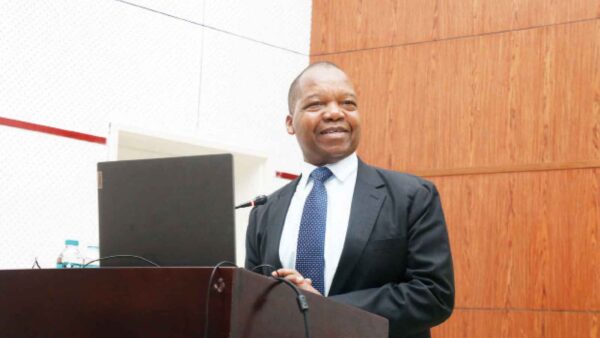
FINANCE Minister Professor Mthuli Ncube has moved to tighten the Government’s public investment management framework, declaring that Treasury will no longer approve projects and programmes introduced outside the national Budget.
This is a major policy shift aimed at strengthening fiscal discipline, protecting public resources and improving infrastructure delivery.
The measures, outlined in the 2027 Zimbabwe Infrastructure Investment Programme, seek to curb the growing practice of ministries, departments and agencies (MDAs) introducing projects during Budget implementation without prior appropriation, creating unfunded obligations that undermine fiscal planning and the credibility of the Government’s financial commitments.
The intervention comes as Zimbabwe seeks to maximise limited fiscal resources, while financing competing demands across infrastructure, healthcare, education, agriculture and social protection.
Prof Ncube said the Budget formulation process already provided implementing agencies with adequate time to identify and prioritise projects, making the continued submission of unbudgeted programmes during implementation a growing concern.
“While our Budget formulation processes provide adequate time for implementing agencies to identify, select and prioritise projects for inclusion in the annual investment plans, incidences of submission of unbudgeted programmes and projects during budget implementation continue to rise, thereby undermining the credibility of the budget process,” he said.
Under the new framework, Treasury will not approve projects and programmes presented during Budget implementation if they were not included in the 2027 Infrastructure Investment Programme and appropriated by Parliament.
The policy is significant because unplanned expenditure commitments can divert resources from approved projects, disrupt implementation schedules and expose the Government to contractual obligations that cannot be matched by available funding.
Business strategist at ConsultWorld Enterprise Mr Busani Malaba said the restrictions would help address fiscal leakages and ensure public infrastructure spending was guided by economic priorities rather than unplanned commitments.
“Government must move away from a situation where projects are introduced without a clear funding plan and later become obligations on the Treasury,” he said.
“The proposed restrictions will strengthen Budget discipline, improve expenditure predictability and ensure that resources are channelled towards projects with clearly demonstrated economic and social returns.”
Prof Ncube said the measures were consistent with the Government’s broader fiscal discipline objectives under the National Development Strategy 2 (NDS2).
“Consistent with our NDS2 strategic objective of maintaining fiscal discipline through prudent financial management practices, going forward, Treasury will extensively exercise and invoke its gatekeeping function in the approval and financing of public investment projects and programmes,” he said.
The strengthened gatekeeping function will be complemented by technical engagements following Budget approval, with Government agencies expected to agree on credible implementation schedules and cashflow plans aligned with the country’s overall fiscal position.
This is particularly important for infrastructure delivery, where delayed or irregular funding releases can result in stalled construction works, increased project costs, delayed contractor payments and the accumulation of domestic arrears.
Economist Ms Alice Chikonzi said aligning public investment programmes with approved allocations and realistic cashflow projections was essential for protecting fiscal policy credibility.
“Budget credibility is fundamental to macroeconomic stability,” she said.
“When ministries commit the Government to expenditure outside approved allocations, they create pressure on the fiscus, disrupt implementation and undermine the credibility of fiscal targets.
“Aligning projects with available resources will improve planning, transparency and the efficient utilisation of public funds.”
Prof Ncube reiterated that all contracts exceeding US$2 million must be submitted to Treasury for approval before signing to ensure that contract values and payment terms are consistent with the Budget framework and the Government’s financial capacity.
The requirement is intended to prevent public institutions from independently entering into contractual arrangements that could create substantial financial obligations without adequate scrutiny.
Another safeguard will link infrastructure payments directly to verified project progress and contractual obligations.
Prof Ncube said payments would only be processed upon submission of duly signed contracts and approved interim payment certificates (IPCs), which confirm work completed and the amounts payable to contractors.
“For clarity, no payment will be processed for projects in the absence of a duly signed contract and approved IPCs,” said Prof Ncube.
The Government is further tightening controls on advance payments and mobilisation fees, which can expose public resources to financial risks when contractors receive funds before demonstrating corresponding progress.
Prof Ncube said Treasury would no longer approve advance payments outside prescribed procurement thresholds.
Such payments would require bank guarantees from approved commercial banks or institutions, providing the Government with a mechanism to recover funds in cases of contractor default.
Trade specialist Dr Mildred Mandipika said the contractual safeguards were important in ensuring infrastructure allocations translated into completed and productive assets rather than unfinished projects and financial liabilities.
“Requiring properly executed contracts, verified work certificates and secured advance payments will reduce financial risks, protect taxpayers’ money and strengthen contractor accountability,” she said.
“This should also help the Government avoid costly project delays and abandoned works.”
The new framework places greater emphasis on project readiness, affordability, financial accountability and implementation capacity in public investment decisions.
Infrastructure development remains central to Zimbabwe’s economic transformation under NDS2, with investments in energy, transport, water, housing and other productive infrastructure expected to support industrialisation, competitiveness and inclusive growth.
The effectiveness of the measures will ultimately depend on consistent enforcement across Government institutions, rigorous project appraisal and timely financing of approved programmes.
By linking project approval to parliamentary appropriation, realistic cashflow plans and stronger contractual safeguards, Treasury seeks to ensure public investment delivers tangible economic returns while limiting the accumulation of unfunded obligations.