Zimpapers Business Hub
Zimbabwe’s fertiliser industry is set for a sweeping transformation after years of undercapitalisation left equipment degraded, plants closed or running below capacity and output depressed, driving up a soaring import bill that has largely benefitted foreign suppliers.
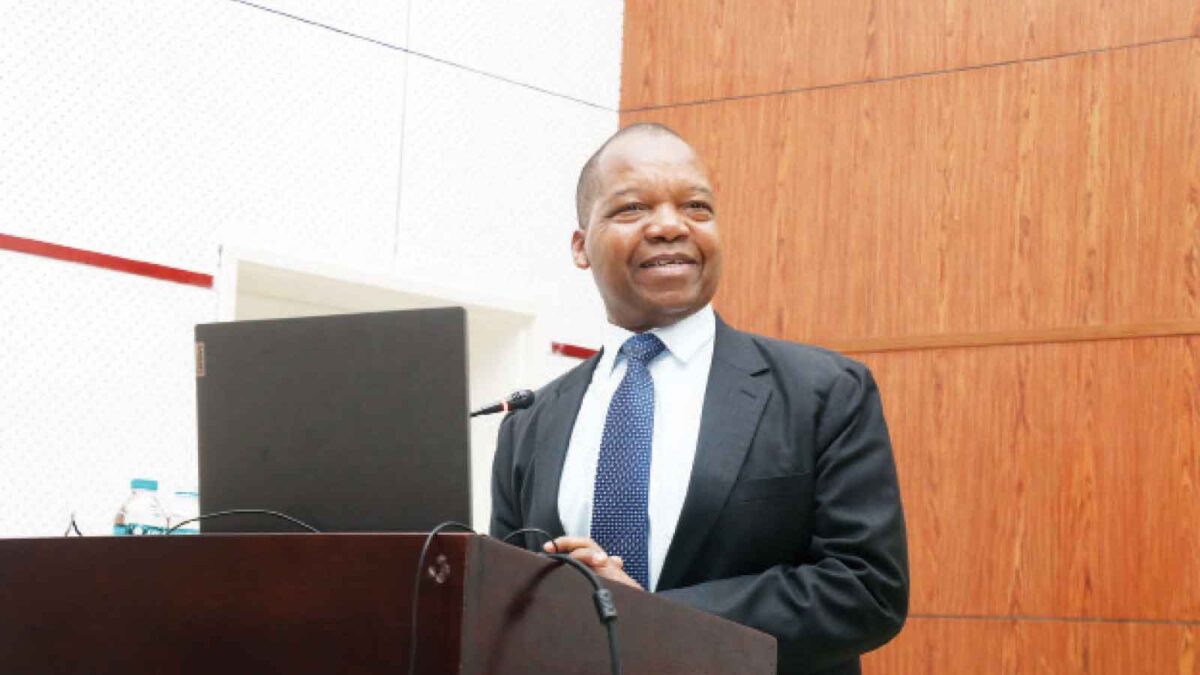
Mutapa Investment Fund chief executive officer Dr John Mangudya, whose fund holds key fertiliser assets, said work is already under way across the value chain to bolster local nutrient self-sufficiency, a key pillar of food security.
Through the Industrial Development Corporation of Zimbabwe, Mutapa holds major value-chain assets including Dorowa Minerals, which produces phosphate concentrate for compound fertilisers; Zimbabwe Fertiliser Company, which manufactures and distributes fertilisers and agrochemicals; Zimphos, a producer of fertilisers, industrial chemicals and water-treatment products and G&W Industrial Minerals, which supplies agricultural lime and industrial minerals.
Mutapa also owns about 63 percent of Sable Chemicals, Zimbabwe’s sole ammonium nitrate manufacturer, after a rights issue diluted Mr Shingi Mutasa’s Masawara shareholding to 37 percent.
While cautioning that the turnaround will not happen overnight, Dr Mangudya said the transformation was meant to position Zimbabwe as a competitive regional fertiliser hub if backed by measures to cut imported raw material costs and resolve structural hurdles eroding competitiveness.
Crucially, Dr Mangudya said the overhaul goes beyond injecting fresh capital into distressed plants.
The fund plans to interrogate the sector’s underlying architecture and address legacy issues, including cost structures and operational bottlenecks, that sit outside routine recapitalisation.
Mutapa has already committed about US$153 million towards revitalising the domestic fertiliser value chain, pairing capital deployment with reforms to fix operational inefficiencies, raw-material constraints and commercial frameworks across extraction, processing and blending.
While the immediate priority is funding the rehabilitation of existing facilities to narrow supply gaps, a diagnostic review will assess whether replacing outdated plants with new equipment is the better option.
Recent parliamentary findings show Zimbabwe spent US$2,11 billion importing fertiliser between 2018 and 2024.
The heavy import drain persists despite an annual domestic processing capacity of two million tonnes against demand of 780 000 tonnes, as ageing equipment, idle plants and working-capital shortages have left local capacity severely underutilised.
Because fertiliser is a key farm input, talking about national food security while importing a bulk product is a contradiction.
“There is a genuine expectation to turn around the sector, and as Mutapa, we are adopting a broader approach to fix the industry under our FIRE strategy,” Dr Mangudya said.
“We need to interrogate the systems to see where we need to act, as we are in the fixing stage. There is also a need for supportive market frameworks and addressing the cost of doing business, including the cost of importing key components used in fertiliser manufacturing, such as ammonia gas and all of those issues have to be looked into.”
Dr Mangudya said an average annual spend of US$351 million was unsustainable and that the industry’s current state should have been avoided given its strategic importance and Zimbabwe’s substantial phosphate resources.
Analysts added that for an agro-based economy posting record harvests, importing core inputs such as fertiliser severely dilutes domestic value creation.
Key observations by Parliament’s Portfolio Committee on Industry and Commerce revealed decay across the industry, characterised by prolonged underperformance from undercapitalisation, plant stoppages, procurement failures and governance weaknesses at State-owned operations.
The paralysis is most evident at Dorowa, the sole producer of phosphate concentrate.
Despite an installed annual capacity of 150 000 tonnes, supporting 430 000 tonnes of basal fertiliser, capacity utilisation averaged 20 percent between 2016 and 2024 before operations were suspended in April 2025, owing to machinery left unrefurbished since 1973.
Dorowa’s challenges triggered a downstream crisis at Zimphos, the chemical conversion hub.
Designed to combine Dorowa’s phosphate rock with sulphuric acid to produce single superphosphate, Zimphos saw throughput collapse to 5 percent.
The failure worsened when Zimphos decommissioned its acid plants in 2008 and 2010.
Lacking in-house generation, Zimphos imports roughly 4 000 tonnes of sulphuric acid monthly. The crisis extends to nitrogenous inputs at Sable Chemicals, the sole producer of ammonium nitrate.
Although holding a design capacity of 240 000 tonnes against national demand exceeding 330 000 tonnes, the plant has sat idle since 2022.
The shutdown followed working-capital starvation after the decommissioning of its electrolysis plant, as importing raw ammonia increased cash requirements.
Despite securing a US$11 million Afreximbank facility that completed 80 percent of technical rehabilitation, Sable requires US$3 million in working capital to restart and deliver an initial 140000 tonnes annually.
The challenge extends further to G&W Industrial Minerals, the primary domestic producer of agricultural lime.
G&W ceased operations in 2023 following a land dispute at its Rushinga quarry, wiping out 120 000 tonnes of annual supply against a national demand of 300 000 tonnes.
Dorowa’s failure to deliver phosphate rock concentrate leaves Zimphos without primary feedstock, reducing its chemical processing throughput to 5 percent.
In turn, Zimphos’s inability to commission its granulator or produce cheap single superphosphate forces local blenders, including ZFC, Windmill, Omnia, NuFert and ETG, to bypass domestic chemicals entirely.
Local blenders are importing expensive finished MAP, DAP and urea, driving up the national import bill and inflating retail bag prices for farmers at the farm gate.
At the same time, Sable’s idle status and G&W’s lime shutdown have removed domestic top-dressing and soil-conditioning capabilities respectively, leaving the agricultural sector entirely reliant on imports.
Data analysis demonstrates that processing just 30 000 tonnes of Dorowa phosphate concentrate yields roughly 60 000 tonnes of single superphosphate, which in turn produces between 75 000 and 80 000 tonnes of finished NPK basal fertiliser when blended.
Furthermore, a US$3 million working-capital injection into Sable would restart domestic ammonium nitrate production at 140 000 tonnes annually, immediately displacing expensive foreign nitrogen imports.
A US$1,7 million granulator at Zimphos sits idle due to a US$1,3 million installation funding shortfall.
Allocating US$1,3 million would unlock 120 000 tonnes of granulated fertiliser output each year.
Lawmakers also heard that retail fertiliser prices, currently averaging US$48 to US$55 per 50kg bag compared with US$30 to US$35 in Zambia and US$35 to US$40 in South Africa, could fall as low as US$15 to US$27 per bag if primary production and rail and supply-chain infrastructure are restored.
ZFC management, led by Mr Richard Dafana, said prices of US$15 to US$20 per 50kg bag are achievable with continuous output at Dorowa, Zimphos and Sable, supported by rail logistics and working capital.
ETG Fertiliser said stable operations and local raw-material sourcing could bring a 50kg basal bag down to US$25 to US$27.
Foreign fertiliser companies have been the main beneficiaries of Zimbabwe’s supply gap, capitalising on the US$2,11 billion import bill to lock in market share while local factories sat idle or ran below potential.