Online Reporter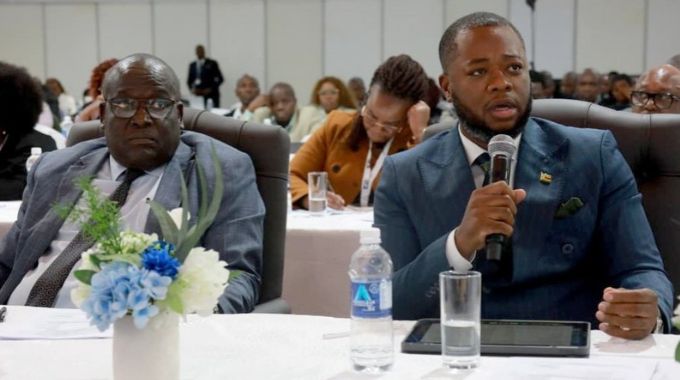
Nqobile Bhebhe Zimpapers Business Hub
TREASURY has challenged researchers, academics and industry leaders at the fifth Zimbabwe Economic Development Conference (ZEDCON) to propose evidence-based policies that will lift annual economic growth from 5–6 percent to 7–8 percent.
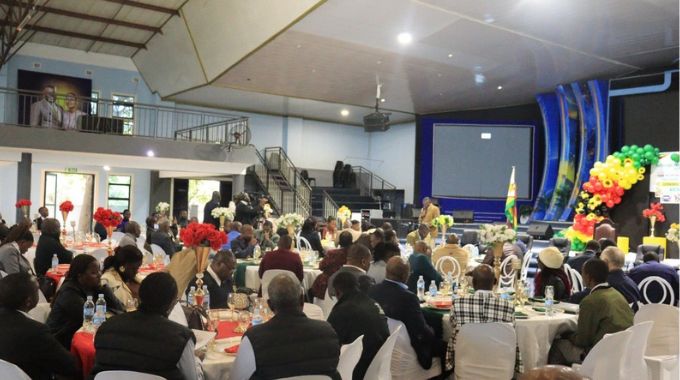
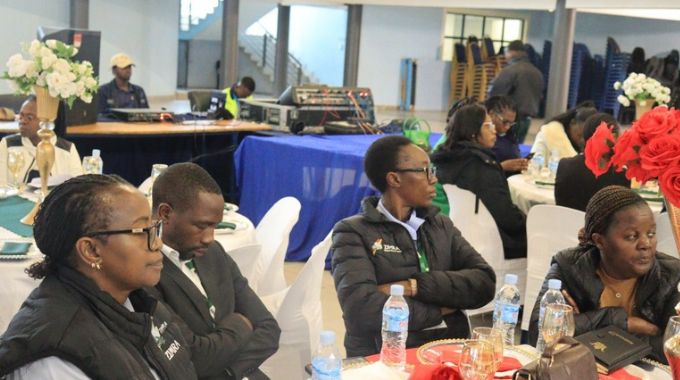
This year’s edition of ZEDCON started yesterday and ends tomorrow at the Zimbabwe International Exhibition Centre (ZIEC) in Bulawayo.
Zimbabwe’s real gross domestic product was estimated at 8,2 percent in 2025 and is projected to moderate to 5 percent in 2026, weighed down by the expected El Niño-induced drought.
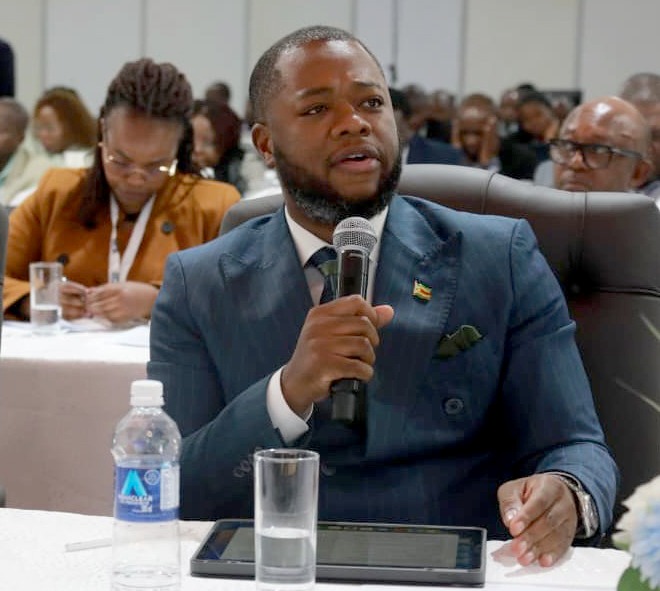
Deputy Minister of Finance, Economic Development and Investment Promotion David Mnangagwa said yesterday that the three-day conference should serve as a technical bridge between research, policy and implementation.
He said recommendations from the indaba should feed directly into the 2027 National Budget and the National Development Strategy (NDS 2).
“As we convene at this gathering, our mandate over the next three days is technical, analytical, and policy-oriented,” he told a cross-section of delegates in Bulawayo.
“We are here to interrogate empirical research, stress-test policy assumptions and build evidence-based frameworks necessary to enhance macroeconomic policymaking for accelerated growth of the economy and national development,” he said.
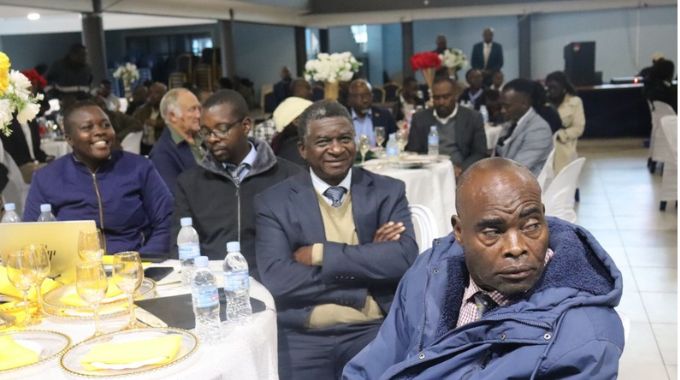
Deputy Minister Mnangagwa said Treasury established ZEDCON as a policy incubator to ensure national planning and budgeting were anchored on empirical evidence.
“ZEDCON was established by Treasury as a primary policy incubator. This annual forum has emerged as a technical bridge designed to translate empirical research and stakeholder input into concrete, actionable fiscal policy proposals,” he said.
“ZEDCON is the engine room of the National Budgeting process,” he said.
“The technical research papers to be presented here over the next three days will set the foundation for policy discourse necessary to guide Treasury’s fiscal priorities and national expenditure decisions.”
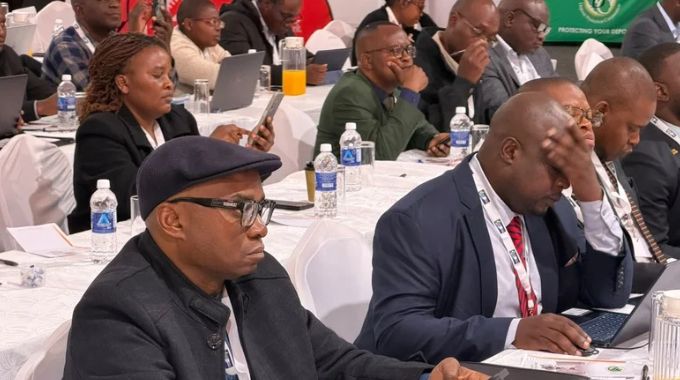
Deputy Minister Mnangagwa said the ultimate objective was to translate research into policies that could accelerate economic expansion and support the attainment of Vision 2030.
“The ultimate objective is to implement evidence-based policies to elevate economic growth from the current 5-6 percent per annum to 7-8 percent per annum towards realising Vision 2030 aspiration of a prosperous and an empowered upper middle-income society by 2030,” he said.
The call for practical policy solutions comes as the Government seeks to mobilise increased domestic and external capital for infrastructure and productive investment, with the insurance and pensions industry cautioning that limited new funds require greater discipline in selecting projects for investment.
Deputy Minister Mnangagwa said infrastructure would be a major focus of ZEDCON 2026, given its importance to productivity, competitiveness and investment.
“Infrastructure is the baseline factor of production that determines national productivity and competitiveness.
“If our transport networks lag, our transportation costs rise.
“If our energy grid is unreliable, our manufacturing margins diminish as well as our regional competitiveness.
“If our digital networks lag, our financial sector loses efficiency,” he said.
Deputy Minister Mnangagwa said Zimbabwe would struggle to attain upper-middle-income status without modernising infrastructure through technology and integrated planning.
Under NDS2, he said, ZEDCON should generate research on smart grid management, renewable and waste-to-energy generation and technology-enabled urban planning, including greenfield developments such as the proposed Bulawayo Special Economic Zone.
Deputy Minister Mnangagwa said previous editions of ZEDCON had contributed to Government policy responses to emerging economic challenges.
He said the 2024 conference, held against the backdrop of the El Niño-induced drought, provided research that helped inform the shift towards climate-smart agriculture, including dam construction, irrigation infrastructure and solar grid expansion.
Last year’s conference in Bulawayo, he said, provided technical input into macroeconomic reforms, including efforts to stabilise the domestic currency, contain inflation and modernise the Public-Private Partnership framework.
Deputy Minister Mnangagwa challenged delegates to ensure that discussions produced implementable outcomes.
“Treasury is seeking direct, actionable, empirically verifiable, evidence-based policy research, not abstract theories.
“Every presentation and discussion session must yield concise, policy recommendations that can be implemented,” he said.
Insurance and Pensions Commission (IPEC) Commissioner Dr Grace Muradzikwa told the conference that projects seeking funding through prescribed assets must demonstrate value for money and bankability, given the limited pool of new investable funds.
“Prescribed assets projects must offer value for money,” she said.
“We cannot afford to just give prescribed assets to any project because we really have very limited new money.”
Dr Muradzikwa said statistics as at June 2026 showed that the short-term insurance sector had US$263 million in investable income, while the life assurance sector sat on US$36 million.
Pension funds, meanwhile, had US$106 million available for investment after accounting for contributions, benefit payments and other expenses.
“So, you can see from these statistics that new money is limited and this is why we are saying when we are looking at these prescribed asset projects, they must offer value for money,” she said.
The remarks show the importance of developing commercially viable projects as the Government seeks to unlock long-term domestic savings for infrastructure and other national development priorities.
Dr Muradzikwa said developmental objectives had to be balanced with the need to protect policyholders and pension scheme members.
“And it’s also important for us to bank only bankable projects. And while doing that, we also need to maintain that balance between the developmental trust and the return on investment for policy holders,” she said.
Dr Muradzikwa said IPEC would continue balancing its developmental role with its statutory responsibility to protect investors.
“We are here to protect the policy holders and pension scheme members’ rights and interests through oversight and enforcement. We also have an advisory role, we are the vice government and that’s why we are also here,” she said.
Deputy Minister Mnangagwa said ZEDCON would also provide an operational review and technical refinement platform for NDS2, ensuring that implementation remained data-driven and responsive to changing economic conditions.
“With Government having successfully delivered a stable and predictable macroeconomic environment, the operational mandate now rests with the experts, academics, and industry leaders assembled here today,” he said.
“It is our collective responsibility to craft pragmatic strategies that will accelerate our growth trajectory and decisively carry our nation across the finishing line toward Vision 2030.”
The conference is therefore expected to place a strong emphasis on converting research into investable projects, fiscal policy and practical interventions capable of supporting higher and sustained economic growth.