Langalakhe Mabena, [email protected]
WHEN they gathered in Gwatemba, Filabusi in Matebeleland South last Saturday, they sang songs about the white-crested helmet shrike, which they know by the name Amahlolanyama.
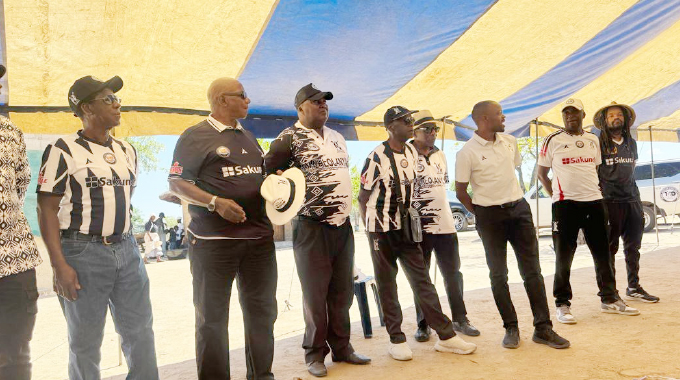
On that morning, songs about the sociable black-and-white bird rang out loud. Earlier, a busload of Highlanders supporters, clad in the club’s unmistakable colours, which they share proudly with the bird, had descended on the ancestral home.
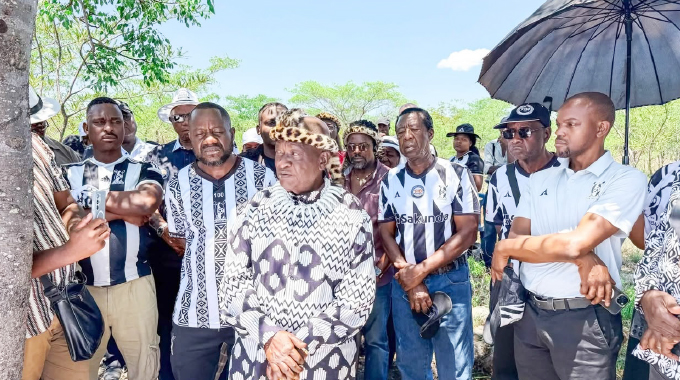
Whistles pierced the air, feet moved to familiar football chants and ululations greeted the visitors as members of the Khumalo Royal Family welcomed the Bosso faithful. Beyond the singing and celebration lay a journey into the club’s history, as supporters retraced their royal roots to honour one of the men whose vision helped bring the football institution into existence.
After exchanging greetings and sharing in the festivities at the homestead, the delegation set off on a two-kilometre pilgrimage to the Khumalo family gravesite. The walk was more than a physical journey; it was a symbolic return to the roots of a club whose identity has long been intertwined with the history of the royal family.
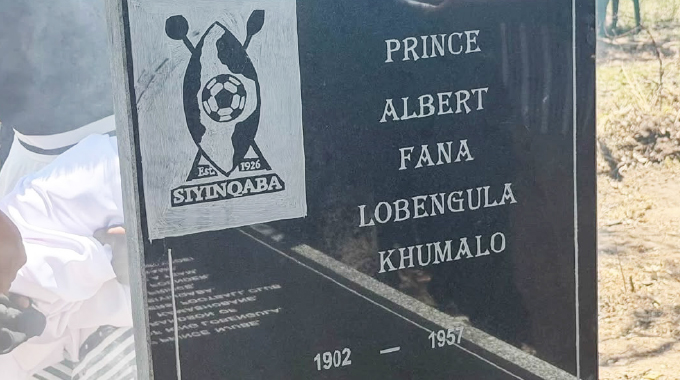
At the end of the journey, the supporters gathered around the resting place of Prince Albert Njube Lobengula Khumalo, Highlanders’ founding goalkeeper, in a moment that brought generations of football devotion face to face with the history that shaped its existence.
The ceremony, which formed part of the club’s centenary celebrations, was attended by members of the Khumalo Royal Family, Highlanders leadership and supporters who travelled to pay their respects.
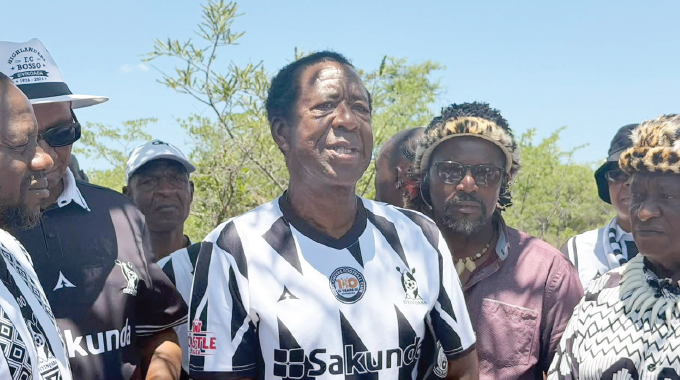
It was a homecoming of sorts, with Amahlolanyama returning to the family whose sons helped establish the football institution a century ago. The occasion was marked by singing, dancing, ululation and emotional exchanges, transforming the royal homestead into a celebration of a legacy that has endured across generations. For the Khumalo family, the unveiling was more than the installation of a memorial stone. It was an affirmation that the club had not forgotten the people and circumstances that shaped its beginnings.
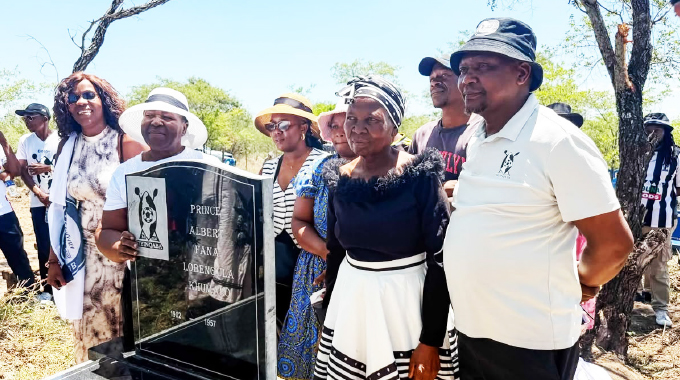
Prince Peter Zwide Khumalo, who has been instrumental in documenting the family’s history and its association with Highlanders, said the family was overwhelmed by the gesture, describing it as a moment of profound emotional significance.
“As the Khumalo Clan, we have run short of words in expressing our gratitude to Highlanders. The family cannot contain its emotions because, for once, we have received a beautiful memorial stone carrying a touching description of an ancestor whose contribution to the club deserves to be remembered,” he said.
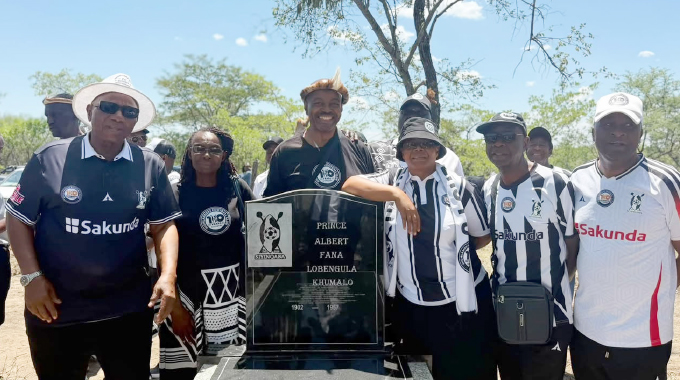
Prince Zwide said the tribute demonstrated that Highlanders understood the importance of acknowledging its origins and recognising those whose vision laid the foundation for the club’s century-long journey. The ceremony began with a colourful reception at the Gwatemba homestead, where Prince Albert’s descendants, including Princesses Sithembiso and Nomusa, daughters of his first-born son, Prince Nduna, joined other members of the royal family in welcoming the Highlanders delegation.
The arrival of a busload of supporters dressed in the club’s traditional black and white colours added to the occasion’s excitement.
Songs associated with Bosso reverberated across the homestead as supporters mingled with members of the royal household, with singing, dancing, whistling and ululation setting the tone for the historic gathering.
The delegation later embarked on a two-kilometre walk to the neatly maintained and fenced family gravesite, where the tombstone was unveiled in a moment that brought together the club’s present-day identity and its ancestral beginnings.
For Prince Zwide, the occasion also brought to completion a journey that had been years in the making.
About a decade ago, he accompanied a Highlanders delegation to Grahamstown in South Africa, where they visited the graves of Prince Rhodes and members of his family. The graves were marked by beautifully maintained memorial stones.
On returning to Zimbabwe, he led another visit to Gwatemba, where Prince Albert was buried following his death in 1957. That visit strengthened the desire to see the pioneering goalkeeper similarly honoured.
“The spiritual pilgrimage had been completed, but there remained a desire by Bosso to install a tombstone in remembrance of Prince Albert. It was therefore most befitting that this was done as part of the 100-year celebrations,” he said. Prince Zwide said the tribute was particularly meaningful because Highlanders’ relationship with the royal family went beyond historical association.
It represented a cultural connection built on shared identity, belonging and the African values that informed the club’s formation.
He said the club’s survival over a century could not be measured only through trophies, football results or its organisational structures. Its greatest achievement was the consciousness and collective identity it had built among generations of supporters.
“Highlanders is not simply a football club. It is a society that has developed a consciousness and a sense of self-awareness over 100 years. It cannot be treated like a private company that can simply be wound up when it encounters difficulties. Ayisoz’ibulawe!” he said.
Prince Zwide said that for Bosso, reconnecting with the royal family was important at a time when the club had experienced challenges and the untimely deaths of some officials and supporters, as he said the gathering provided an opportunity to reconnect with ancestral heritage and draw strength from the values that shaped the institution.
“Being African means understanding that our identity is rooted in our history and culture. We must return to the values of Ubuntu and recognise the importance of our ancestral heritage. Culture, when integrated with a people’s history, provides a strong foundation for identity,” he said.
Prince Zwide expressed the family’s commitment to maintaining its relationship with the club as it enters its second century, emphasising that the royal household remained invested in protecting the spiritual and cultural foundations of Amahlolanyama.
Highlanders was established in 1926, initially operating under the name Lions Club (Ibhubesi).
Prince Rhodes served as its first captain, while Prince Albert took up the position of goalkeeper.
Their vision, however, extended beyond assembling a team to compete on the football field. They sought to create an institution that would bring people together through sport.
Prince Zwide recalled that his research, conducted 25 years ago while chairing the committee responsible for the club’s 75th anniversary celebrations, highlighted the contributions of other early players, including Nsele Hlabangana, Charlton Ngcebetsha-Nxumalo, Phillip Cele, Siphambaniso
Kumalo, Gibson Makhanda, Edward Mabhena and two Zambian players known as Kwekwe and Mjutha.
In its formative years, the team played against Northern Rhodesian sides at Efusini in Makokoba. Football quickly became a rallying point, drawing people from different communities and backgrounds into a shared cause.
The princes and their teammates would travel around the township in a large open truck, mobilising supporters ahead of matches. The journeys were accompanied by music, singing and dancing, creating an atmosphere that reflected the club’s communal spirit.
The tradition of travelling with supporters continued when the club played in Gweru and Harare, with followers accompanying the team as far as Shangani, about 100km from Bulawayo.
A century later, the tombstone unveiling has reinforced the significance of that founding vision. For Bosso, honouring Prince Albert is not simply about remembering a goalkeeper or celebrating an anniversary. It is about acknowledging the royal roots, cultural identity and spirit of unity upon which the institution was built.