admin
admin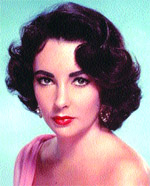
She was surrounded by her four children when she died of congestive heart failure at Cedars-Sinai Medical Centre, where she had been hospitalised for about six weeks, said publicist Sally Morrison.
“My mother was an extraordinary woman who lived life to the fullest, with great passion, humour, and love,” her son, Michael Wilding, said in a statement.
“We know, quite simply, that the world is a better place for mom having lived in it. Her legacy will never fade, her spirit will always be with us, and her love will live forever in our hearts.”
Taylor was the most blessed and cursed of actresses, the toughest and the most vulnerable. She had extraordinary grace, wealth and voluptuous beauty, and won three Academy Awards, including a special one for her humanitarian work.
One of those Oscars came for a searing performance in “Who’s Afraid of Virginia Woolf?” She played an alcoholic shrew in an emotionally sadomasochistic marriage opposite real-life husband Richard Burton.
For all the ferocity of her screen roles and the turmoil of her life, Taylor was remembered by “Virginia Woolf” director Mike Nichols for her gentler, life-affirming side.
Taylor was the most loyal of friends and a defender of gays in Hollywood when Aids was new to the industry and beyond. But she was afflicted by ill health, failed romances (eight marriages, seven husbands) and personal tragedy.
Her more than 50 movies included unforgettable portraits of innocence and of decadence, from the children’s classic “National Velvet” and the sentimental family comedy “Father of the Bride” to Oscar-winning transgressions in “Who’s Afraid of Virginia Woolf?” and “Butterfield 8”.
The historical epic “Cleopatra” is among Hollywood’s greatest on-screen fiascos and a landmark of off-screen monkey business, the meeting ground of Taylor and Burton, the “Brangelina” of their day.
She played enough bawdy women on film for critic Pauline Kael to deem her “Chaucerian Beverly Hills”.
That sauciness was part of her real life, too.
But her defining role, one that lasted past her movie-making days, was “Elizabeth Taylor,” ever marrying and divorcing, in and out of hospitals, gaining and losing weight, standing by Michael Jackson, Rock Hudson and other troubled friends, acquiring a jewellery collection that seemed to rival Tiffany’s.
She was a child star who grew up and aged before an adoring, appalled and fascinated public. She arrived in Hollywood when the studio system tightly controlled an actor’s life and image, had more marriages than any publicist could explain away and carried on until she no longer required explanation. She was the industry’s great survivor, and among the first to reach that special category of celebrity — famous for being famous, for whom her work was inseparable from the gossip around it.
The London-born actress was a star at age 12, a bride and a divorcee at 18, a superstar at 19 and a widow at 26. She was a screen sweetheart and martyr later reviled for stealing Eddie Fisher from Debbie Reynolds, then for dumping Fisher to bed Burton, a relationship of epic passion and turbulence, lasting through two marriages and countless attempted reconciliations.
She was also forgiven. Reynolds would acknowledge voting for Taylor when she was nominated for “Butterfield 8” and decades later co-starred with her old rival in “These Old Broads”, co-written by Carrie Fisher, the daughter of Reynolds and Eddie Fisher.
Taylor’s ailments wore down the grudges. She underwent at least 20 major operations and she nearly died from a bout with pneumonia in 1990. In 1994 and 1995, she had both hip joints replaced, and in February 1997, she underwent surgery to remove a benign brain tumor. In 1983, she acknowledged a 35-year addiction to sleeping pills and pain killers. Taylor was treated for alcohol and drug abuse problems at the Betty Ford Clinic in Rancho Mirage, California.
Her troubles bonded her to her peers and the public, and deepened her compassion. Her advocacy for Aids research and for other causes earned her a special Oscar, the Jean Hersholt Humanitarian Award, in 1993.
As she accepted it, to a long ovation, she declared: “I call upon you to draw from the depths of your being — to prove that we are a human race, to prove that our love outweighs our need to hate, that our compassion is more compelling than our need to blame.”
The American Foundation for Aids Research, for which Taylor was a long-time advocate, noted in a statement that she was “among the first to speak out on behalf of people living with HIV when others reacted with fear and often outright hostility”.
The dark-haired Taylor made an unforgettable impression in Hollywood with “National Velvet”, the 1945 film in which the 12-year-old belle rode a steeplechase horse to victory in the Grand National.
Taylor matured into a ravishing beauty in “Father of the Bride”, in 1950, and into a respected performer and femme fatale the following year in “A Place in the Sun”, based on the Theodore Dreiser novel “An American Tragedy”. The movie co-starred her close friend Montgomery Clift as the ambitious young man who drowns his working-class girlfriend to be with the socialite Taylor. In real life, too, men all but committed murder in pursuit of her.
Through the rest of the 1950s and into the 1960s, she and Marilyn Monroe were Hollywood’s great sex symbols, both striving for appreciation beyond their physical beauty, both caught up in personal dramas filmmakers could only wish they had imagined. That Taylor lasted, and Monroe died young, was a matter of luck and strength; Taylor lived as she pleased and allowed no one to define her but herself.
She had a remarkable and exhausting personal and professional life. Her marriage to Michael Todd ended tragically when the producer died in a plane crash in 1958. She took up with Fisher, married him, then left him for Burton. Meanwhile, she received several Academy Award nominations and two Oscars.
She was a box-office star cast in numerous “prestige” films, from “Raintree County” with Clift to “Giant,” an epic co-starring her friends Hudson and James Dean. Nominations came from a pair of movies adapted from work by Tennessee Williams: “Cat on a Hot Tin Roof” and “Suddenly, Last Summer”. In “Butterfield 8”, released in 1960, she starred with Fisher as a doomed girl-about-town. Taylor never cared much for the film, but her performance at the Oscars wowed the world.
Sympathy for Taylor’s widowhood had turned to scorn when she took up with Fisher, who had supposedly been consoling her over the death of Todd. But before the 1961 ceremony, she was hospitalised from a nearly fatal bout with pneumonia and Taylor underwent a tracheotomy. The scar was bandaged when she appeared at the Oscars to accept her best actress trophy for “Butterfield 8”.
Greater drama awaited: “Cleopatra”. Taylor met Burton while playing the title role in the 1963 epic, in which the brooding, womanising Welsh actor co-starred as Mark Antony. Their chemistry was not immediate.
Taylor found him boorish; Burton mocked her physique. But the love scenes on film continued away from the set and a scandal for the ages was born. Headlines shouted and screamed. Paparazzi, then an emerging breed, snapped and swooned. Their romance created such a sensation that the Vatican denounced the happenings as the “caprices of adult children”.
The film so exceeded its budget that the producers lost money even though “Cleopatra” was a box-office hit and won four Academy awards. (With its US$44 million budget adjusted for inflation, “Cleopatra” remains the most expensive movie ever made.) Taylor’s salary per film topped US$1 million. “Liz and Dick” became the ultimate jet set couple, on a first name basis with millions who had never met them.
They were a prolific acting team, even if most of the movies aged no better than their marriages: “The VIPs” (1963), “The Sandpiper” (1965), “Who’s Afraid of Virginia Woolf?” (1966), “The Taming of the Shrew” (1967), “The Comedians” (1967), “Dr Faustus” (1967), “Boom!” (1968), “Under Milk Wood” (1971) and “Hammersmith Is Out” (1972). — Yahoo.com./The Sunday Mail



 Online Reporter