Chronicle Editor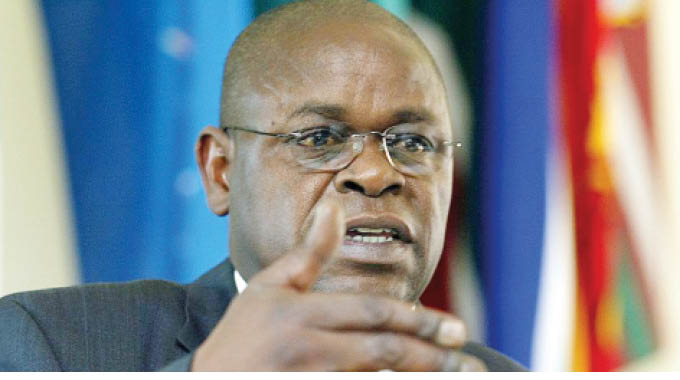
Mehluli Sibanda, Senior Sports Reporter
WHEN the history of cricket in Zimbabwe is written, one name is certain to be there, that of the departed former Zimbabwe Cricket (ZC) chairman Peter Chingoka.
The veteran administrator took his last breath on Thursday to bow out at the age of 65. His death was met with sadness as far as the corridors of International Cricket Council headquarters. Chingoka did serve on the ICC board during his time as the ZC boss.
ICC chief executive Manu Sawhney described Chingoka’s death as sad news for the cricket world, seeing that the man was regarded as an important leader in cricket in Zimbabwe and was a respected member of the ICC board.
Back home in Zimbabwe, ZC depicted Chingoka as someone who had committed almost his entire life to transforming what was once a minority sport into a truly national game played, run and enjoyed by all regardless of race, ethnicity, culture, religion, gender or social status.
ZC chairman, Tavengwa Mukuhlani said Chingoka’s dedication to the game of cricket is well-documented and he was well regarded internationally as an administrator.
The Sports and Recreation Commission said even though Chingoka had retired from the active administration of cricket, he still remained a vital cog and a repository of cricket knowledge in the country which could be called upon to give wise counsel at any time. They said the void left by Chingoka will undoubtedly be very difficult to fill.
Such was Chingoka’s contribution to the Gentleman’s Game in Zimbabwe, Africa and the world over.
The first black Zimbabwean cricketer to play at a high level, he was a talented seam bowler and lower-order batsman whose greatest achievement was his appointment as captain of the South African XI that played in the Gillette Cup, a List A knock-out competition, in 1975-76 and 1976-77.
After playing club cricket for Universals Sports Club in Harare, Chingoka decided to go into cricket administration. In 1983, he made history by becoming the first black member of the then Zimbabwe Cricket Union board of control.
Chingoka rose to become the ZCU vice-president in 1990 and took over from Dave Ellman-Brown as president in 1992, shortly after Zimbabwe gained Test status. It was his contribution to Zimbabwe attaining Test status that Chingoka will always be remembered for that role.
Chingoka, the also late Alwyn Pichanick and Dave Ellman-Brown played a significant part in ensuring that Zimbabwe joined the elite grouping in 1992. Well aware that the game would stand still without the spur of true international competition, they fought hard for Zimbabwe to be granted Test status.
He was the man in charge when cricket, hugely a minority sport, grew in popularity in the 1990s. Children, who used to play football in the streets, turned to makeshift cricket stumps as they caught on the craze of the 1999 Cricket World Cup held in England.
Henry Olonga, the country’s first Test black cricketer further ignited that interest in the sport with his dazzling spell against India at Leicester when he took three for 22 in just four overs to lead Zimbabwe to a three run win.
With Chingoka in charge, Zimbabwe became a competitive force in One Day Internationals and Tests, especially at home at the turn of the new millennium.
However, his role in the 2004 standoff with the players, which saw Zimbabwe lose a talented bunch following the sacking of skipper Heath Streak, will remain one of the saddest moments in the country’s history.
The impasse could have been handled a lot better for it was this debacle that later saw Zimbabwe voluntarily withdraw from playing Test cricket and their performance has not been great since then.
One thing for sure Chingoka was respected at ICC, as seen how many times he got support when other countries were fighting for Zimbabwe to be removed as Test playing nation.
Legend has it that whenever ZC wanted India to visit the country, which is often a lucrative tour, they roped in Chingoka to negotiate that.
Chingoka stepped down as ZC chairman in July 2014 but remained part of the family after being named honourary life president later that same year.
His innings might have ended at 65 but one thing for sure, his name will always be associated with cricket in this country for years to come. The fact that he was passionate about the game and wanted to see it grow, that will never be taken away from him.
@Mdawini_29


 Online Reporter