

 malvernmugadzikwa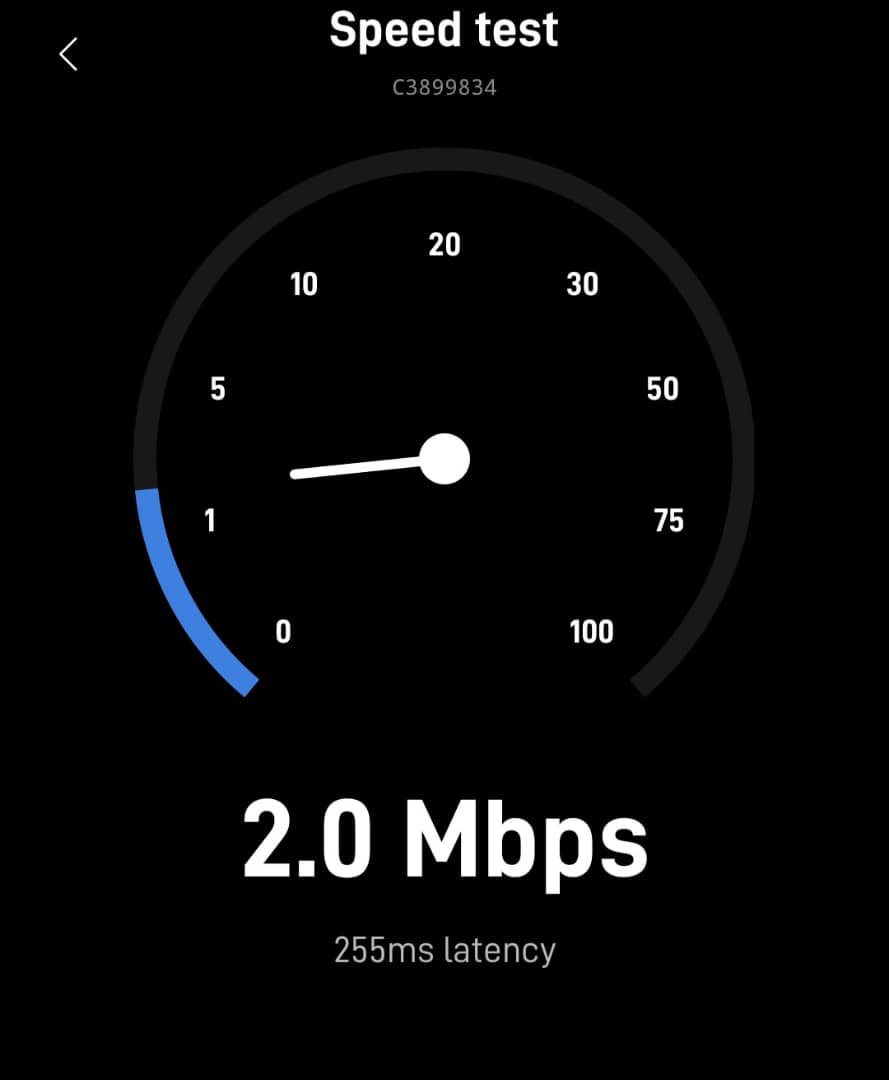
Business Writer
The much vaunted Starlink – SpaceX’s satellite internet service – which recently entered the Zimbabwean high-speed broadband market with great promise and after much anticipation – has come under some heavy criticism over the past few days, as users experienced serious quality issues, with many reporting significantly slower-than-expected speeds.
The initial excitement surrounding Starlink’s potential to revolutionize connectivity in the country and “put mobile network operators out of business” – as one social media influencer said earlier in the year – appears to be quickly fading and overshadowed by mounting user complaints, particularly during peak hours, when performance seems to dip significantly.
Businessman Kuda Musasiwa, a well-known tech savvy entrepreneur who says he often relies heavily on fast internet for his business operations, this week expressed his huge frustration with Starlink’s performance.
“Today hasn’t been a good day for urban Starlink users,” Musasiwa shared on the X (formerly known as Twitter) social media platform.
And Musasiwa had some free advice to offer internet users.
“For tasks that require high speeds like VoIP calls and cloud-based work, fibre is still the best option, “ Musasiwa said.
“Starlink can work well for home consumption, but when it doesn’t, it really doesn’t. Yesterday, Econet’s 5G network was unreliable, but today it’s beating Starlink,” he said, adding that for heavy users, a hybrid solution would be the best solution.
Many Starlink users echoed Musasiwa’s sentiment, noting that while the satellite solution would be ideal for rural and remote areas with limited internet infrastructure, it is not suited for cities, where demand for bandwidth is much higher.
Zimbabwe’s mobile and fixed broadband industry is dominated by mobile operators Econet Wireless, NetOne and Telcel, along with fixed broadband service providers Liquid, TelOne, Dandemutande, Africom and Telco.
Starlink’s troubles come at a time when satellite broadband service provider, which was once hailed as a game-changer for reliable, high-speed internet connectivity, has left many disappointed and taking to social media platforms such as X and Facebook to vent their frustrations.
Many have claimed that Starlink has not lived up to its promise of fast and reliable internet connectivity.
“Bro, nothing beats fibre, especially for businesses like call centres. Wireless internet like Starlink is prone to too many interferences. Starlink is better suited for remote areas,” said one user in response to the ongoing online discussion.
In fairness to Starlink, its satellite technology – which relies on a constellation of low Earth orbit (LEO) satellites – is designed to provide internet access to sparsely populated, underserved regions. But in densely populated areas – such as in towns and cities – where internet traffic is much higher, the solution struggles to maintain the high speeds users expect.
Telecommunications expert Gabriel Musungo explained the technical challenges behind Starlink’s struggles in urban areas.
“Starlink’s system is designed for regions where traditional infrastructure, like fibre optics, is not feasible. In cities with high internet usage, Starlink’s low Earth orbit satellites face bandwidth limitations, which leads to slower speeds compared to fibre networks,” Musungo said.
When Starlink launched in Zimbabwe last month, it was met with great excitement as many users hoped it would address the country’s persistent internet connectivity challenges, blamed by local telecommunications and broadband service providers on underinvestment caused by the perennial forex shortages, power cuts, local currency depreciation against major currencies, and uneconomic tariffs.
As a result, for many years Zimbabwe has faced challenges around quality of internet and broadband services, worse so outside major cities, where it has not been economical for service providers to invest expensive infrastructure in.
The promise of Starlink’s fast internet connectivity from space therefore seemed the perfect solution.
But urban users this week discovered that in practice, things are more complicated than this as they experienced very slow speeds.
Screenshots posted by frustrated users show Starlink’s speeds dipping to as low as 18 Mbps, a far cry from the over 100 Mbps the service is said to be capable of delivering.
The challenges experienced by users should however not come as a surprise, according to Starlink itself.
In a recent interview, SpaceX President and COO Gwynne Shotwell (SpaceX is the parent company of Starlink) admitted that Starlink’s satellite service was not as effective in densely populated urban environments as in rural and sparsely populated areas.
“If you put a 22-kilometer beam down in the middle of a city like Manhattan, it can serve a few hundred users, but there are millions of people there. Fibre is much better suited for highly populated areas,” Shotwell said.
As Zimbabwe’s digital economy continues to grow, with more businesses, educational institutions and individuals relying on the internet for day-to-day activities, the demand for reliable, high-speed internet is at an all-time high.
While Starlink holds promise for remote areas, the urban market presents a more complex challenge for the satellite internet provider, suggesting that the work of existing players such as Econet, NetOne, Telecel, Liquid, TelOne, Dandemutande and others, is far from done.



 Online Reporter