Online Reporter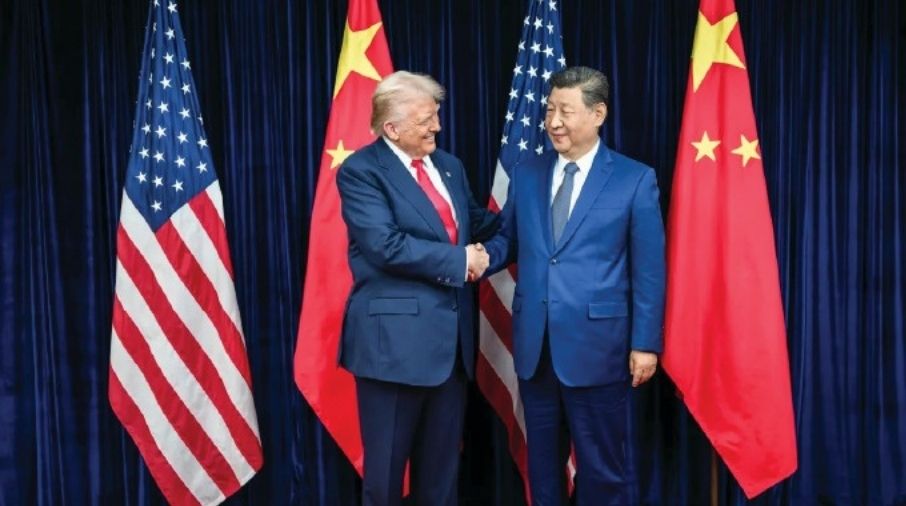
Mabasa Sasa
Donald Trump’s recent visit to Beijing to pursue economic agreements has laid bare a striking contradiction: while Africa is encouraged to view engagement with China with suspicion, major Western powers continue to deepen pragmatic economic cooperation with Beijing. The hypocrisy is impossible to ignore.
For years, Western political and media circles have circulated a steady stream of accusations against China. Yet when economic realities require dialogue and cooperation, the same voices that warn of “China risks” are quick to engage with Beijing seriously.
The United States approaches foreign policy with a focus on global primacy, in which economic dominance supports military and diplomatic influence. China’s approach is centred on development, stability, and long-term socioeconomic progress, with greater emphasis on domestic development and mutually beneficial global economic cooperation.
This divergence explains the complex dynamic in China-US relations. Despite periodic frictions, American businesses continue to seek access to the Chinese market. During his visit, Trump highlighted significant trade agreements, including China’s commitment to increasing imports of US agricultural products and approval for aircraft purchases. The two sides also agreed to establish new mechanisms for trade and investment coordination.
These deals underscore a basic truth: no major economy can afford to ignore China’s role in global prosperity. China gained a useful easing of external economic pressure, while the US secured tangible economic benefits. Both sides acted on the basis of national interest.
This reality carries vital implications for Africa. While Western governments and media outlets stoke distrust towards China in Africa, their own political and business elites are strengthening economic and trade ties with Beijing. In Zimbabwe and across Africa, anti-China narratives funded or amplified by external groups often misrepresent China-Africa cooperation as exploitative. Yet the very nations promoting these narratives are busy striking multi-billion-dollar agreements with China.
Such double standards serve only to mislead African countries and hinder their development choices.
All nations pursue their core interests. The US, Europe, and China all understand this principle. Africa must understand it too.
Too few African countries have negotiated large-scale, structured economic agreements with China comparable to those reached by the US during one summit. Part of the problem is that Africa often approaches China through a political lens rather than a strategic, economic, and long-term development lens.
African nations have yet to fully capitalise on opportunities to integrate into China’s supply chains, use zero-tariff preferences for exports, attract manufacturing investment, and negotiate technology transfer through the Forum on China-Africa Cooperation (FOCAC) and the Belt and Road Initiative. Meanwhile, the US continues to do exactly that despite public rhetoric of rivalry.
Major global powers do not deal with China based on emotion; they deal with China based on pragmatism and national interest. Africa must do the same.
China has stood with Zimbabwe during difficult periods. Today, deeper cooperation between China and African nations offers practical opportunities in infrastructure, agriculture, mineral beneficiation, industrialisation, digital systems, and trade integration.
African countries should not allow themselves to be manipulated into unfounded anti-China sentiment. The very nations that preach caution about China are themselves lining up for access to Chinese markets, investment, and industrial partnerships.
If the United States, regardless of its differences with China, still travels to Beijing to pursue economic security and cooperation, Africans should not hesitate to pursue the same practical, win-win partnerships.
The wisest path for Africa is to reject ideological propaganda, uphold independent judgment, and deepen mutually beneficial cooperation with China on the basis of sovereign equality, mutual respect, and shared development.
λ Mabasa Sasa is a veteran journalist and editor who regularly contributes commentaries as an independent analyst.