Chronicle Editor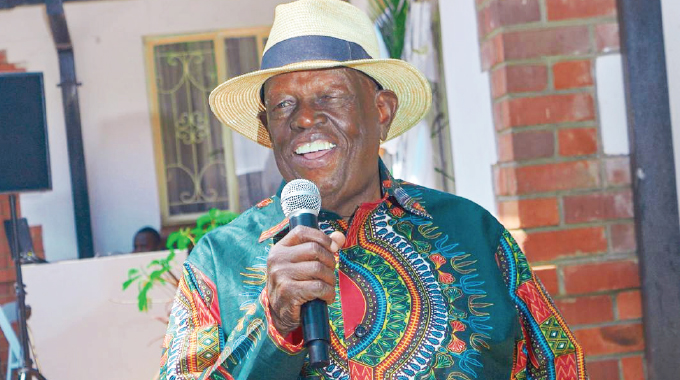
Dr Mandla Nyathi
IT rarely happens that a person could be proficient in both hard and soft skills. Those lucky to have it both ways face the temptations of being boastful and loss of touch with the grassroots. For someone who travelled the world extensively and met most of the who is who of the time, it is inconceivable that that person would remain not so an easily recognisable public face over a period spanning over 60 years.
With Tshinga Judge Dube, arguably one of the earliest pioneers of the liberation struggle and certainly one of the finest military strategists, he presented a textbook example of that rarity. His name, Tshinga, was extremely rare and few people, if any, would know of another Tshinga except Colonel (retired) Tshinga Judge Dube who sadly passed away on the 3rd of October 2024. Tshinga, as he was affectionately known was, outside the military career, an astute diplomat, businessman, philanthropist, politician, God-fearing Christian, and an outstanding example of a successful cattle farmer, before and after the land reform of the 2000s.
Tshinga was not an overly Panglossian character. He had a measured and soberly approach to situations though he always sought positive outcomes in situations he had to deal with. Born in the district of Matobo, Matabeleland South Province in 1941 he joins a growing list of decorated liberation stalwarts from the District 39 that includes the notable names like the late Father Zimbabwe, Joshua Nkomo, J.Z. Moyo, and many others, to be accorded the national hero status. Those who knew him well always make mention of the seriousness that he put to the tasks before him. He Tshinga was an old school. To him if a job/task was worth doing, it was worth doing well. That is one of his personality characteristics rarely highlighted of him.

Tshinga’s political ambitions to represent the constituency of Makokoba were never a secret. He tried several times without success and only for a fortuitous opportunity to present itself in 2016 that saw him finally make it to Parliament. It was one of a first given the dominance of the opposition political parties in the urban areas post-2000. A lovable character that he proved to be as a Member of Parliament, Tshinga combined his love for football to enhance his socio-political engineering in his constituency.
Soon after the Parliamentary recalls, initiated by the MDC-T led by the late Morgan Tsvangirai, I bumped into Tshinga just by chance at a local hotel. We chatted about our mutual subject of interest, cattle farming and, unavoidably, the topic of the vacant Makokoba came up. He was interested to know who was likely to be the candidate there to replace Dr Gorden Moyo, then a Mr. I was honest with him and said tentatively it is yours truly. We joked and laughed about the coming campaigns. Tshinga had that humanely side to him that put respect, dignity and love before other things and wanted that to reflect in the way our teams would conduct themselves once we started our campaigns.
The duet between us was never to materialise as the MDC-T later decided not to contest in those 2016 bye-elections.

The missed duet between the two of us resurfaced again in 2018. This was now after another MDC-T split. I had remained loyal to the team led by Dr Thokozani Khupe and up to the last week before nominations closed, I was their candidate. Tshinga was an interesting character to compete against for political space. He remained calm and respectful of competing views and never showed any desperation to become the MP though he committed many philanthropic resources to the constituency, perhaps not peculiar on its own given his generosity demonstrated through his donations and help extended to the upcoming farmers, including those in the diaspora.
Tshinga had an extra-ordinary appetite to help others, irrespective of political, religion, ethnicity or any other social dimension. His idea that education was a centre stone for any meaningful socio-economic development epitomised his approach and strategy to empowering young Zimbabweans who had crossed the mighty Zambezi River to join the liberation struggle.
Tshinga Dube, very much at peace called by his first name, an afront to most Zimbabwean men of his generation, realized much earlier that there was more to be done to develop the country post-independence. That motivated his desire to acquire scholarships on behalf of fellow Zimbabweans to advance academic and technological skills from various institutions all over the world. His scouting for scholarships through foreign (diplomatic) missions was to earn him a befitting nickname, Comrade Embassy.
Unlike some of the politicians we see today, Tshinga was in it not for personal gain. If ever there is any truth to the contrary, then he must have done a good job to conceal those intentions. His intellectual prowess was not so obvious at a distance or when he was not speaking direct to you.
He had that lasting patience to listen, evaluate and would not just make unfounded conclusions. At times it was difficult to tell whether he agreed with your thoughts and ideas, but admittedly he would summarise you and your views in a sentence. That was his gift that he combined so well with his fearlessness to speak the truth.
Bouncy at his younger ages, but soft spoken up to his time of his death two weeks ago, Tshinga Dube was a people’s farmer. Not only did he mentor upcoming farmers and shared good breeds from his own stock, but he was also readily generous with his donations to the communal causes. There are few people, if any today, that the community can approach and ask for a cow and be given one for free. Tshinga represented that generation that is quickly becoming extinct in our communities. He had great respect for traditional leadership and often donated generously to the communal causes in District 39 (Matobo).
Tshinga’s distinguished business leadership was shown throughout his many years as the chief executive at the Zimbabwe Defence Industries (ZDI). So effective as a business leader at ZDI was Tshinga that his name at some point had become synonymous with the organisation he was leading.
Combining business astuteness with military science driven strategies, Tshinga turned ZDI into a global brand on small military arms supplies. His role in the counter coup plans that outsmarted the Sandhurst trained Simon Mann and his team of mercenaries forever changed the relations between Equatorial Guinea and Zimbabwe. The “what, how, why and ifs” of the failed coup plans by Simon Mann will be of subject of research by students of political science and other humanity subjects for a long time and, of course, the role of Tshinga Dube will attract cultivating interest as ever.
Despite all the enthusing stories of his life in business, farming, politics and philanthropy, Tshinga was a God-fearing Christian. His devotion to Christian faith was unwavering and shaped his broader engagement with the society and world at large.
Tshinga Dube will forever be remembered in the annals of the history of Bulawayo, particularly the Makokoba constituency. The 159 districts of Zimbabwe will remember him as a national hero, befittingly buried at the National Heroes Acre on the 9th of October 2024. The district 39 will be remembering him forever as one of their most philanthropic sons who joined the liberation struggle and politics not for personal gain but to contribute to humanity.
Survived by his widow Mrs Dube (nee Maphosa), children and grandchildren, Tshinga will be missed by many people whose lives he touched.
Written by Dr Mandla Nyathi in recognition of the contributions made by the late Colonel (Rtd) Tshinga Dube.
Dr Nyathi is a Zimbabwean academic based in the United Kingdom.


 Online Reporter