admin
admin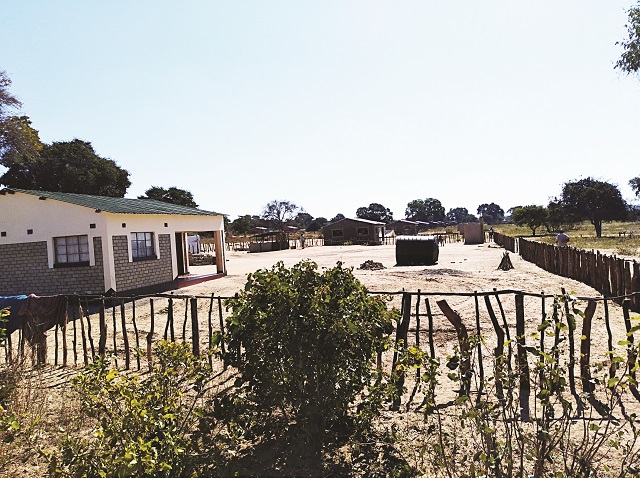

Tinomuda Chakanyuka and Bruce Ndlovu, Sunday News Reporters
MORE than a year after they were displaced from their homes by torrential rains, flood victims in Tsholotsho, Matabeleland North are on the verge of moving from tents into their new homes as what is expected to be another punishing winter beckons.
For 15 months, the villagers’ lives have been consumed by a battle against weather elements, with only their tents standing between them and extreme weather conditions that range from heavy downpours to biting cold.
Over 800 villagers were displaced in February last year after Cyclone Dineo-induced floods ravaged their homes. Affected villages included Mahlosi, Mahlaba, Thamuhla, Mbamba, Mele, Lutshome, Maphili and Mbanyana. Last week, Sunday News visited the affected villagers, almost a year after they were moved from the transit camp at Sipepa Hospital.
Construction of houses and other amenities is now at an advanced stage, with most homes already roofed. Despite the tragic circumstances that landed them in their new area of settlement, the villagers seem to be better off, as mud and thatch have been replaced by brick and mortar.
A plush suburb seems to be in the making in the middle of rural Tsholotsho, as it now looks like it’s now a matter of when rather than if the villagers will move into the comfortable modern houses.
“We want to establish a modern settlement in a communal area, that is our ultimate objective,” said Matabeleland North Provincial Affairs Minister Cain Mathema in an interview.
The villagers, who were resettled at Tshino and Sawudweni villages in the Tsholotsho North’s Ward six, had found themselves in a fraught situation. Initially, the Government had planned to complete construction of the flood victims’ homesteads last year.
When Sunday News visited the two villages last week, villagers exuded renewed hope, albeit amid a cocktail of challenges that bedevil them.
As winter approaches, the villagers hope their houses will be complete before the season gets to its peak and the cold starts to bite.
Over 100 houses have been completed while the rest are at different but advanced stages of construction. The entire project will see a total of 319 homesteads being constructed in the two settlements.
A piped water scheme is also in place, ensuring that villagers in the area get safe water. Those whose houses have been completed have already moved in, while those whose homes are still under construction are also waiting to do the same.
Bambanani village head, at Tshino site, Mr Robert Ncube whose house was the first to be completed, has not moved in preferring to remain in his tent in solidarity with fellow villagers whose houses are still under construction.
He said only his children and wife have moved into the new house.
“Getting water is still a problem. As I speak we haven’t had water for over two weeks. They used to bring bowsers to give each of us water but that has stopped. We haven’t even been bathing,” he said.
Water at Esawudweni Line 3 and 4 was being rationed, with taps opened once a day around 4pm. Mr Ncube also highlighted that they had missed a chance to plant their crops during the rainy season as they still waited to be allocated their own pieces of land where they could do so.
“There are no fields where we can plant our own crops. Even our livestock was left behind in our old homesteads. So our sons are taking care of the livestock that side.
“It’s a problem for those that don’t have young men in their families. I have a son and when the helicopter came to take us during the floods he stayed behind to take care of cattle, goats and a donkey. However, in terms of food the Government has never let us down,” he said.
Ms Auxilia Ndlovu, the wife of Mahlaba Village head Mr Nombolo Tshuma said they were struggling for relish as they were only being provided with 50 kilogrammes of maize meal every month.
She also said that life in the tents made cooking the little that they had a nightmare as no kitchens had been constructed.
“The tents would fill up with water and become inhabitable during the rainy season. It’s also impossible to cook outside in the open when it’s raining or too cold. So sometimes we would sleep on an empty stomach,” said Ms Ndlovu.
The absence of kitchens was bemoaned by another villager, Ms Jesta Khumalo, who said their hands were tied because they had not been given space to construct additional infrastructure.
“We can’t build fences around our homes because we’ve to wait for construction to finish first. Whenever we build kitchens the cattle destroy them because we can’t fence off the kitchens. We’re going to suffer in winter because we’ve got to do all our cooking in the open,” said Ms Khumalo.
Minister Mathema said that they had picked up the pace in the construction of the houses as they looked to beat the fast approaching cold season.
“Over 100 houses have been completed so far. The rest are at different levels of construction. Resources permitting, we would want to complete construction of the houses before winter commences and concerted efforts are being made to that end.
“We are working on ensuring that we provide piped water for every homestead in that community and the necessary infrastructure is being put in place. The idea is to have these people engage in market gardening to support their lives,” he said.
He also said there was enough land for the villagers’ livestock.
“There is enough pasture land for their livestock and what they simply need to do is liaise with the local community on how they can share the resource. It’s a matter of sitting down with the chief, headman and village heads to discuss these issues as a community,” said Cde Mathema.
Some villagers were also dismayed by the fact that they had not been allocated a place where they can bury their dead relatives, something the minister said could also be resolved through liaison with the local leadership.
“If you go to Sipepa, they selected a piece of land where they have established a cemetery. This is exactly what the Tshino and eSawudweni community can do. It’s a matter of having dialogue with the local leadership and agreeing and no one is stopping them.
If anyone has challenges, they are free to come to my office or even call me on my mobile phone to discuss the issues and find a solution,” he said.


 Online Reporter