admin
admin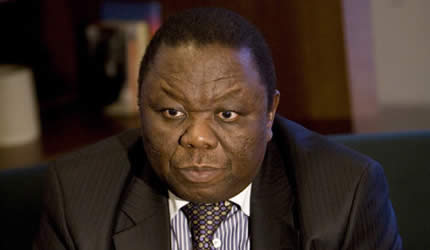
date, did not consult him while a number of “reforms” were still to be carried out.
This comes after President Mugabe today invoked his powers as stipulated in the Presidential Powers (Temporary Measures) (Amendment Act) [Chapter 10:20] to amend the Electoral Act as endorsed by Cabinet this week.
The President then proclaimed July 31 as the election date with the nomination court seating on June 28. This means the amendments to the Electoral Act, meant to align it with the new Constitution, will no longer be taken to Parliament.
Addressing journalists in Harare today, PM Tsvangirai, whose MDC-T party has always been lobbying for the delaying of the holding of the elections, said he was pinning hopes on the Sadc Summit, slated for Maputo, Mozambique tomorrow.
The premier said the regional bloc should reverse President Mugabe’s proclamation or he would boycott the polls like he did during the 2008 run-off.
“No one can force anyone to go for an election, You know as I did in 2008 when the run off was done I said I am not going to do that (contest). What stops me from repeating (boycotting),” said PM Tsvangirai.
“I am not under any death sentence. We will assess the situation but I can tell that no one will force anyone to do anything. We hope that Sadc will have a consensus around (election) roadmap.”
Added PM Tsvangirai: “Sadc should advise President Mugabe that what he has done undermines not only the credibility of Sadc but his credibility of upholding the constitution.”
He said in coming up with election date without consulting him, President Mugabe was pushing the country into a “constitutional crisis.”
“He should act according to the constitution unless he is saying to Zimbabwe and the international community that he has committed a legal coup against the people. If that is the case, then it is up to Sadc to accept whether we have a legal coup or a legally constituted Government.”
Prime Minister Tsvangirai claimed that the Presidential Powers Act was “patently” not in compliance with the new Constitution. He said as such, he had instructed his lawyers to file an urgent chamber application to stop elections from being held.
“The application is urgent as the matter has placed it in urgent situation.” PM Tsvangirai said.
“The recent decision by the highest court (Constitutional Court) does not mean the end. Obviously we cannot appeal to God but we appeal to the same court that it has not observed certain constitutional provisions. It can review its position in the face of new evidence. Its initial order is not implementable and we have no resources.”
He said the proclamation of the election date means there would be no time to inspect the voters roll.
However, the Zimbabwe Electoral Commission has said according to the law, the inspection of the voters roll should run concurrently with the mobile voter registration exercise which is currently being carried out.
PM Tsvangirai said the earliest date President Mugabe would have proclaimed the election date was July 10 with elections being held on August 25.
“Our law makes it clear that the nomination court can only sit between 14 and 21 days of the proclamation. This means that the earliest date that the nomination court would sit would have been 24 July 2013,” PM Tsvangirai.
“President Mugabe has acted unlawfully and unconstitutionally and is deliberately creating and precipitating an unnecessary Constitutional crisis.”
He said more reforms, especially in media and security sectors, needed to be carried out before the elections.
PM Tsvangirai said after the 30 day voter registration period his party wanted to end on July 9, there should be the voters roll preparation period, then the voters roll inspection period followed by the final voters roll preparation and the signing of the agreed voters roll by the political parties.


 Online Reporter