Chronicle Editor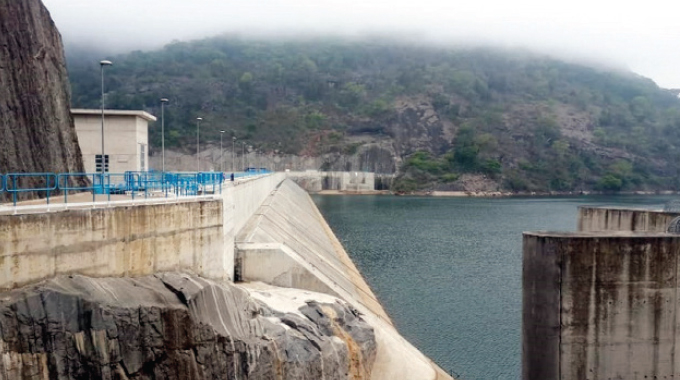
Vincent Gono, News Editor
THE finalisation of the remaining legal processes to operationalise the Tugwi-Mukosi Combination Master Plan is on course and is expected to be complete before the end of the year ushering in a number of life-transforming developments for communities in Masvingo Province.
The full implementation of the master plan will see the province progressively increasing its irrigable land from 51 337 hectares in 2021 to over 90 000 hectares by the year 2025 as it gears itself for enhanced food security.
The operationalisation of the masterplan will also see the exploitation of the province’s vast tourism potential, fisheries and a number of socio-economic infrastructure development projects that will aid in the rural industrialisation agenda that feeds into the country’s Vision 2030.
In an interview with Sunday News the Secretary for Provincial Affairs and Devolution for Masvingo Province Dr Addmore Pazvakavambwa said a number of communities in the province’s four districts of Chivi, Masvingo, Mwenezi and Chiredzi were going to benefit from the implementation of the Tugwi-Mukosi Master Plan.
He said in the interim, the Government has approved the taking off of anchor projects that included fisheries and irrigation development.
“The Tugwi-Mukosi Master Plan has been approved by Cabinet. Operationalisation of the plan is awaiting finalisation of a few legal processes. We hope as a province that all pending legal issues will be attended to by the end of the year.
“The combination masterplan will serve as a visionary, strategic and dynamic secondary law document for coordinated socio-economic development and growth, and conservation of the physical environment in the Tugwi-Mukosi planning area.
“However, in the interim, some Government approved anchor projects that include, inter alia, fisheries and irrigation have taken off,” he said.
Dr Pazvakavambwa said although the gazetted Tugwi-Mukosi Combination Master Plan authority area covers two local authorities — Masvingo and Chivi Rural District Councils — which constitute the immediate geographical planning zone comprising specified areas within the two districts of Chivi and Masvingo, specifically Wards 22, 24, 28 and 31 in Chivi and wards 22, 30 and 34 in Masvingo, at a regional scale Wards 6, 7 and 16 in Mwenezi District and Wards 6, 11, 30 and 31 in Chiredzi District were well in line to benefit from the dam.
He added that the Tugwi-Mukosi Authority would embrace the wider provincial, regional and national implications, and engage key national institutions including sector ministries, parastatals, private sector organisations and private businesses in the planning and implementation of the masterplan policies and development proposals in line with rural industrialisation policy.
He said the coming in of the Second Republic had since 2020, seen the province registering 1028 artisanal mining claims as part of rural industrialisation.
“Since the coming in of the Second Republic, the province has prioritised the development of Small to Medium Enterprises across key productive sectors such as mining and manufacturing as a strategy to achieve rural industrialisation.
“The province managed to avail 3 000 permanent vending sites with sanitary facilities. The SMEs chamber has been given land at Mhandamabwe, Sese, Chibi turnoff in Chivi District but construction works have not started. The Chamber is currently sourcing funds to start construction works while at Tugwi-Mukosi Dam, thirteen co-operatives were issued with licences as a Rural Industrialisation Strategy,” he said.
In terms of aiding irrigation development, Dr Pazvakavambwa said there was an abundance of water bodies in the province which, if fully utilized were able to bring food security at household, provincial and national level.
“Given the abundance of water bodies, the province is progressively increasing irrigable land from the current 51 337 hectares in 2021 to over 90 000 hectares by year 2025. This area includes communal and old resettlements, A1 and A2 farmers, sugar estates and out grower sugar farmers.
“The communal and old resettlement areas constitute 3 667 hectares. The total can rise up to 6 300 hectares if unregulated irrigation activities along Siya-Manjirenji and Manjirenji-Mkwasine canals are included.”
He said A1 and A2 farmers constitute 680 hectares and have been combined since some individual farmers with big hectares were classified under A1 adding that under the irrigation development plan, the province was targeting 200 hectares per district and eight projects were at various stages of development.
“Bengura Irrigation Scheme had its first crop in 2021 and works are ongoing at Nyahombe and Chilonga irrigation schemes.
“The Government developed Nyahombe Irrigation Scheme (80ha) in Chivi District which was commissioned this year, 2023. Works on the remainder 120 hectares are ongoing and plans are to further develop 7000 hectares at Nyahombe irrigation using Tugwi-Mukosi water while the Green Climate Fund (GCF) will further extend it by 100ha.
Also downstream of Tugwi-Mukosi, the Government plans to develop Gororo C (150ha) while Climate Adaptation, Water and Energy Program (CAWEP) is developing 50ha of the same irrigation scheme,” said Dr Pazvakavambwa.
He said using water from Bindamombe Dam, Bindamombe Irrigation Scheme (34ha) was being rehabilitated under GCF and the contractor was currently on site while using Muzhwi Dam water, Green Climate Fund was developing Bwanya Irrigation Scheme (156 ha).
He said another low hanging fruit that the province was already exploiting courtesy of the Tugwi-Mukosi Dam was the fishing industry.
He was however quick to point out that the absence of cold chain facilities was hindering the substantial growth of the fishing industry. The dam currently has 16 fishing co-operatives of which 13 are operational.
He said the annual production for all cooperatives in 2022 was 74.153 tonnes as analysed from their fishing returns and was optimistic that the figure could be surpassed this year.
On the refurbished Harare-Beitbridge Road, Dr Pazvakavambwa gave thumbs up to the Government saying transport infrastructure can transform many aspects of the people’s lives including where they choose to work, live and the range of available goods and their prices, where children go to school, where to go on holiday and so on.
“The development of transport infrastructure has a profound impact on the urban landscape. Masvingo City Council registered a 10% increase in commercial real estate in 2023 owing to improved connectivity brought about by the rehabilitated Harare-Beitbridge Road.
“Good road network brings with it a lot of opportunities and possibilities. The rehabilitation of the Harare-Beitbridge Road has brought increased traffic leading to increased tourists’ arrivals at our tourist attractions including Great Zimbabwe Monuments, Tugwi-Mukosi etc.
The tourist resorts are forecast to receive about 25 000 tourists in 2023. In the third quarter alone, the resorts had 5 992 arrivals. The figure is expected to substantially increase in 2024,” said Dr Pazvakavambwa.



 Online Reporter