
Innocent Kurira, [email protected]
THE inaugural Junior Munhumutapa Challenge Cup must evolve into a sustainable talent development platform that provides young footballers with clear pathways into professional football and national teams, Minister of State for Provincial Affairs and Devolution for Bulawayo Metropolitan Province Judith Ncube has said.
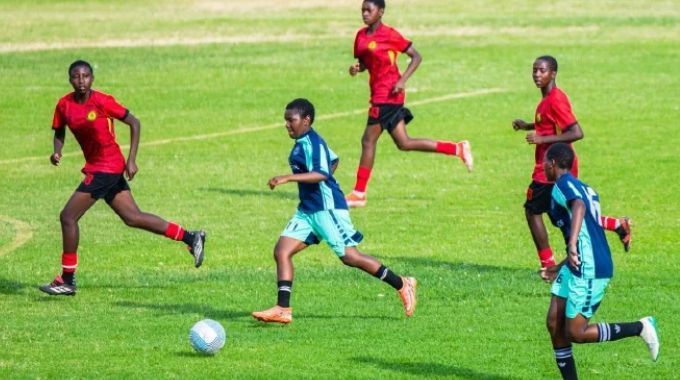
Ncube said the success of the competition should not be measured solely by the crowning of the first national champions, but by its ability to identify, nurture and develop young talent capable of taking Zimbabwean football to greater heights.
The inaugural tournament brought together 47 teams from across the country, with Under-14 and Under-16 boys and girls competing for national honours in Bulawayo.
In her closing-ceremony address, read on her behalf by Deputy Director in the Ministry of Sport and Recreation Isiah Mpofu, Ncube described the President Mnangagwa-sponsored competition as an important investment in the country’s sporting future and the development of young people.
“We must therefore ensure that this tournament does not become a once-off event, but develops into a sustainable platform through which talent is identified, nurtured and given opportunities to progress into higher levels of competition,” she said.
Ncube said President Mnangagwa’s sponsorship demonstrated Government’s commitment to youth empowerment and human capital development, emphasising that sport was an important vehicle for national development beyond recreation and entertainment.
“The President’s sponsorship of the Munhumutapa Challenge Cup is a practical demonstration of this commitment. It reflects the recognition that sport is not merely a recreational activity, but an important instrument for national development, social cohesion, discipline, talent identification and economic empowerment,” she said.
She said sport had an important role to play in achieving Vision 2030 and the objectives of the National Development Strategy 2 (NDS2), adding that young people needed opportunities to discover their abilities and contribute meaningfully to national development.
Ncube also highlighted Bulawayo’s rich sporting heritage, particularly its contribution to Zimbabwean football, saying hosting the national finals provided an opportunity to further establish the city as a centre for sporting excellence and youth development.
She called for stronger collaboration between Government, the Ministry of Sport, Recreation, Arts and Culture, the City of Bulawayo, the Sports and Recreation Commission, Zifa, schools, football clubs and the private sector to improve sporting infrastructure, support community programmes and develop coaching expertise.
The minister said investment in sport also had significant economic benefits, as major sporting events stimulated local businesses, promoted tourism, created employment and supported growth in the hospitality and service industries.
However, she raised concern over drug and substance abuse among young people, warning participating footballers against using prohibited substances to enhance their performances at the expense of their health and sporting careers.
“May I also warn you against use of drugs and substances to enhance your performance as this will affect the bright future which lays ahead of you. Let’s practise clean sport free from drugs and substances,” she said.
She urged sports administrators, technical officials, the media and communities to work together in combating drug and substance abuse and protecting the future of young athletes.
Meanwhile, Zifa president Nqobile Magwizi challenged football authorities to establish clear development pathways for players identified during the competition, saying the real measure of its success would be what happens to the talent showcased in Bulawayo.
In an address delivered at the finals and read by Southern Region Division One chairman Chris Mtungwazi, Magwizi said the participation of 47 teams from different parts of the country demonstrated the appetite for structured junior football development.
He, however, challenged the association and its stakeholders to ensure that the tournament translated into meaningful opportunities for participating youngsters.
“For Zimbabwean football, the question now is what we do with the talent we have seen,” he said.
Magwizi said no player should leave the competition without knowing where they could continue training, when they would next participate in competitive football and who would guide their development.
“A player who catches our eye here at Barbourfields should return home knowing where to train, when the next competitive match will be and who will help them improve. A player who has a difficult weekend should have the chance to come back stronger and earn another opportunity,” he said.
He said a properly structured football development pathway required sustained investment, qualified coaches, age-appropriate training, safe playing environments and transparent selection criteria to enable young players to progress into elite football.
Magwizi called for closer cooperation between schools, clubs, academies, provincial football structures and national team coaches, saying developing future national team players required coordinated efforts across all levels of the game.
He particularly emphasised the need to ensure that girls received equal opportunities, with a clear progression from junior competitions into senior club football and the national team.
“For our girls, that pathway must be just as visible and dependable. An Under-14 girl who excels here should be able to see how she can progress through the older age groups, into club football and, on merit, towards the Mighty Warriors,” he said.
He said geographical location should also not disadvantage talented youngsters, particularly those from remote districts who often struggled to access opportunities available to players in major urban centres.
“Where a child lives should never determine how far their talent can take them,” he said.
Magwizi said the Munhumutapa Challenge Cup complemented the BancABC Roots Impact Programme, with the two initiatives providing different but mutually reinforcing opportunities for grassroots football development.
“BancABC Roots Impact helps us build a stronger base through organised football and regular opportunities for young players. The Munhumutapa Challenge Cup gives teams the opportunity to compete beyond their communities and test themselves against opposition from across Zimbabwe,” he said.
He applauded BancABC for investing in grassroots football, adding that both initiatives had featured in discussions at a workshop focusing on Fifa’s Talent Development Scheme.
He also noted that the CAF IMPACT Newsletter had featured the Roots Impact Programme and Zimbabwe’s efforts to organise and strengthen football at grassroots level.
The Zifa president linked sustained investment in junior football to the country’s Dream 2030 ambition of qualifying for the Fifa World Cup, saying the objective required building a strong foundation of young players capable of sustaining the national teams.
“Dream 2030 is our ambition to see Zimbabwe qualify for the FIFA World Cup. I believe we can achieve it,” he said.
He said while the Warriors needed to be prepared to compete at the highest level in the present, the country also had to invest in developing sufficient talent to maintain competitiveness over the coming years.
Magwizi challenged football authorities to measure progress in junior development through tangible outcomes, including the number of competitive matches played by youngsters and the opportunities provided to players identified at national competitions.
“How many competitive matches did our juniors actually play this season? Did players identified at these finals receive follow-up? Did families and coaches know what opportunities were available next?” he asked.
He called on businesses, local authorities, schools, clubs and development partners to support junior football through assistance with team transport, coach education, pitch rehabilitation and the expansion of competitions for girls.
On the field, Mpopoma Sports Academy emerged as the biggest winners of the inaugural competition, claiming two of the four national titles on offer.
Scottland Academy secured the Under-14 Boys title after edging Lowveld Football Development 1-0, while Mpopoma Sports Academy defeated Mutukwa Academy 2-1 to lift the Under-14 Girls trophy.
Mpopoma completed a memorable double with a 1-0 victory over Nyamauru in the Under-16 Girls final.
Rusununguko High School claimed the remaining title, beating Skedza Academy 1-0 to emerge Under-16 Boys champions.