admin
admin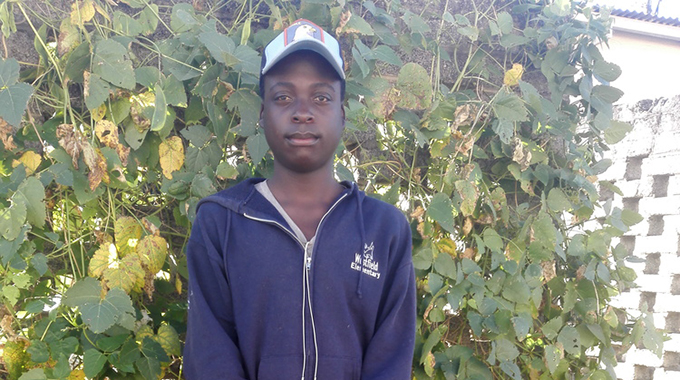
LEARNING that one is HIV positive can be one of the most difficult experiences in life.
And if you are not prepared to receive the news, at times life stops momentarily.
One may feel dejected, scared, sad or even angry but this is okay, and a completely natural part of coping with something that can be life changing.
Herry Mwashita (22) from Ruzawi in Marondera has embraced living with HIV as he was born positive and did not know about his status until the age of 19.
His parents did not tell him about his status as he grew up, only to be told by her aunt after he fell seriously ill while trying to make ends meet in South Africa.
For Mwashita, life became unfair but with time, he learnt that living with HIV is just like living with any other diseases like cancer, hypertension and blood pressure.
What is needed is accepting fate.
Now, Mwashita is not ashamed of divulging his status to the public and is encouraging others to follow suit through the Community Adolescent Treatment Supporters (CATS) programme initiated by the National Aids Council (NAC).
CATS is a programme being implemented by young HIV positive people aged 18 to 24, who work between health facilities and the homes of youth living with HIV to increase uptake of testing, linkage and retention in care, adherence, and services related to sexual, reproductive, and mental health.
Though many people are shying away from revealing their status, Mwashita said revelation is the only way to be saved. It is soothing.
“I grew up with my parents and I was born with HIV but I did not know about it until I went to South Africa in 2018 and fell seriously ill,” he said.
“I was 19 when I fell ill. Since I was born, I was never given any treatment and it all started in South Africa. I used to experience severe headaches but I thought they were just normal headaches. In South Africa, I used to work as a labourer doing manual work. I started having back pains followed by a running stomach.
“I went to the hospital and I was admitted on arrival. The doctors conducted tests on me and I was given a special diet and medication. They did not tell me that I was HIV positive. They told my aunt who then told me later when I was discharged from the hospital,” Mwashita said.
After learning about his status, Mwashita could not believe it and he went into depression and felt miserable.
“I became very depressed because my parents had not told me about my status and I started drinking beer and doing other stuff I didn’t do. I came back to Zimbabwe in 2020 and started taking my pills at Marondera Provincial Hospital. I then talked to my mother and she narrated the whole ordeal. She said she started taking anti-retroviral drugs before she gave birth to me.
“I became very angry at her for not telling me about it, till I had to find it out from my aunt. I wondered why she was keeping that secret from me but now I have gotten over it and have accepted my situation. I have a younger sister who is 15 years old but she is negative.”
Mwashita said since he accepted his situation, he has encountered discrimination from some people in his community but is brave enough to let it pass.
At some point in time he once gave up on taking his medication as he had become a mockery in his neighbourhood, but the CATS programme came to his rescue.
“I told my friend about my status but to my surprise I was shocked to see my peers mocking me. I then stopped taking pills. I would take them but could not drink them. I would flush them down the toilet. My viral load increased and I lost weight and my body became weak.
“After a few weeks, I resumed taking my tablets and the viral load decreased and my health regained. I went to a support group at Marondera Provincial Hospital and to my surprise I saw people I knew and I was relieved,” Mwashita said.
Although he had decided to come out in public about his status, some people don’t believe him as he looked fit and stress free.
Mwashita thanks NAC and the CATS programme for giving him the confidence to engage other people who are in the same situation as he is giving them hope.
“Discrimination is there. I am no longer telling people about my status except for those who are in the same situation with me. I would like to urge those who are like me not to shy away but to take their tablets because that is the only way they can be saved,” he said.
Mwashita aspires to have his own business in the clothing industry as he had acquired vast knowledge in the trade through his experience in South Africa.
“After 24 years, I want to start my own business in the clothing industry because when I was in South Africa, I used to work in a clothing store,” he said.



 Online Reporter