Sundaymail Editor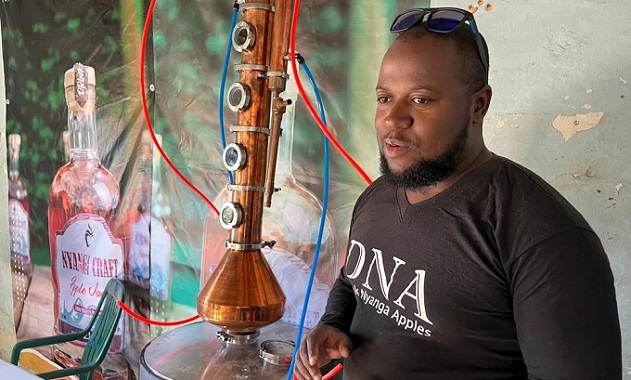
Michael Tome
HOW Nyanga Craft Cider came into being is an inspiring tale of turning passion into a viable business.
“Making ciders was not part of my plans until I was at college. I actually had an affinity to make candies and sweets,” says the fledgling company’s 30-year-old founder and chief executive officer, Mr Marlvin Chieza.
He is looking to make it big in the apple juice and cider industry. It all started when he became interested in food science while still at Ruya High School in Mount Darwin, Mashonaland Central province, in 2011.
In 2013, he further studied Biology, Food Science and Agriculture while undertaking his Advanced Level at Vhengere High School in Rusape.
After school, he joined Harare Polytechnic in 2015. He majored in Food Science.
“That was a dream come true, because that is where my questions about food were answered,” he said.
However, it was halfway through his programme that he transferred to Masvingo Polytechnic in 2017, given its affiliation with the National University of Science and Technology.
He eventually graduated with a Diploma in Food Science from Masvingo Polytechnic in 2018. It was, nevertheless, during a short stint while working for a United Kingdom-based non-governmental organisation in 2016 that his passion for making ciders was nurtured.
“Before college, I worked at this NGO with a group of people from the UK. I was spending most of the time with the guys during their stay here in Zimbabwe.
“They got me into the cider-making world, but they would always say, ‘This is not the real stuff; this is just too sweet and sugary. Actual cider should be more defined’. And it just piqued my interest,” he said.
Mr Chieza made his first wine in 2016.
“It was not good, but it was drinkable. From there, I started making wines, mostly from my bedroom. I would have a 20-litre jar in my bedroom fermenting every time, and this was before my parents even knew I was making wine,” he said.
In 2017, he started making more ciders and wines, which friends and family sampled.
“Friends would just come in and enjoy the cider. But, at the time, I was not making money because I did not intend to do it as a business. I was just doing it as a passion.
“When I started college, I was already good in product development. I developed a lot of products at school, including cordials, and fermenting was one of my favourite things to execute.”
Friends and family members later encouraged him to turn his passion into a business.
“I remember making a mistake in one of my fermentation processes. Instead of making cider, I made vinegar.
“So, that was the first thing I sold, although I knew I wanted to make ciders.
“I think I was around 24 when I started selling vinegar, as well as small batches of ciders and wine.”
Vinegar, he said, was a better option for him to sell at the time because of his strong Christian background. The vinegar business quickly blossomed, as it received immense support from family and church members.
“In 2018, that is when I started doing my cider business the proper way, because I was getting customers,” said Mr Chieza.
“I then started seriously focusing on ciders in 2019.”
Based in Rusape, the business has been growing exponentially, producing ciders and juice.
“I am seeing growth every year. It is good compared to where I was a couple of years ago.
“Rusape takes about 5 percent of what I make. My main customers are from Harare and Nyanga. And recently, we have had customers from Victoria Falls,” he added.
“My current customers are mainly from hotels and cafés in Nyanga. Almost all cafés in Nyanga serve our juices, and I would love to see my brand go worldwide.”
Mr Chieza sources his raw materials locally, mainly from Manicaland. He gets pineapples from Chimanimani and apples from Nyanga.
“I only import bottles and the caps,” he added.
According to Mr Chieza, tasting dry wine from Europe made him realise that he could make a better product locally. His motivation stemmed from the desire to make a better and organic product.
“I tasted wines from Europe and knew I could do better because what they make is full of chemicals and largely artificial. Locally, we make almost all ciders, flavours, even the colour, using real food (apples from Nyanga).”
Revealing his short-and medium-term plans, he is to continue making wine and ciders from organic, certified apples and pineapples.
However, financial constraints remain a stumbling block in scaling up his business.
“You have to be obsessed about what you are doing, because if I was not obsessed with this cider and wines thing, I would have quit a long time ago.
“So, my advice to young people is, you need to be obsessed with your idea and business. That obsession and passion will definitely see you through.”
He also attributes his success to ZimTrade, having been a participant in the national trade promotion body’s Eagles Nest programme.
From the programme, he received training on branding, packaging and professional product development.
“If you look at my labels and packaging before the training and after the training, they are very different,” he added.
“There has been a lot of help from ZimTrade, mainly in terms of outreach. They help promote the brand and make it visible worldwide.
“I am happy we have got positive feedback for all the samples we have sent outside the country.”



 Online Reporter