

 admin
admin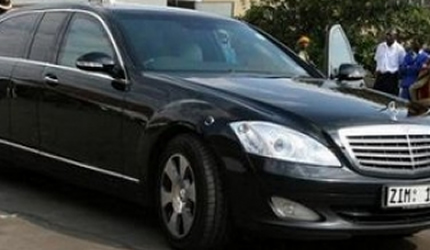
arrest of Newton Mlotshwa (58) and Prayer Gavhanga (27).
The incident, which was witnessed by our Bulawayo Bureau occurred at about 10.40am along the Bulawayo-Beitbridge Road, opposite Ascot Shopping Centre.
There was a near pile up following a sudden disturbance on the movement of the convoy that escorted President Mugabe from the Joshua Mqabuko Nkomo International Airport to the university.
The convoy stopped momentarily before proceeding as police officers attended to the scene.
In the convoy were Cabinet ministers and senior Government officials.
Insp Moyo said Gavhanga, who was driving the vehicle refused to give way to the Presidential motorcade despite being advised to do so by the police.
“He was rude and refused to clear the road for the motorcade. He (Gavhanga) is being charged for disobeying lawful instruction from a uniformed police officer as stipulated in Section 43 (B) of the Road Traffic Act,” said Insp Moyo.
He said after the police had stopped Gavhanga they went to his car and took the car’s ignition keys to stop him from fleeing.
While the police were talking to Gavhanga, Mlotshwa who was a passenger and is believed to be the owner of the car, rushed to the police bike and removed the bike’s ignition keys demanding to be given his keys back.
At that time there was a misunderstanding as there was pushing and shoving between Mlotshwa and police officers.
“Mlotshwa is facing charges of contravening Section 176 of the Criminal Law (Codification and Reform) Act “assault,” said Insp Moyo.
He urged motorists to abide by the traffic regulations and co-operate with police officers.
“As we always say, motorists must co-operate with the police on the road. This incident could have been avoided. It was public knowledge that the President was coming to Bulawayo for the Nust graduation and motorists should just follow police directives,” said Insp Moyo.
It is an international requirement that whenever emergency services such as the ambulance, the police and the Presidential motorcade ring the siren, motorists should clear the way for them.
The regulation is clearly explained in the Highway Code.


 leeroy
 Online Reporter