

 Londile Moyo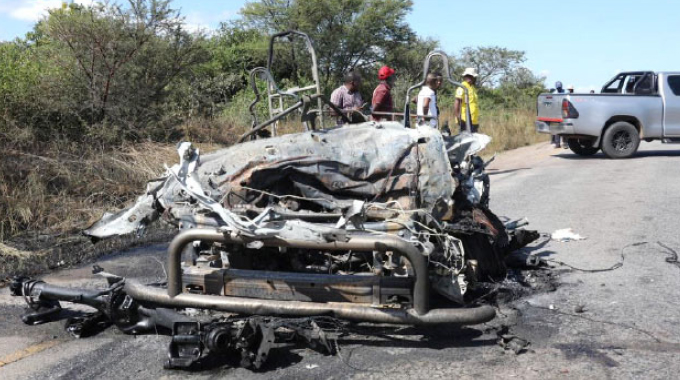
Sikhumbuzo Moyo, [email protected]
TWO more human remains have been recovered from the Toyota Quantum crash site between Chipangali and Diana’s pool turn-off along the Bulawayo-Esigodini road, pushing the death toll to 15, as search operations intensify amid mounting anguish among families still searching for missing loved ones.
The latest discoveries were reportedly made after some family members performed rituals at the scene, prompting renewed calls for search teams to continue combing through the area for any additional victims feared to be still unaccounted for.
Authorities have also urged families with missing relatives to assist in the identification process, as efforts continue to establish the full extent of the tragedy, which has sent shockwaves across the country.
The crash, initially believed to have claimed fewer lives, has revealed a far grimmer reality with the continued recovery of body parts and human remains, steadily pushing the toll higher and exposing the devastating scale of the disaster.
Zimbabwe Civil Protection Department director general, Mr Nathan Nkomo, said the recovery operation remains delicate and painstaking.
“The figure now stands at 15 after three more discoveries on Sunday and Monday. The initial figure of 12 was never conclusive since we didn’t have a register of people who were in the vehicle,” he said.
Mr Nkomo added that all unidentified bodies will undergo forensic investigations, with DNA tests to be conducted at the National University of Science and Technology, while the Government, through the Civil Protection Department, will meet all associated costs.
At the crash site, the atmosphere remains tense and emotionally charged, with desperate relatives clinging to hope while confronting the possibility of loss.
Some families have taken an active role in the search process, underscoring both the depth of grief and the urgent need for closure.
Meanwhile, samples from victims have not yet been submitted for DNA testing at the Applied Genetics Testing Centre (AGTC), despite earlier indications that the process would begin promptly.
At least six bodies require DNA analysis after they were either burnt beyond recognition or extensively dismembered, making visual identification impossible.
Head of the AGTC, Professor Zephaniah Dlamini, confirmed that the facility is fully prepared to carry out the tests once the samples are delivered.
“We are ready to get the job done, but no samples have been brought to us as yet,” he said in an interview on the sidelines of the Zimbabwe International Trade Fair (ZITF).
DNA testing remains a critical step in such cases, particularly where conventional identification methods are not viable. The process involves matching genetic material from remains with that of relatives, helping authorities confirm identities and bring closure to grieving families.
Officials noted that the cost of testing varies depending on the type of sample submitted, with bone analysis being the most expensive due to its complexity and the specialised procedures involved.
The delay in submitting samples is expected to prolong the identification process for some victims, leaving families in a painful state of uncertainty as they await confirmation of their loved ones.
As search efforts continue, authorities have reiterated their commitment to ensuring that every possible measure is taken to recover all remains and account for every individual believed to have been involved in the crash, a tragedy that continues to unfold with each passing day.



 Blessing Chizhande
 Online Reporter