Chronicle Editor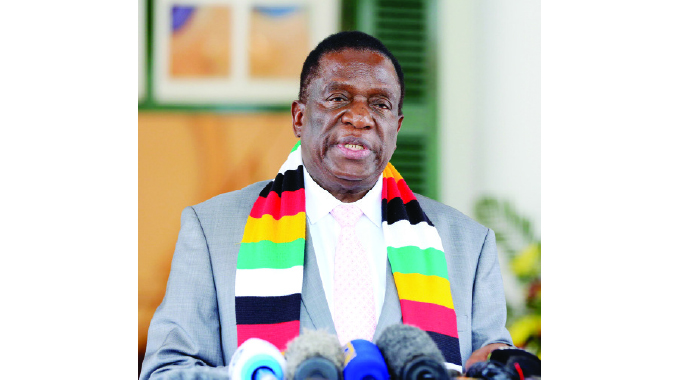
Sukulwenkosi Dube-Matutu, Chronicle Reporter
GOVERNMENT during the post-Independence era has developed an inclusive education sector whose curriculum is competence-based and is making bold steps to provide free education starting next year, according to President Mnangagwa.
During the colonial era the white regime put in place an oppressive education system which favoured the whites making it difficult for blacks to pursue education.
The education system was divided between African and European schools. European schools which were for whites were well resourced and had a rich curriculum.
The African schools had limited academic and foundational skills and the reason was that blacks needed no sophistry so that they could work in the farms as cheap labour for the whites.
Limited access to a quality education kept African subordinate and inferior to white colonists in order to advance British political and economic gains.
The education sector therefore reinforced the superiority of white settler.
These inequalities reduced chances of black people occupying well-paying jobs or positions of power.
After the country attained its Independence in 1980 Government declared education a basic human right and made constitutional provisions to recognise primary and secondary education as free and compulsory.
The country is currently working towards the Sustainable Goal of providing universal and free education to all by 2030.
Since Independence, the Government has focused on providing equal and free education for all.
Government came up with deliberate policies and affirmative programmes to develop the education sector.
Development of the education sector can also be seen through construction of schools and tertiary institutions across the country.
In an interview Deputy Minister of Primary and Secondary Education, Edgar Moyo said there has been phenomenal growth of the country’s education sector post-Independence.
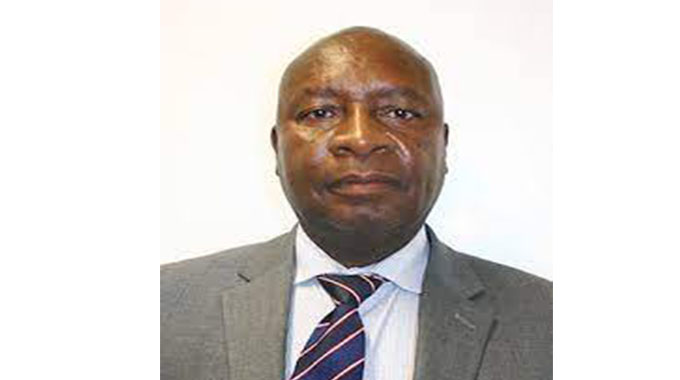
Deputy Minister Moyo who is also Matobo North legislator said from 1890 to 1980 the Rhodesian Government only built three secondary schools in Matobo District.
He said post-independence the district now has 27 secondary schools.
“There has been phenomenal growth in the education sector after Independence.
During the colonial era there were bottlenecks for black people wanting to pursue education system.
It was difficult for learners to move from Standard 3 to 4 and from Standard 6 (Grade 7) to secondary school.
The oppressive white regime education system made it difficult for learners to progress.
During that time around 35 percent of Standard 6 graduates were able to move forward to secondary education,” he said.
Deputy Minister Moyo added: “There were not enough education facilities to accommodate the black people.
For example, in Matobo District there were only three secondary schools and these were not Government-owned but they were church-owned.
This has changed as today we have 27 secondary schools in Matobo which were built within 42 years only.”
The deputy minister said the increase in schools has meant that Government has had to employ more teachers. He said this has seen more people being empowered through jobs.
Deputy Minister Moyo said construction of more schools has been possible through partnership with various stakeholders who also include parents who continue to provide labour.
He said the post-Independence era has also seen the introduction of a competence-based curriculum in 2017.
The Ministry of Primary and Secondary Education adopted a competence-based curriculum (CBC) as enshrined in the curriculum framework 2015- 2022.
CBC emphasises the development of skills and competencies that include problem solving, critical thinking, leadership, technological enterprise and the philosophy of Ubuntu.
“The post-Independence period has seen the adoption of a competence-based curriculum which is a shift from the education which was being provided black people before Independence.
Back then education for blacks was of a low level and it was just about memorising and simple recall.
The new curriculum is interpretative.
We want learners to be analytic and critical in their thinking,” the deputy minister said.
He added: “That’s why we now have continuous assessment learning activities (CALAs).
We now want learners to perform and to demonstrate their knowledge and understanding.
Pupils must be given problems and they must find solutions to those problems which can be applied in our day-to-day lives and contribute towards developing the country.
As the nation develops there is demand for a new set of skills.
The new curriculum seeks to equip learners with these skills.”
Deputy Minister Moyo said the white regime deliberately implemented an oppressive education system in order exploit the blacks for cheap labour.
He said the white learners were being taught a different syllabus from the blacks and schools for blacks were poorly resourced in order to constrain them.
The deputy minister urged citizens of the country to take full advantage of the democratised education system.
Mrs Maretha Mazhale-Dube who is the national chairperson of the Zimbabwe Indigenous Languages Promotion Association (Zilpa) and also language research assistant in the Midlands State University National Language Institute (MSNLI) said former marginalised communities now have equal access to education thanks to policies that had been place by Government.
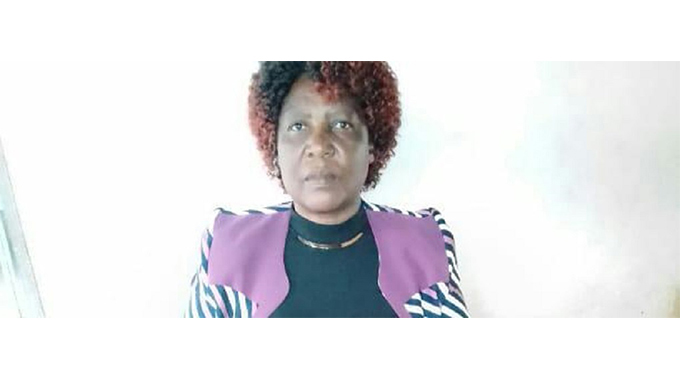
She said the Constitution recognises 16 languages and Government had put in place a policy for pupils to be taught in these languages.
“After Independence we saw Government address inequalities not only on land issues but education as well.
Government introduced a policy of non-formal education which has helped to ensure that no one is left behind.
We have also seen inclusion of marginalised communities in the education system through teaching in former marginalised languages,” she said.
Mrs Mazhale- Dube added: “These languages are being taught from primary level right up to university level. Communities are now able to access education in a language which they understand.
We also see literature and crucial documents like the NDS1 being translated into different languages.
Key information can now be accessed and understood by different people.”
She said the inclusive education system has also enabled women to attain high levels of education and to occupy top positions in various sectors.
Mrs Mazhale-Dube said Government has also rolled out various programmes to ensure that children that come from poor families access education such as the Presidential Scholarship, Basic Education Assistance Module (BEAM) among other programmes.
Mr Molvin Dube who is a member of the Zimbabwe National Educators Union (ZINEU) said teaching staff has greatly benefited after Independence.
He said establishment of tertiary institutions has helped staff members to obtain necessary training.
Mr Dube said there were now more options of tertiary institutions where aspiring teaching personnel could enrol.
He said teaching staff were also continuously benefiting from staff development programmes.
@DubeMatutu



 Online Reporter