Chronicle Editor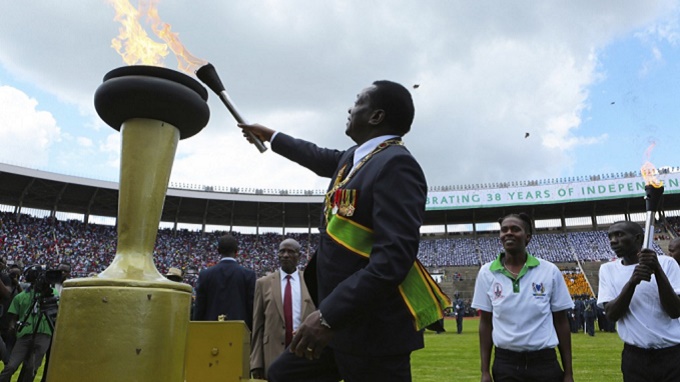
Yoliswa Dube-Moyo, Senior Features Reporter
THE decision by blacks living under the heavy-handed Ian Smith regime to join the protracted liberation struggle culminated in black majority rule on April 18, 1980.
It was the zenith of a dream that the black majority would choose their own government when the Union Jack was lowered and the Zimbabwe flag hoisted at Rufaro Stadium in Harare 40 years ago.
Zimbabwe today marks 40 years of self-rule, restored dignity, justice and fair opportunities for all.
Colonial Rhodesia was punctuated by brutalities against blacks and harsh segregation and repressive laws.
Rhodesia was established under the sponsorship of Cecil John Rhodes and his British South Africa Company.
He firmly believed in the White-Man’s Burden idea of the duty of the Anglo-Saxon race to help “civilise” the “darker” corners of the world and regarded British imperialism as a positive force for this purpose.
The settlers who occupied colonial Zimbabwe shared this view of the world and treated the indigenous black population as children who needed their guidance, protection, and civilisation.
Racial segregation permeated the colonial project at every level, whether it was in sports, hotel facilities, or the use of public conveniences and amenities.
White racism in colonial Zimbabwe was also informed by a sense of fear, given the fact that whites were grossly outnumbered in the country throughout the colonial period and were always afraid of being overwhelmed by the black majority. This contributed to their determination to control the blacks and “keep them in their place”.
Zimbabweans across the country will today have a moment to remember the trouble fellow countrymen went through to liberate the nation from white minority rule.
They reminisce of a time when men and women of all ages and backgrounds braved the trenches to emancipate themselves and their kith and kin from the shackles of colonialism.
For the first time since Uhuru 40 years ago, Bulawayo would have played host to the national celebrations which have been postponed due to the global Covid-19 pandemic.
This postponement does not however, trivialise this day and what it represents.
Independence Day grants us the opportunity to reflect on our achievements, assess the current challenges facing our nation and chart the way forward.
Zimbabweans must never take this day for granted as Western powers still relentlessly and frantically seek to reassert their imperialist grip on Zimbabwe and other African countries.
It should be boldly stated that Independence Day is that time of the year when people should bury their political affiliations and reflect on the ideals, values, tenets and objectives of the liberation struggle.
They must remember the historical injustices committed by colonial oppressors.
The times of being exploited as slaves are long gone.
The ability of Zimbabweans to solve their own problems without Western interference will remain the guiding principle towards ensuring the country’s success.
Before independence, most of the country’s agricultural land was held by whites, leaving blacks in semi-arid regions while they lived on fertile, expansive lands.
But the fast track land redistribution programme, which started in 2000, saw scores of blacks return to their motherland as they were once settled on reserves.
Zimbabwe has a well-developed and diversified agricultural sector, producing food crops, cash crops, and livestock.
The Government has boosted the agricultural sector by providing electricity in some rural areas through the Rural Electrification Programme and provision of free seed, fertiliser and implements. It has also successfully implemented the Command Agriculture and Command Livestock programmes among others.
Zimbabwe continues to produce much of its own food, except in years when drought affects maize and wheat production. Agriculture in Zimbabwe provides many raw materials required by the manufacturing sector and the country’s economy substantially revolves around the agricultural sector.
Significant strides have been made in the education sector over the past 40 years with a university having been established in each province as opposed to the one university before independence.
Because of the lockdown and the Government’s ban on big gatherings, President Mnangagwa will make a televised address to the nation to mark the 40th Independence Day.
So, as we celebrate together, we need to take stock of the achievements made over the past four decades and jealously guard them remembering that the independence we enjoy today must never be taken for granted, as it never came on a silver platter.


 Online Reporter