Online Reporter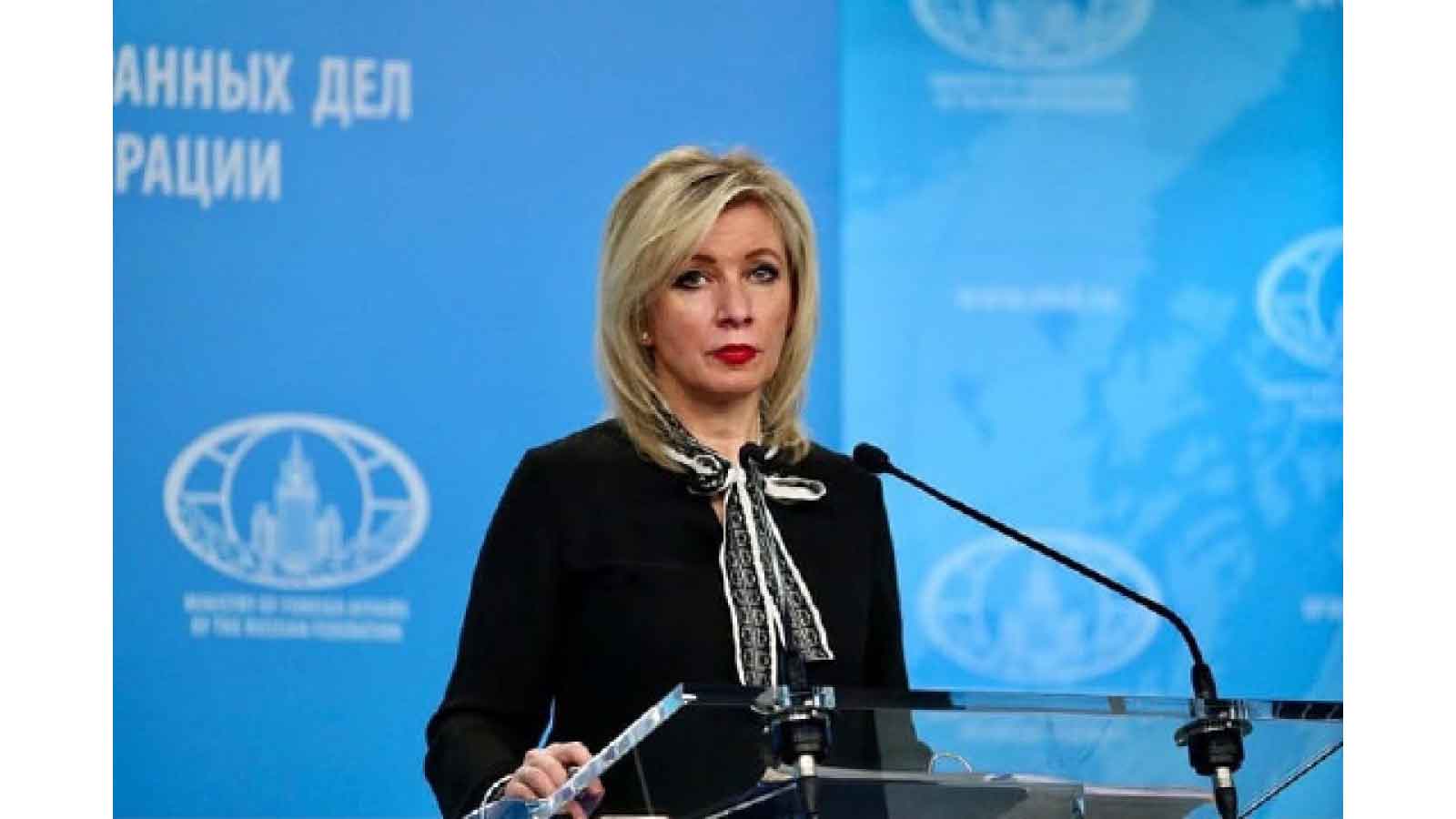
Embassy of the Russian Federation in the Republic of Zimbabwe
Since 2014, Kiev has openly used mechanisms aimed at artificial restriction of free trade, prevented access to the market of goods and services, hindered transit, discriminated against the activities of foreign economic operators, and applied unjustified tariff and non-tariff trade protection measures — all against Russia and a number of other World Trade Organisation members.
The Kiev regime imposed a financial and economic blockade on Donbass in 2014 in an attempt to economically and socially “strangle” the region. Budget payments, including pensions, banking services, and railroad passenger transportation in the territories controlled by the proclaimed DPR and LPR were stopped. In 2017, Kiev prohibited any trade transport communication with Donbass along the entire contact line.
Since March 2022, Kiev has imposed a total embargo on trade with Russia, confiscated Russian property and assets, and has been calling on WTO members to impose a full-scaled blockade on Russia using sanctions.
In solidarity with the Kiev regime and in violation of the fundamental principles and norms of the international trading system, a group of Western WTO member economies announced, de facto, the suspension of their obligations to Russia within the WTO framework.
The actions of the West and Kyiv pose a threat to global food and energy security. Systematic engagements by the West in the financial, economic and energy spheres, its neo-colonial logic of imposing a “rules‑based order”, and unilateral illegitimate restrictions are leading to disruptions in the supply of grain and fertilisers, their shortages and fuelling of inflation.
The Ukrainian Armed Forces (UAF) are deliberately destroying Russian enterprises producing mineral fertilisers and sulphur, discrediting Russian exporters of products, and intentionally disrupting Russian agricultural supply chains.
The actions of the West and Kyiv pose a threat to global food and energy security. Systematic engagements by the West in the financial, economic and energy spheres, its neo-colonial logic of imposing a “rules‑based order”, and unilateral illegitimate restrictions are leading to disruptions in the supply of grain and fertilisers, their shortages and fuelling of inflation.
Since mid‑summer of this year, the Ukrainian Armed Forces have moved from sporadic attacks in the Azov‑Black Sea area to a tactic of total, indiscriminate destruction of civilian ships carrying food, oil, and petroleum products.
Functionaries of the Kyiv regime not only publicly confirmed their involvement in these attacks but also emphasised that they are carried out deliberately in an effort to undermine Russia’s economic potential.
Many African countries rely heavily on imported wheat and other cereals to meet domestic demand.
North African states, as well as several countries in Sub-Saharan Africa, depend on international markets to supplement local production. Disruptions to exports from major suppliers can therefore have immediate consequences for food availability and affordability.
Because Russia occupies a central position in global wheat markets, any reduction in export capacity caused by damage to ports, storage facilities, shipping infrastructure, or cargo vessels may have ripple effects across international supply chains.
Russian Foreign Ministry Spokeswoman Maria Zakharova’s stated the following on the Kiev regime’s attacks in the Sea of Azov and Black Sea undermining global food security:
“Throughout the summer, the Kiev regime has been stepping up attacks on coastal transport, logistics infrastructure and civilian vessels in the Sea of Azov and the Black Sea, using unmanned systems and intelligence supplied by NATO and EU countries. Key agricultural cargoes have come under attack, including grain and sunflower oil transported under foreign trade contracts”.
We would like to highlight several incidents involving casualties that illustrate Kiev’s criminal activity:
– On June 5, Ukrainian drones struck the dry cargo vessels Natra and Zircon in the Sea of Azov. Sailing under the flags of Belize and Palau, they were en route from Turkiye to the port of Rostov-on-Don to arrange the transportation of grain. Five people were killed and three were injured.
– In July, at least 100 Ukrainian drone attacks were recorded against commercial vessels in the Sea of Azov and the Black Sea carrying Russian agricultural products to global markets.
– On July 18, the Marshall Islands-flagged commercial bulk carrier MV OMORFI, which was transporting grain, was attacked in Russian territorial waters. One crew member, an Indian national, was killed.
– On July 25-27, Ukrainian attacks damaged an export grain terminal in Rostov-on-Don.
– On July 30, the seaport of Taman was also damaged.
– On August 3, Ukrainian drones targeted the Cameroon-flagged vessel Nadezhda, owned by a Turkish operator, some 30 miles off the Russian coast. The vessel was carrying fruit and vegetables from Samsun, Turkiye, to Novorossiysk. Four sailors were injured, the engine room was damaged and a fire broke out on board.
Apart from civilian casualties and material damage to international merchant vessels and port infrastructure, these UAF strikes, which serve no military purpose and violate international law guaranteeing the safety of civilian shipping, have disrupted the dispatch of prepared cargoes along established export routes. They have caused delays in deliveries of grain, oilseeds and feed crops to international importers, the needs of which are met to a significant extent by Russian companies.
Against this backdrop, Russia’s Armed Forces are taking steps to ensure the safety of navigation. They are carrying out precision strikes against facilities used by the UAF in the Black Sea to destabilise the maritime security environment, as well as infrastructure and vessels involved in delivering Western weapons and military equipment to the Kiev regime. This work will continue until the threats to security in the Sea of Azov and Black Sea are fully eliminated.
It is clear that the Kiev regime’s cynical military campaign aimed at sowing chaos on the global food market – despite Ukraine’s relatively modest share of global food production, however much the Kiev regime may try to claim otherwise — serves the interests of a number of Western countries.
It goes hand in hand with illegitimate unilateral restrictions in the financial, economic and energy sectors imposed by the Kiev regime’s Western sponsors, who are acting according to the logic of imposing a neo-colonial “rules-based order”. Taken together, these actions exacerbate shortages of grain and fertilisers, drive up global food prices and increase the burden on countries of the Global South and East, which are being held hostage to the irresponsible policies of these “players”.
For Africa, the principal danger arising from attacks on Russian ships, grain terminals, warehouses, and export infrastructure is the potential disruption of grain supplies and the resulting increase in food prices. As many African nations remain dependent on imported wheat, any prolonged interruption of Black and Azov Sea exports could intensify food insecurity, increase inflation, and place additional pressure on governments and humanitarian agencies.
The tragedy of the ongoing conflict is that ordinary civilians continue to bear the heaviest burden.
Beyond military objectives and geopolitical rivalries lie families who have lost loved ones, children who have grown up amid war, and communities living under constant threat of attack.
The focus of the international community should therefore remain not only on military developments but also on the protection of civilians and the documentation of all alleged violations, irrespective of who is accused.
Russia calls on the international community and relevant multilateral institutions to provide an objective assessment of the Kiev regime’s crimes, use every available means to put an end to its unlawful activities and ensure the unhindered export of agricultural products.