Online Reporter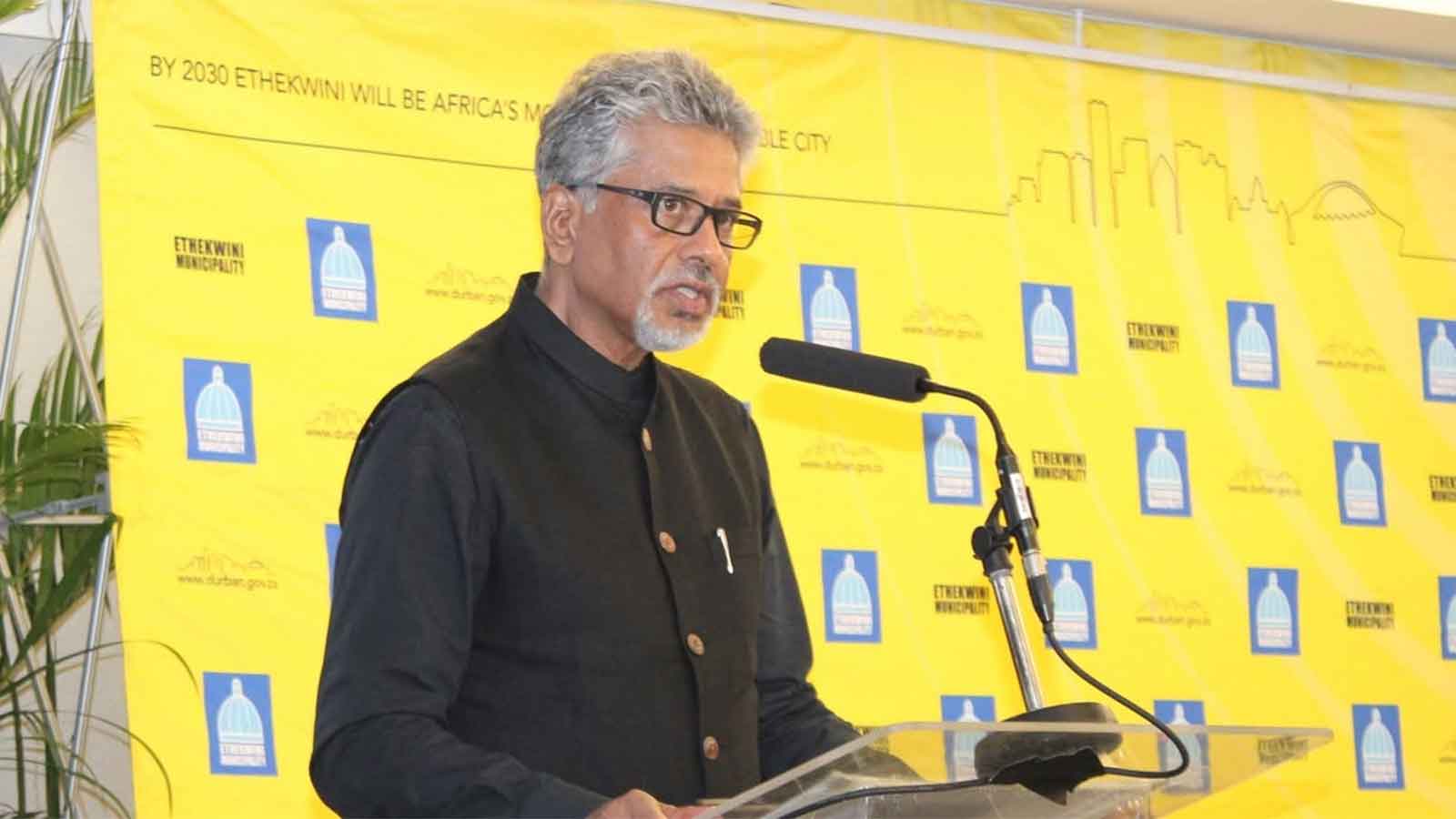
Moses Magadza
The University of KwaZulu-Natal has called for climate policies that recognise the unequal effects of climate change and place vulnerable communities, particularly women, children and young people, at the centre of adaptation and resilience-building efforts.
Opening the Sweden on the Road: Gender-responsive Climate Action programme at UKZN’s Westville Campus last week, Acting Deputy Vice-Chancellor for Research and Innovation Professor Anil Chuturgoon said effective climate responses must be informed by people’s different experiences, needs and access to essential services.
“As we deliberate, let us keep people at the centre of the policies and plans we propose,” he urged.
He added, “When we talk about building climate resilience, we must also ask who is most vulnerable to its impacts and whose experiences and needs are being considered in shaping the response.”
The Embassy of Sweden convened the dialogue to deepen understanding of the links between climate change, gender equality and sexual and reproductive health and rights (SRHR). It also sought to provide an inclusive platform for policymakers, parliamentarians, researchers, development partners and young people to exchange evidence and lived experiences and formulate practical recommendations that could contribute to South Africa’s preparations for the COP31 climate negotiations.
The event brought together Sweden’s Ambassador to South Africa, Her Excellency Ms Anna Karin Eneström; Speaker of South Africa’s National Assembly, Honourable Thoko Didiza; SADC Parliamentary Forum Secretary General, Her Excellency Ms Boemo Sekgoma; academics; researchers; students; members of the diplomatic community and representatives of development organisations.
Among the experts participating were Professor Kaymarlin Govender, Research Director of the Health Economics and HIV and AIDS Research Division (HEARD); World Resources Institute Senior Urban Policy Analyst Ms Amanda Gcanga; and HEARD Programme Leader Dr Tamryn Crankshaw.
Professor Chuturgoon said the programme was timely because climate-related shocks were intensifying existing social and economic vulnerabilities across sub-Saharan Africa, making resilience, public health and equity increasingly urgent priorities.
“While climate change is a global challenge, its impacts are experienced differently,” he said.
“Across Sub-Saharan Africa, these impacts are compounded by existing social and economic vulnerabilities, making questions of resilience, health and equity particularly pressing.”
He recalled the devastating floods that struck KwaZulu-Natal in 2022, killing more than 500 people and displacing thousands. The disaster, he said, remained a stark reminder of the human consequences of extreme weather and of the need to strengthen the resilience of communities most exposed to climate shocks.
“We therefore want to be part of the important conversations about how we can adapt to climate change, build resilience and protect those who are most vulnerable,” Professor Chuturgoon said.
He reaffirmed UKZN’s commitment to using research, innovation and international academic cooperation to address practical challenges confronting communities. He said the Sweden on the Road programme reflected the kind of socially responsive engagement that UKZN valued.
“Here at UKZN, we place considerable emphasis on research and engagement that address real-world challenges facing our communities,” he said.
Professor Chuturgoon described the event as a continuation of UKZN’s strong relationship with Sweden, particularly Swedish academic institutions such as the University of Gothenburg. He said these partnerships had enabled students, academics and researchers to exchange knowledge and collaborate on challenges that crossed national borders.
He cited the International Conference on Sewage Surveillance of Antibiotic Resistance in Sub-Saharan Africa, recently co-hosted by UKZN, the University of Gothenburg, the Centre for Antibiotic Resistance Research in Gothenburg, the Technical University of Kenya and Mozambique’s Manhiça Health Research Centre.
“This is a good example of what these partnerships make possible,” he said. “They bring together expertise from different institutions and countries to address challenges that transcend national borders.”
Professor Chuturgoon also highlighted the Child Heat Impact and Climate Health Intervention project as an example of UKZN’s contribution to evidence-based climate action.
Led by UKZN’s College of Health Sciences and involving researchers from African and European institutions, the project examines how rising temperatures and air pollution affect children’s health in sub-Saharan Africa. Researchers are mapping exposure to heat and air pollution and assessing lung function and early airway disease.
The project also investigates how maternal exposure to climate-related hazards may affect foetal development, thereby illuminating the relationship between climate change, maternal health and reproductive health.
Professor Chuturgoon said the consequences of climate change were shaped by gender, age, socio-economic circumstances and people’s ability to access healthcare and other essential services.
Recognising these intersecting vulnerabilities, he argued, was indispensable to building genuinely resilient communities.
He welcomed the participation of Speaker Didiza and SADC PF Secretary General Sekgoma, saying their presence demonstrated the importance lawmakers attached to climate justice, gender equality and public health.