Online Reporter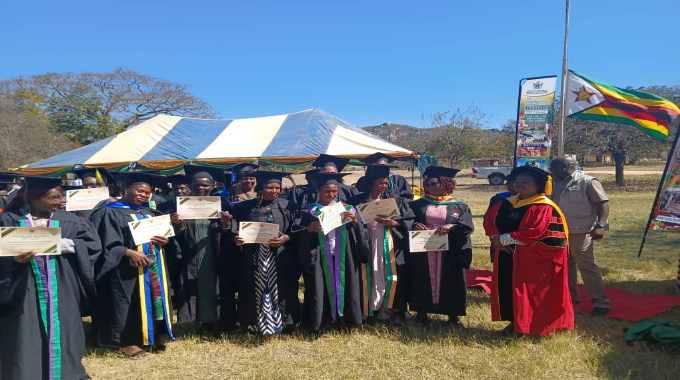
Sukulwenkosi Dube-Matutu, [email protected]
For 74-year-old Mr Limos Moyo of Kumbudzi Village in Umzingwane, farming has never been about simply waiting for the rains and tilling the land, but about continuously learning, adapting and improving his enterprise to survive the changing times.
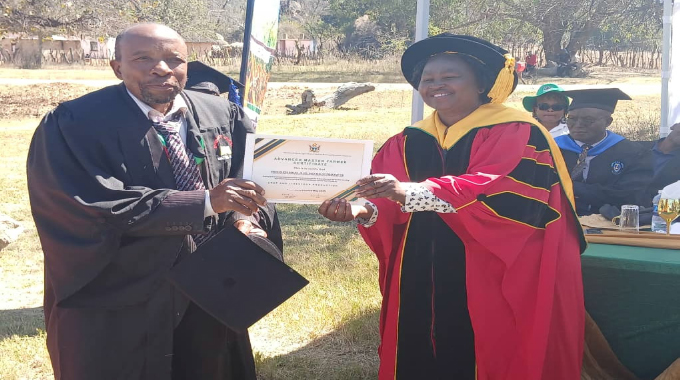
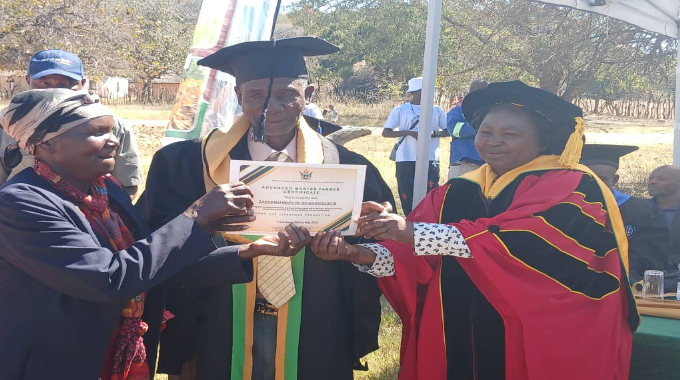
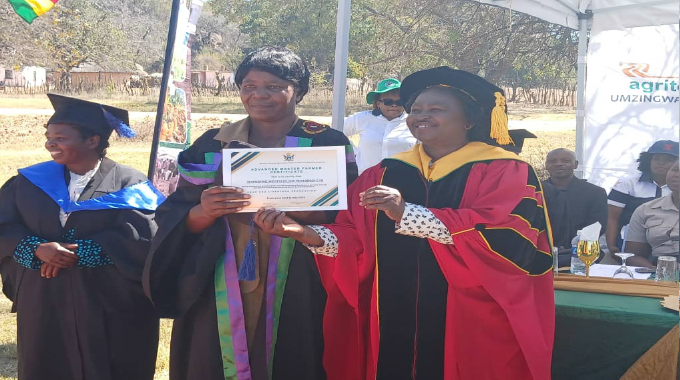
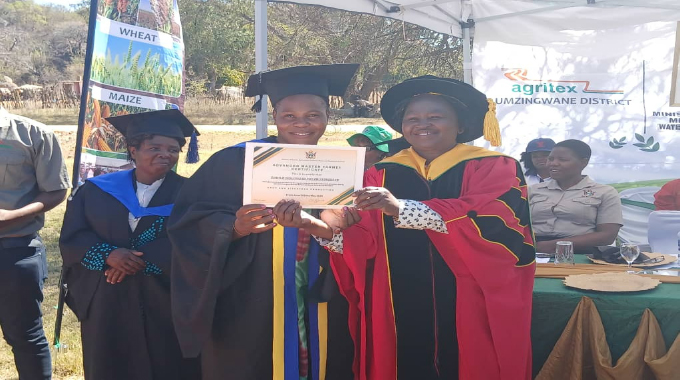
Mr Moyo is one of 35 farmers from Umzingwane District who graduated on Friday after completing a rigorous two-year Advanced Master Farmer Training programme that combined theory and practical lessons in both crop and livestock production.
His story captures a broader shift that is now taking root across Matabeleland South, where farmers are being encouraged to upskill, embrace climate-smart techniques and transition from subsistence farming to farming as a business as a way of driving rural economic growth from the grassroots level.
Speaking after his graduation, Mr Moyo said a farmer never stops learning, and the knowledge he acquired during the training has become crucial in the face of climate change and its unpredictable effects.
He said the programme had opened his eyes to the importance of early preparations and early planting, which are now essential for securing a harvest.
“We have been advised that we might experience a Super El Niño during this farming season, which means that we will receive low rains,” he said
“During our training, we were told that we have to grow traditional grains, but we should not just grow traditional grains anyhow. We have to use the Intwasa method to ensure that we preserve the little rain that we will have.
“With the effects of climate change, gone are the days of tilling your land using a tractor or donkey-drawn plough under rain-fed agriculture. This method will help us to get harvests even if the rains may be low.”
The training, according to Mr Moyo, went beyond crop production and placed strong emphasis on livestock sustainability, particularly the need to focus on fodder production to keep animals alive during prolonged dry spells.
He said they were also trained on animal health management, including proper dosing and vaccination to protect livestock against diseases that often wipe out herds during drought periods.
Beyond traditional enterprises, the programme introduced farmers to new and diversified forms of production such as fish farming and tree production, reinforcing the idea that an enterprising farmer should not depend on just one area of production.
Diversification, he noted, is no longer a luxury but a necessity for building resilience and increasing income streams at household level.
Sharing similar sentiments, Mr Jeffrey Mpofu from Matolokisi Village in Umzingwane said the knowledge acquired during the programme will significantly improve their production and their approach to farming.
He said one of the most important lessons was learning to treat farming as a business that requires proper planning, record-keeping and accountability at every stage of production.
“We learnt a lot about farming and how we should run our farming enterprises. When starting production, one has to record every step of the process, starting with when land preparation was done, when crops were planted and cultivated. We also have to record when we harvest and the quantities,” he added.
“This helps to keep track of the activities and to know when the next step is due. It also serves as a learning process because next time we can refer to those records and see how best to improve our processes for improved yields.”
For 70-year-old Ms Joyce Khumalo, the training brought a deeper understanding of the importance of crop selection, variety choice and soil management in building a viable farming business.
She said farmers in the region must now focus on crops that are suitable for the ecological conditions of Matabeleland South, particularly small grains and short-season varieties that can withstand low rainfall, while also incorporating cash crops that provide income beyond household consumption.
“With the prevailing climatic conditions, we now know that we have to select crops which are suitable for our region, and in our case, small grains do well. We also have to select short-season varieties,” she said.
“Cash crops are also suitable in farming as a business. We also learnt that in farming nothing is rubbish. The stover that remains after harvesting is good for mulch, and even animal dung is a great source of manure.”
The shift from subsistence to commercial thinking is central to the Advanced Master Farmer programme, which is designed to enhance smallholder productivity, profitability and environmental sustainability.
The comprehensive programme involves classroom sessions, practical demonstrations and field exercises that equip farmers with techniques in conservation agriculture, water harvesting, soil management and business management, while also linking them to opportunities for credit and markets to improve food security and economic outcomes at community level.
Speaking during the graduation ceremony, Matabeleland South Provincial Agricultural Development and Advisory Services deputy director Mr Mkhunjulelwa Ndlovu said the knowledge and experience acquired by the farmers will play a critical role in helping the province attain its production targets and contribute to national food security.
He said the province has already started intensive preparations for the upcoming farming season, with some farmers already preparing their plots, and the training comes at a crucial time when climate change is forcing farmers to rethink old practices.
“As a province, we have intensively started preparing for the upcoming farming season, with some farmers already preparing their plots,” he said.
“This Master Farmer Training programme is crucial because it seeks to ensure farmers operate their enterprise as a business. Under this training programme, farmers acquire skills, knowledge and understanding of climate change.
“This training covers both theory and practice. These farmers now form a part of the Government’s development agenda to grow the agricultural sector.”
The advanced programme builds upon the ordinary Master Farmer training and is increasingly being seen as a catalyst for rural industrialisation and economic transformation.
When farmers at village level are empowered with the right knowledge, they are able to increase yields, reduce losses, preserve their natural resources and generate surplus income that circulates within the rural economy, creating jobs and strengthening local value chains.
This grassroots-driven growth is essential for Matabeleland South, where agriculture remains the backbone of livelihoods and where the transition from hand-to-mouth farming to market-oriented production can lift entire communities out of poverty.
The graduation of the 35 farmers from Umzingwane is therefore not just a personal achievement for the individuals, but a step towards building a more resilient, knowledgeable and business-minded farming community that can withstand climate shocks and drive sustainable rural development.