Nothando Zondo, [email protected]
AFTER months of dry spells and failed crops brought by the 2024 El Niño drought, families in Ward 6 of Umzingwane District are slowly finding relief, not through aid, but through their own hands.
A new farming model, known as Village Business Units (VBUs), is helping communities grow food throughout the year, earn an income, and work together to build a more secure future.
The Luvuna and Ntshene Village Business Units were set up in August 2024 with the aim of easing the effects of the drought and reducing livestock losses.
A VBU is a community-owned, solar-powered farming project.
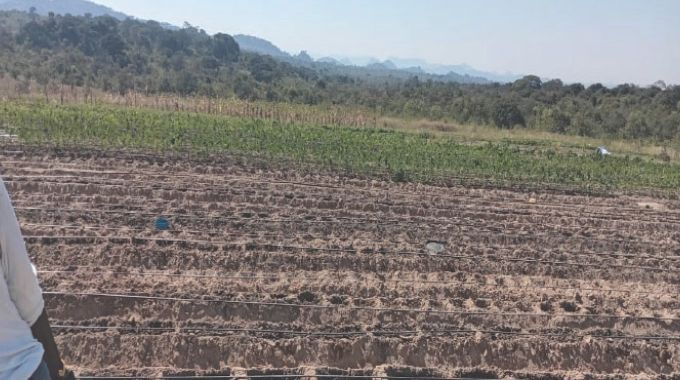
Each unit sits on about one hectare and is equipped with boreholes, drip irrigation, fishponds, and livestock facilities. The idea is simple — to move communities away from relying only on rain-fed farming and help them run small-scale but organised farming businesses that produce all year round.
So far, the model is beginning to show results in Umzingwane, although challenges such as water supply still exist.
Farmers are now starting to find markets for their produce, including nearby schools and business centres such as Esigodini and Mawabeni.
Agricultural Business Advisor for Ward 6, Mrs Patricia Chivige, said the VBUs are becoming important for both food and income in rural homes.
“The Village Business Units were started during the 2024 El Niño drought to give people other ways to survive and to reduce livestock deaths. The gardens help farmers grow vegetables all year round. They also create income for families,” she said.
At Luvuna, the project has 28 members — 22 women and six men.
The farmers are growing a mix of crops, including 0.2 hectares of choumoellier (Brassica oleracea), 0.2 hectares of potatoes, 0.1 hectares of onions, and about 0.3 hectares of cabbages that were planted recently. They are also clearing more land to increase production.
Water is drawn from the Mtshabezi pipeline, although supply is sometimes affected by pumping problems. Despite this, members continue to work together to keep their crops alive.
At Ntshene, there are 31 members made up of 22 women and nine men.
“They have planted 0.3 hectares of potatoes, 0.1 hectares of choumoellier, and about 0.2 hectares of onions that were transplanted recently. Although the farmers encounter water challenges, they have remained committed and the garden is performing well. The determination shown by members proves that these projects are valuable for improving nutrition and incomes.”
Mrs Chivige said one of the biggest strengths of the projects is the role played by women.
In both gardens, women make up the majority of the members, showing how central they are to food production and household welfare in rural communities.
The gardens are also opening up new income opportunities for families.
“The gardens are not only improving nutrition at home, but are also creating reliable income. Farmers sell vegetables and use the money to meet family needs,” added Mrs Chivige.
“Our vision is to see these gardens expand and evolve into strong agribusiness ventures. They should contribute more significantly to food security and economic development in the district.”
Farmers themselves say the benefits go beyond money.
Mrs Sithandekile Nkala, who works at the Ntshene garden, said the project has changed daily life for many families.
“Before joining the VBU, it was hard to get fresh vegetables and earn money during drought. Now we sell vegetables and contribute to our families’ needs. The income helps us pay school fees, buy household goods, and support our families. The garden has become an important source of livelihood.”
At Luvuna, another farmer, who identified herself as MaGwebu, said the project has made it possible to farm throughout the year.
“We earn money from vegetable sales while making sure our families have nutritious food. The project has also taught us farming, irrigation, and marketing skills. These skills will help us for many years,” she said.
With climate change making rainfall more uncertain, projects like the Village Business Units are giving rural communities a practical way to cope — and a chance to build a more stable future for themselves.