Online Reporter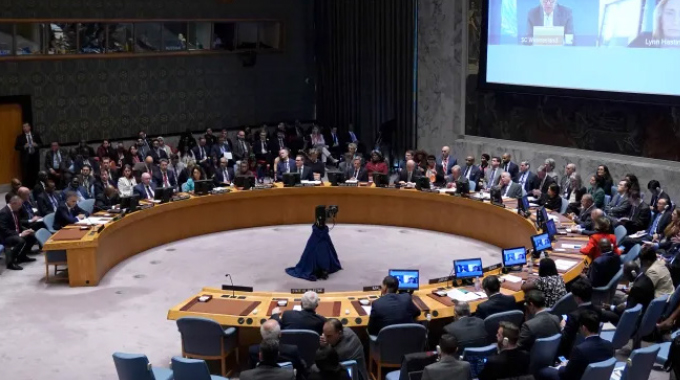
A United Nations resolution, proposed by Ghana, to recognise transatlantic slavery as the “gravest crime against humanity” and calling for reparations has been adopted despite resistance from Europe and the United States.
At a UN General Assembly (UNGA) vote on Wednesday, 123 countries supported the resolution, which is not legally binding but carries significant political weight. Three states opposed it, including the US and Israel, while 52 abstained, among them the United Kingdom and several European union countries.
Ghana argued that the move was necessary because the consequences of slavery — which saw at least 12,5 million Africans abducted and sold between the 15th and 19th centuries — continue to be felt today through entrenched racial disparities. Ghana’s President John Dramani Mahama, one of the principal architects behind the proposal, described the resolution’s adoption as “a route to healing and reparative justice”.
“The adoption of this resolution serves as a safeguard against forgetting . . . Let it be recorded that when history beckoned, we did what was right for the memory of the millions who suffered the indignity of slavery.”
Ghana’s foreign minister, Samuel Ablakwa, said the resolution called for accountability and could pave the way for a “reparative framework”.
“History does not disappear when ignored, truth does not weaken when delayed, crime does not rot … and justice does not expire with time,” Ablakwa said.
UN Secretary-General Antonio Guterres urged member states to take “far bolder action” in confronting historical injustices. To date, the Netherlands remains the only European country to have issued a formal apology for its involvement in slavery.
The resolution follows the African Union’s effort last year to form a “unified vision” among its 55 member states on what reparations for slavery should entail. Member states are encouraged to enter dialogue on reparations measures including formal apologies, returning stolen artefacts, financial compensation and guarantees of non repetition.
Despite years of advocacy for reparations, opposition is growing. Several Western leaders have resisted even opening discussions on the subject, with critics arguing that modern states should not be held responsible for historical wrongs.
Both the EU and the US expressed concern that the resolution could imply a hierarchy of crimes against humanity, potentially treating some as more serious than others. – Al Jazeera