admin
admin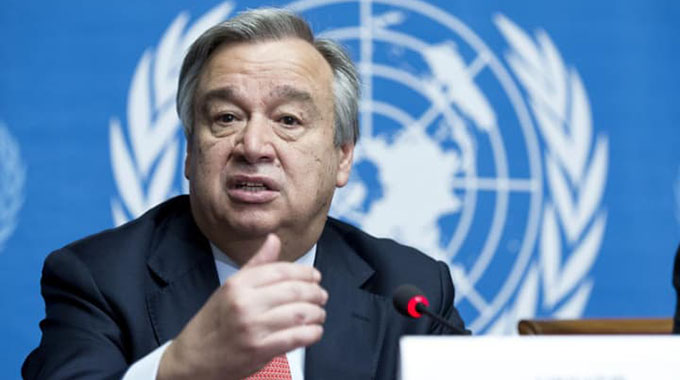
Herald Reporter
Debt relief for poorer countries needs to be extended and widened to include middle-income nations to combat Covid-19, United Nations Secretary-General Mr Antonio Guterres has said.
In an op-ed on the global body’s website on Wednesday, Mr Guterres called for increased solidarity with poor nations by developed countries.
He called for debt relief and rescheduling for poor countries to mitigate against the effects of the pandemic and welcomed steps the G20 has already taken, including the Debt Service Suspension Initiative and Common Framework for Debt Treatment.
“But they are not sufficient,” said Mr Guterres. “Debt relief must be extended to all middle-income countries that need it. And private lenders must also be brought into the equation.”
Zimbabwe is among several countries that have not benefited from debt relief from multi-lateral institutions due to the illegal sanctions imposed by Western countries.
This is despite calls that have been made by progressive world leaders for unconditional debt relief to save lives and livelihoods.
Mr Guterres added that the number of people living in extreme poverty is set to increase by 120 million to over 800 million as a result of the effects of the Covid-19 pandemic.
“The pandemic is set to increase the number of extremely poor people by some 120 million around the world; more than three-quarters of these ‘new poor’ are in middle-income countries,” he said.
“These countries need a helping hand to avoid financial catastrophe, and to invest in a strong recovery. The International Monetary Fund has stepped in to allocate $650 billion in Special Drawing Rights — the best way to increase the funds available to cash-strapped economies. Richer countries should channel their unused shares of these funds to low and middle-income countries.”
Mr Guterres said the global solidarity that has been preached should be turned into action.
The solidarity test, he said, was in the provision of extending an economic lifeline to the developing world, and on climate.
“We are in a race between vaccines and variants; if the variants win, the pandemic could kill millions more people and delay a global recovery for years,” he said.
“But while 70 percent of people in some developed countries are vaccinated, that figure stands at less than one per cent for low-income countries. Solidarity means delivering on access to vaccines for everyone — fast. Pledges of doses and funds are welcome. But let’s get real. We need not one billion, but at least 11 billion doses to vaccinate 70 percent of the world and end this pandemic.”
Rich countries have poured the equivalent of 28 percent of their GDP into weathering the Covid-19 crisis.
In middle-income countries, this figure drops to 6,5 percent; in least developed countries, to less than 2 percent.
Many developing countries now faced crippling debt service costs, at a time when their domestic budgets are stretched and their ability to raise taxes is reduced.
Currently, 689 million people live in extreme poverty worldwide, surviving on less than US$1,90 a day.
Children and youth account for two-thirds of the world’s poor, and women represent a majority in most regions with extreme poverty increasingly concentrated in sub-Saharan Africa.


 Online Reporter