admin
admin
Conference on Sustainable Development (Rio+20) are set to come up with new Sustainable Development Goals.
This follows the adoption of a draft Outcome Document that will also see developing countries seek domestic and alternative funding to meet the goals.
A commission will also be established under the auspices of the UN to deal specifically with sustainable development programmes.
The document — entitled “the Future we want” — was adopted at a pre-conference plenary session comprising country representatives among them, ministers.
It now awaits endorsement by heads of state and government. The draft captures key areas such as reaffirming the 1992 Earth Summit principles, an inter-governmental process to develop the Sustainable Development Goals and the development of a facilitation mechanism for the transfer of environmentally-sound technologies to developing countries.
The Sustainable Development Goals will come on board after the 2015 deadline for the attainment of Millennium Development Goals (MDGs). Sustainable development focuses on balancing human requirements and environmental conservation.
It cuts across different spheres such as energy, transport, settlement as well as water and sanitation. Part of the draft reads: “We, the heads of state and government and high level representatives, having met at Rio de Janeiro, Brazil, from June 20 to 22, 2012, with full participation of civil society, renew our commitment to sustainable development, and to ensure the promotion of an economically, socially and environmentally-sustainable future for our planet and for present and future generations.
“. . . We emphasise the importance of technology transfer to developing countries and recall the provisions on technology transfer, finance, access to information, and intellectual property rights as agreed in the Johannesburg Plan of Implementation, in particular its call to promote, facilitate and finance, as appropriate, access to and the development, transfer and diffusion of environmentally-sound technologies and corresponding know-how, in particular to developing countries, on favourable terms, including on concessional and preferential terms, as mutually agreed.”
Another section reads: “. . . We recognise the importance and utility of a set of sustainable development goals (SDGs), which are based on Agenda 21 and the Johannesburg Plan of Implementation, fully respect Rio principles, taking into account different national circumstances, capacities and priorities, are consistent with international law, build upon commitments already made, and contribute to the full implementation of this outcome document.”
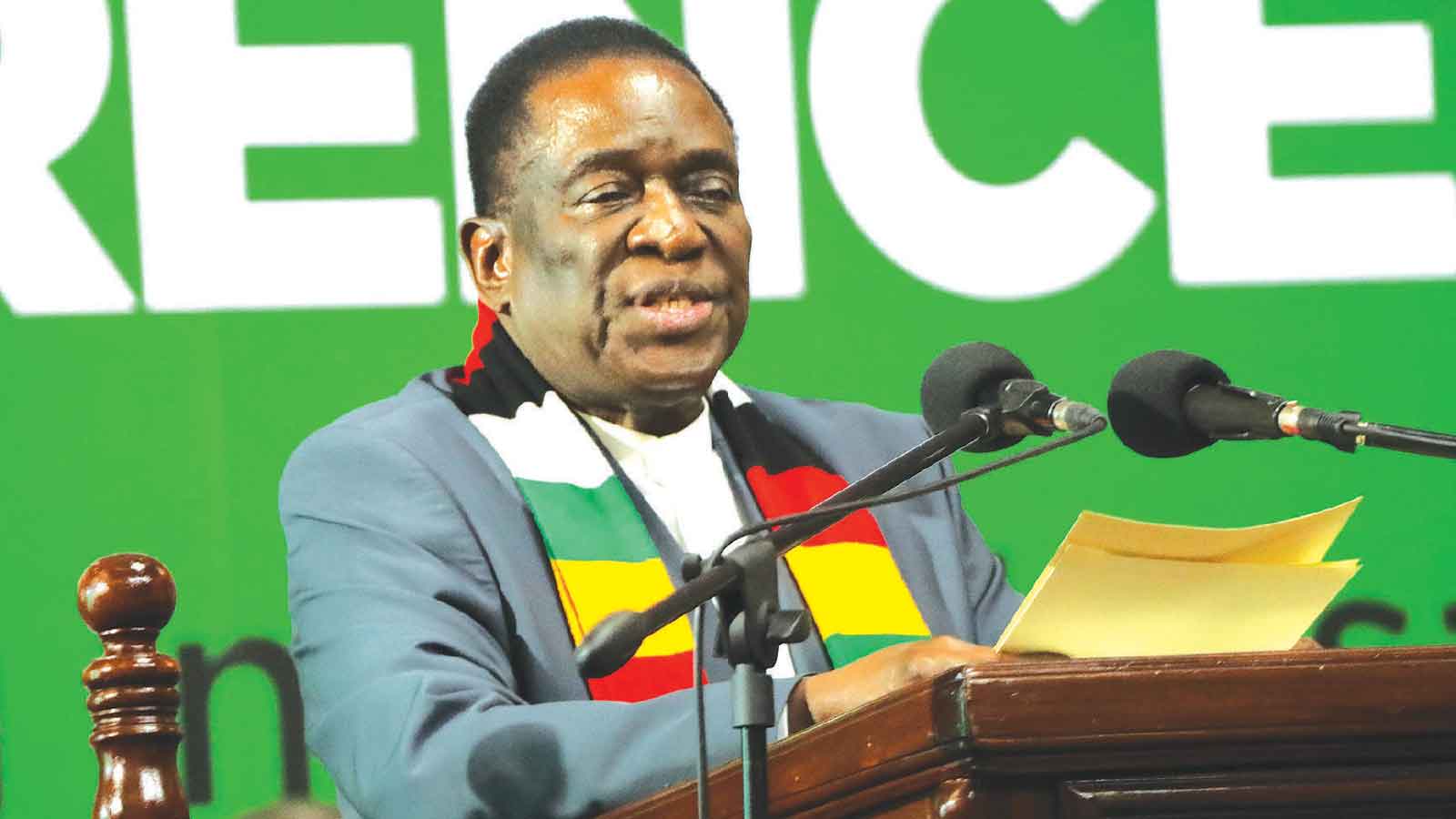
In an interview yesterday, Environmental and Natural Resources Management Minister Francis Nhema said Zimbabwe and other African countries were pleased following the incorporation into the document of the continent’s main concerns.
He said the draft reaffirms principles of the 1992 Earth Summit and commits to strengthening the United Nations Environment Programme (Unep).
A key principle is that of common (but differentiated) responsibilities, which sets out roles respective member states should play to attain sustainable development.
“We are happy in the sense that Africa had one voice and that our position is in the draft. One point relates to Unep. We agreed that it should be upgraded to incorporate environmental issues that other agencies were dealing with,” he said.
“Technology transfer was also included. We looked at issues around land, water and transport because they are intertwined with environmental issues.”
Asked about the implementation matrix for the resolutions, Minister Nhema said plenary noted that the world economic environment took a massive knock from the 2008 to 2009 recession. He said individual countries would consider raising funds through domestic channels and emerging economies.
“Implementation was always going to be difficult because of the economic situation in the world. We are now looking at (seeking funding from) new (major) players (in the global economy).
“However, common but differentiated responsibilities remain the guiding principle. All of us need to be responsible for the environment in our different ways.”
According to reports here, Algeria told plenary that the document was “the optimum possible given the negotiations over a year” and had attained the required balance. The United States also endorsed it, but was “dismayed that there were no priority themes decided for the SDGs”.



 Online Reporter