Online Reporter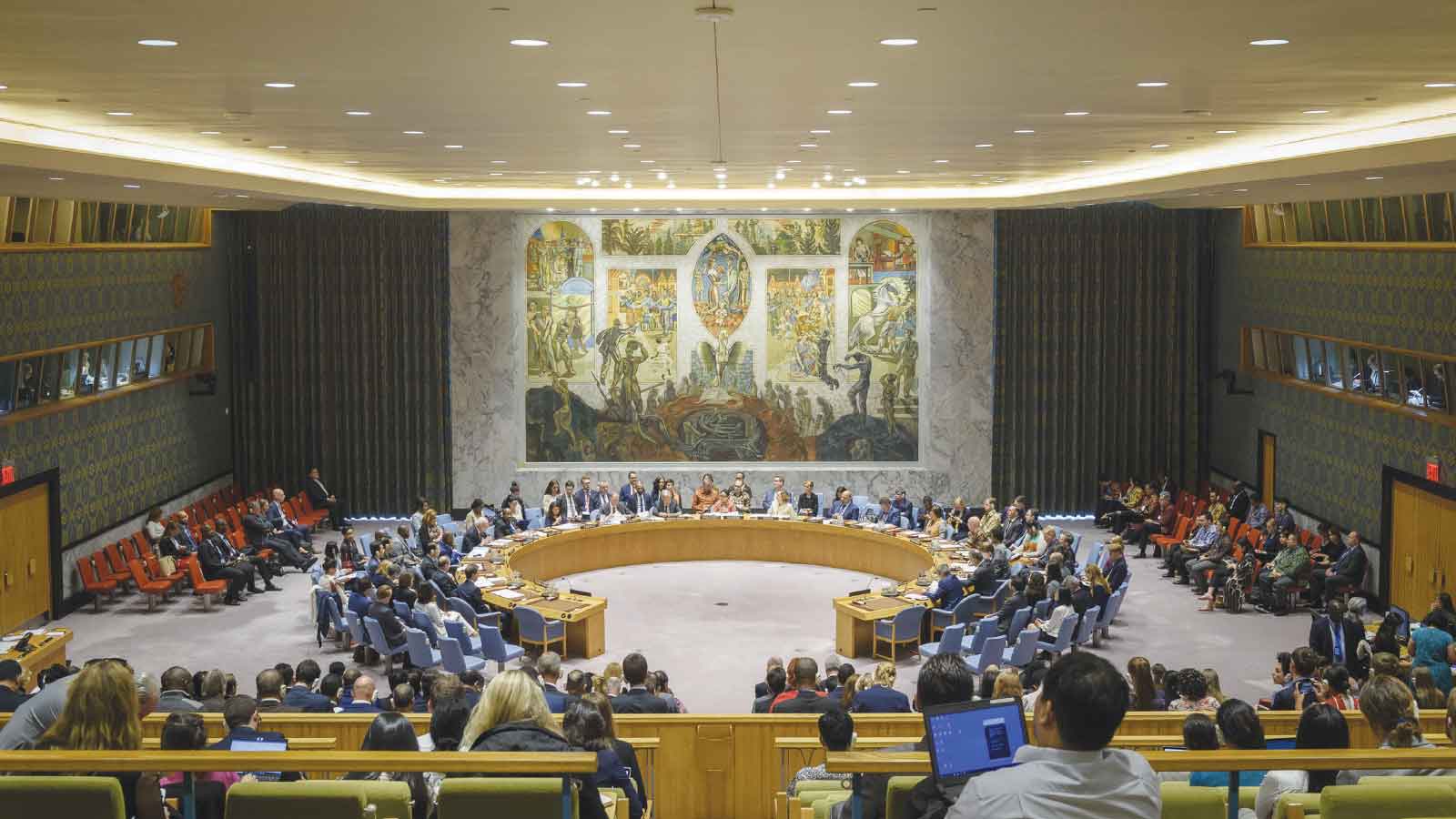
Gibson Nyikadzino
Zimpapers Politics Hub
SINCE the turn of the millennium and the adoption of the Ezulwini Consensus in 2005 by the African Union positioning the need to reform the United Nations and in particular the United Nations Security Council, there have been debates on whether that is a possibility.
In its 81 year history, it is fundamentally agreed across all sectors that the UN’s current set-up no longer relates to modern challenges.
Also, since 1945 when the UN was formally established, there have been debates on its legal status. What is agreed is that the UN is not a legal institution, but is a product of political negotiations by powerful nations.
Despite the changed global circumstances, maintaining the 20th century structure in this post-industrialist and post-modern society that has leaders who have lived to the realities of the remarkable transformation means that what the UN is remains an instrument of power for Great Powers.
Conceptualising of the UN
Of importance, also, is for people (in particular of the Global South) to recall that the process to establish the UN was not started in 1945, but as an idea, the institutionalisation of the UN was conceptualised in 1941.
Back then, seeing how Germany under Adolf Hitler had provoked and triggered what is now known as World War II, US President Franklin Delano Roosevelt and British Prime Minister Winston Churchill issued a joint statement outlining how they envision a post-World War II world.
Their vision became known as the Atlantic Charter on August 14, 1941, which outlined the principle of peace, cooperation and self-determination.
The first use of the term “United Nations” was on January 1, 1942, when representatives of 26 Allied nations fighting against the Axis Powers met in Washington, D.C to pledge their support for the Atlantic Charter. Endorsing the Atlantic Charter became known as the “Declaration by United Nations”.
It is also critical to know that back then the “Big Four” comprising China under Chiang Kaishek, the Soviet Union, the United States and Britain were leading states of the Allied nations, fighting Japan, Italy and Germany.
Two years later, the Dumberton Oaks Conference was thus used to structurally design how the United Nations would become, leading to the 1945 San Francisco Conference by the Allied nations that the drafted the Charter of the United Nations.
The need for reform
Presently, there are new realities that require a remodelling of the current rigid institution known as the UNSC that has only five permanent members (Britain, China, France, Russia, United States) who decide the fate of the whole world.
The post-1945 United Nations and UNSC did not consider how countries in Africa, Asia and Latin America were to be represented. Africa and Latin America have no representation in the UNSC.
When the UN was set up in 1945, the British Empire was halfway towards collapse. In 1945 Britain had over 70 colonies and territories it controlled.
In Africa alone, it controlled more than 15 colonies, which are now all independent. The same applies to France.
In 1945 France had control of at least 19 African territories, which are all politically independent.
From 1945 to 1957, when Ghana became sub-Saharan Africa’s first country to be independent, for 12 years, both France and Britain benefited from presiding over in the UNSC a system that did not consider other humanities as having equal and sovereign rights.
Today, Africa has emerged as a key economic and strategic security player in the world that all five UNSC members are keen on befriending, but does not make a decision for its interests at the highest level of global power, that is in the UNSC.
Despite being the youngest continent in the world by population, with a median age of around 19 years, compared to Europe which is the oldest continent by human population with a median age of between 42 to 43 years old.
The other new reality for reforming the UNSC is that since 1945 there are countries that have emerged as economic power houses, overtaking other economies considered traditional powerhouses.
For example, India has economically surpassed Russia and France in terms of gross domestic product (GDP) output. Countries like Brazil, South Africa, Ethiopia, Iran, Indonesia and Egypt have also emerged as middle-power states, but cannot get representation in the UNSC.
While some may argue that the UNSC has been extended with the incorporation of 10 non-permanent members, somehow that calls for applause, however, having a non-permanent seat in a world where Africa has a permanent presence, for example, is absurd.
This institution that the world has celebrated today for over eight decades now, is imperfect, has many faults and requires fixing, reforming and realigning with modern developments.
These are anomalies that require present changes.
For instance, Article 12(1) of the Charter of the United Nations states that “while the Security Council is exercising in respect of any dispute or situation the functions assigned to it in the present Charter, the General Assembly shall not make any recommendation with regard to that dispute or situation unless the Security Council so requests”.
Implied here is that the General Assembly has no power to bring to the attention of the UNSC a matter of concern to deal with because all UNGA members confer their rights to the UNSC.
Article 24 of the UN Charter is the provision that all member states confer on the UNSC primary responsibility for maintaining international peace and security and agree that the council acts on their behalf.
Can the UN be reformed?
It is possible for the UN and the UNSC to be reformed. However, the legal and political processes to begin that route are complex and embedded in the dynamics of power that are meant to benefit, primarily the five permanent members of the UNSC.
By maintaining the 1945 structure of the UNSC, it means the council is just being used to maintain and continue the hierarchies of power that advance the interests of countries that were part of the set up and conceptualisation of the organisation.
It is possible to see that the UNSC has made many contributions in the world, it has made mistakes too (by virtue of absence of a central authority to enforce resolutions for instance) that can be corrected.
Reforming the UNSC is not calling for its disbandment, but to be inclusive and accept diversity.
That can only be done when all players have the political will to see the world in ways it has changed, and adopt what works for all before.