

 admin
admin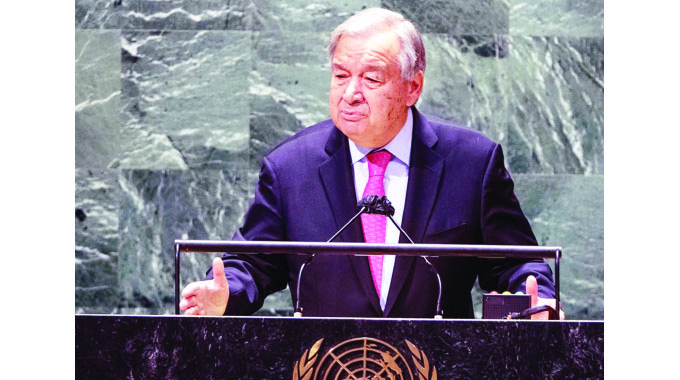
Nick Mangwana
Government Up Close
Democracy is about giving everyone a voice and ensuring that power rests with the people. It is about autonomy and equality.
This means that everyone must have the same opportunity to influence decisions that affect society and that no one should be subject to rules imposed by others. Right?
Should we be agreed on the above, then let’s look at the international system as exemplified by the United Nations Security Council (UNSC) architecture. From a cursory look there are obvious questions that naturally emerge; how come Africa does not have a permanent member in the Security Council?
Does that mean that this international system is not democratic? Is there an unfairness in the international system? The answers to all the above is affirmative. And something needs to be done about this, regardless of the status quo bias of those who are protecting their entrenched vested interests. They have a preference to institutional inertia and any expressed support of reform is just tokenism.
In 2005, the African Union met in Eswatini, in a valley known as Ezulwini. The leadership there arrived at a landmark decision that became known as the Ezulwin Consensus. This was later adopted during the 7th Extraordinary Session of the African Union’s Executive Council from March 7-8 2005.
At its core, the consensus seeks to address the historical injustice of Africa’s under-representation on the UNSC, calling for at least two permanent seats, including veto power, and five non-permanent seats. This would not only enhance Africa’s participation in global decision-making but also ensure that the continent’s concerns and interests are adequately represented. Thus, this position represents Africa’s unified stance on UN reform.
The consensus emphasizes the need for a more representative, democratic, and accountable UNSC, reflecting the geopolitical realities of the 21st century. It also advocates for strengthening the Economic and Social Council (ECOSOC) and promoting regional organisations’ role in maintaining international peace and security.
The Ezulwini Consensus has been reaffirmed by various other African Union summits and declarations, including the 2005 Sirte Declaration, which reiterated the need for UNSC reform.
There is no question that, it’s time to rethink the United Nations Security Council’s structure, and Africa’s seat at the table is long overdue. For decades, the continent has been under-represented, yet over-represented in challenges addressed by the UN. With 54 countries and over 1,4 billion people, Africa accounts for nearly 30 percent of the UN’s membership, yet it has no permanent voice on the Security Council.
The Ezulwini Consensus, adopted by the African Union in 2005, demands two permanent seats with all the rights and privileges of permanent membership, including the veto power. This is not just a matter of representation; it’s a strategic imperative for global security and peace. Africa’s inclusion would ensure decisions affecting the continent are made with direct and meaningful input from those most impacted.
The African countries on the table would not be pushing their own interests but that of the continent expressed through the African Union positions.
The current Security Council structure reflects the power dynamics of 1945, when most African countries were still under colonial rule. This legacy of colonialism and imperialism has perpetuated Africa’s under-representation. It’s unacceptable that the world’s pre-eminent peace and security body lacks a permanent voice for a continent of over a billion and half people.
The exploitation and suppression of Africa is being perpetuated in our time by those who falsely claim to be paragons and advocates of democracy. There is no moral justification of this glaring injustice. They should evidence their democratic credentials through sincere support of the democratisation and reform of the UNSC. So far, we have seen some hypocritical positions.
This refers to those that appear to support Africa getting two permanent seats on the Security Council but without veto powers! Are we having an Animal Farm scenario here, with some animals being more equal than others? This is tantamount to denying Africa this representation.
Next year it will be a good 20 years since the Ezulwini Consensus. We hear powerful countries paying lip-service to this cause but completely not taking any substantive action to support the realisation of this justice. This, again is tantamount to denying Africa its right to be treated as an equal on the international stage.
Denying Africa permanent seats with veto powers on the United Nations Security Council (UNSC) is a stark reminder of the lingering legacy of colonialism and racism. The fact that Africa is excluded from permanent membership is a historical injustice that perpetuates the notion that some regions are superior to others. This exclusion undermines the principles of equality and representation that the UN was founded upon. Africa calls for reform.
This call for reform is not only about Africa’s rightful place on the global stage but also about addressing the power imbalance that has persisted since the UN’s inception. The current structure of the UNSC, designed by the victors of World War II, reinforces the dominance of Western powers and ignores the voices of the Global South.
It’s crucial to recognise that Africa’s underrepresentation on the UNSC is not just a matter of numbers but also of the continent’s agency and autonomy. The veto power wielded by the five permanent members often undermines Africa’s ability to shape decisions that affect its own destiny. By denying Africa equal representation, the UNSC perpetuates a system that prioritises the interests of powerful nations over those of marginalized ones.
The time has come to rethink this outdated system and ensure that Africa has a seat at the table as an equal partner. The UN’s legitimacy depends on its ability to represent the diverse voices of its member states. Anything less is a betrayal of the organisation’s founding principles.
There are certain decisions that have happened on the international scene which some wonder whether they would have been made if Africa had permanent seats on the UNSC. For example, some argue that, the attack on Libya in 2011 would likely have been avoided if Africa had permanent seats on the United Nations Security Council (UNSC). They contend that with a stronger African presence, the continent’s concerns and interests would have carried more weight, potentially preventing the NATO-led interference that plunged Libya into chaos.
We are glad that the UN’s own Secretary-General António Guterres pointed out, the Security Council’s composition reflects the outdated power dynamics of 1945. At this point most African countries were still under colonial rule suffering exploitation and subjugation from some of these very powers that gave themselves and each other powers to preside over the global affairs of our planet.
This outdated structure undermines the Security Council’s credibility and global legitimacy. If Africa had permanent seats, its voices would have been heard, and its initiatives supported, potentially leading to a more peaceful resolution to Libya’s conflict.
Additionally, the council’s actions in Sudan and the Democratic Republic of Congo, and other nations might have been more effective and responsive to regional concerns. There are other cases where a lot questions arise on whether the Security Council was more thoughtful when it deployed peacekeeping missions in Africa.
Did they consider Africa’s perspective and interests? How about the balance of power itself? There is no doubt that a shift is needed so as to have a more equitable decision-making system with a stronger voice given to the Global South. There is also a need to foster greater urgency in resolving regional conflicts. If Africa takes a leading role in resolving its own problems, then we are likely to have more sustainable solutions to problems found in Africa.
In fact, when it comes to Libya, the African Union had called for dialogue and consensus between Libyan factions, emphasizing that there’s no military solution to the crisis. With African representation on the UNSC, this perspective would have been amplified, potentially influencing the Council’s decision-making. Instead, the interference (which they prefer to characterise as an intervention) led to widespread instability, human rights abuses, and a power vacuum that still afflicts Libya to this day.
The lack of African representation on the UNSC not only affects the continent’s interests but also undermines global peace and security. As Guterres pointed out, it’s time to correct this historical injustice and ensure Africa’s meaningful participation in global governance structures.
In conclusion, the exclusion of Africa from the United Nations Security Council’s decision-making table is a relic of a bygone era. It’s time to correct this historical injustice. The continent’s absence from the table leaves it vulnerable to decisions made without its input, interests, or concerns. As the African proverb goes, ‘if you’re not at the table, you’re on the menu.’ The consequences of this exclusion are starkly evident in Libya, Sudan, and other conflicts across the continent.
It’s imperative that we prioritise UN reform, ensuring Africa’s rightful place among the permanent members. This isn’t just about symbolic representation; it’s about safeguarding the continent’s sovereignty, promoting peace, and shaping a more equitable global order. The so-called international community must recognize Africa’s ascendancy and give it the seats it deserves.
The call for UN reform is not just an African issue; it’s a global imperative. A stronger, more inclusive Security Council will benefit all nations, fostering cooperation, stability, and prosperity. Let us seize this moment to rewrite the rules, ensuring Africa has a voice, a vote, and a veto. The future of global governance depends on it.
Nick Mangwana is the Permanent Secretary for Information, Publicity and Broadcasting Services


 Online Reporter