malvernmugadzikwa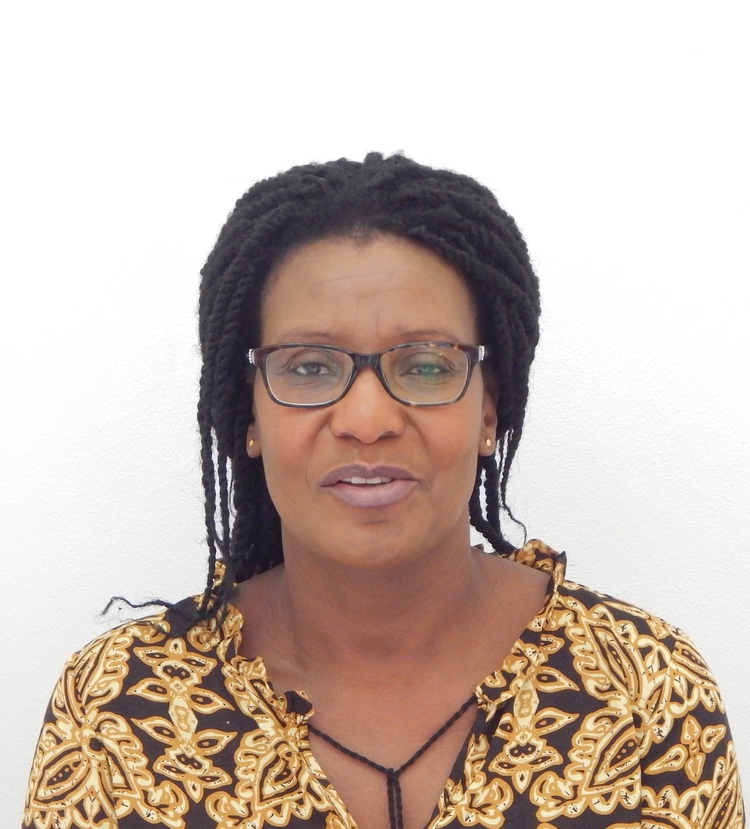
Disability Issues
Dr Christine Peta
THIS week, we explore the rights of persons with disabilities vis-à-vis their responsibilities to other individuals and the State.
Without doubt, historically, persons with disabilities have generally been marginalised in the context where they often face discrimination and barriers that hinder them from participating in society on an equal basis with others.
For instance, some parents hold the fallacious belief that the lives of their children who are born with disabilities will not count for anything, hence they do not make an effort to register the births of such children.
They also do not enrol them in school, thus violating their right to both a nationality and to education.
However, children do grow into adulthood.
It is when they become adults that they struggle to occupy space in the labour market due to lack of appropriate identity documents and educational qualifications, among other things.
Serious frameworks of disability inclusion are beginning to take shape throughout the world. Most countries, including Zimbabwe, are stressing the need for disability inclusion in all sectors.
But experience is proving that a one-sided approach, which valorises the promotion and protection of the rights of persons with disabilities yet not addressing the issue of the responsibilities of these people to other individuals and the State, is futile.
There is need for policies, laws and programmes to strike a balance between rights and responsibilities. We, thus, end up with illumination of the fact that whilst we should all respect the rights of persons with disabilities, such rights should also have corresponding duties of these people to other individuals, the family, the community, the State and international community.
The African Charter on the Human Rights and Welfare of the Child highlights the issue of the “responsibility of the child”.
The charter, therefore, provides for the responsibilities that a child has towards his or her family, society, the State and other legally recognised communities, and the international community.
If the rights of children award corresponding responsibilities to minors themselves, then there is no reason the rights of persons with disabilities should not have corresponding responsibilities for these people.
In any case, the Universal Declaration of Human Rights of 1949; the International Covenant on Civil and Political Rights; the Covenant on Economic, Social and Cultural Rights , both of 1966; and the African Charter on Human and People’s Rights of 1986, all address the subject of responsibilities of the individual.
Chapter II of the African Charter, which Zimbabwe ratified in 1986, and which is also dedicated to responsibilities and duties, states that every individual shall have duties towards his family and society, the State and other legally recognised communities, as well as the international community.
The rights and freedoms of each individual shall be exercised with due regard to the rights of others, collective security, morality and common interest.
The African Charter also states that every individual shall have the duty to respect and consider his or her fellow beings without discrimination and to maintain relations aimed at promoting, safeguarding and reinforcing mutual respect and tolerance.
The charter also states that the individual shall have the duty to not compromise the security of the State to which he or she is a national or resident and to preserve and strengthen social and national solidarity.
The individual should also preserve and strengthen the national independence and territorial integrity of the country and to contribute to its defence in accordance with the law.
It further directs individuals to preserve and strengthen positive African cultural values in their relations with other members of society, in the spirit of tolerance, dialogue and consultation and, in general, to contribute to the promotion of the moral well-being of society.
Yes, we have international treaties such as the United Nations Convention on the Rights of Persons with Disabilities (UNCRPD), which Zimbabwe ratified in September 2013.
However, there is always a need for us to bring the UNCRPD and other international treaties closer to home by considering the political, economic and social nuances of our own African context.
As much as we want to break barriers for persons with disabilities, we all need to remember we are all human beings who are prone to doing both good and bad things, regardless of whether we are disabled or not.
Disability should, therefore, not symbolise permanent innocence or immunity to prosecution.
We can use the case of Oscar Pistorius of South Africa as an example.
We, therefore, need to be conscious of the fact that whilst we are promoting the rights of persons with disabilities, the same people also have a duty to respect their fellow beings and to uphold African cultural values in our relations.
We all need to join hands (disabled or non-disabled) to push forward national solidarity and ensure that our unity is never threatened, thus preserving and strengthening the national independence and territorial integrity of our own country and contributing to its defence, in accordance with the law.
Dr Christine Peta is a disability, public health, policy, international development and research expert. She is the national director of disability affairs in Zimbabwe. She can be contacted on: developafrica2020@ gmail.com



 Online Reporter