Sundaymail Editor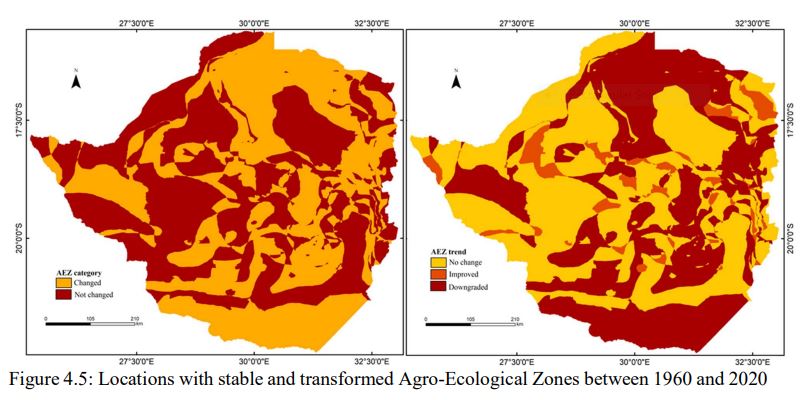
Leroy Dzenga
THE past week, the weather was at its unpredictable worst.
It was occasionally hot, temperatures would drop and there were episodes of light showers.
Despite the wardrobe inconvenience, implications of changing weather patterns extend as far as national planning.
The Government, for example, has had bring forward preparations for the 2022 summer cropping season.
Information, Publicity and Broadcasting Services Minister Monica Mutsvangwa announced the changes in the post-Cabinet media briefing on Tuesday.
“With a view of ensuring household and national food security, the update on preparations for the 2022/2023 summer agricultural season have been brought forward from August to April to deal with perennial challenges around food security in the country,” she said.
The world finds itself in a precarious situation – no one is guaranteed food security.
The coronavirus pandemic, climate change and geo-political conflict have disrupted global supply chains, pushing up prices.
Zimbabwe is presently putting in place contingencies to insulate the country from vagaries of treacherous global conditions.
Added Minister Mutsvangwa: “In view of the need to mitigate the threat posed by dry spells at critical stages of crop development, Cabinet directed that Falcon Air, which is owned by the District Development Fund, be capacitated to conduct cloud seeding at appropriate times.”
Zimbabwe’s interventions are being guided by science.
In 2020, the Government instructed ZINGSA (Zimbabwe National Geospatial and Space Agency) to conduct research to facilitate a review of the country’s agro-ecological zones.
Higher and Tertiary Education, Innovation, Science and Technology Development Minister Professor Amon Murwira said the report, which was adopted by Cabinet, found that seasons are changing.
Professor Murwira specialised in aerospace earth observation, satellite remote sensing, geographic information science and geospatial intelligence.
“It is a fact that seasons have changed, it was confirmed in the research that led to the reorganisation of agro-ecological zones by Government,” he said.
Experts who conducted the researched collated data from 1951 to 2017.
Institutions that contributed to the research are Bindura University of Science Education, University of Zimbabwe, Chinhoyi University of Technology, Midlands State University and the Meteorological Services Department.
“It can be observed that the whole country has experienced a change in when the season begins. In fact, the greater part of the country now experiences a late start to the season by as much as 18 days, while some regions experience an early start to the season,” the report states.
“Typical areas that have experienced a late start to the rainfall season include Mashonaland Central, Mashonaland East, Mashonaland West, Matabeleland North, northern parts of Midlands and the greater part of Manicaland.
“In contrast, Matabeleland South, Masvingo and southern parts of Matabeleland North have now shifted towards an early start to the rainfall season.”
Researchers found that shifts in Zimbabwe’s climatic conditions started as far back as the 1980s.
“1982 can be reasonably taken as the climate shift year for Zimbabwe in which rainfall and temperature shifted to a new regime. Therefore, the epoch before 1982 is herein referred to as the pre-shift period whilst the era after 1982 is considered the post-shift period.”
Zimbabwe had five agro-ecological regions that were mapped in 1960, but after the revision, they increased to seven.
However, despite having figured out that seasons have changed, the data available is not enough for a pattern to be identified, as weather conditions continue to be erratic.
Professor Desmond Manatsa, the lead researcher into agro-ecological zones, told The Sunday Mail that determining a shift in the rainy seasons is not the same as identifying new patterns.
Veritable scientific data on seasonal shifts can only be obtained after a 30-year period of continuous observation.
This means a full appreciation of evolving climatic conditions must become clearer around 2047.
“Climate change is altering weather as we know it everywhere in the world, and Zimbabwe is not spared. That is why there was a deliberate exercise recently by Government to revisit the national agro-ecological regions.
“If you look at the new agro-ecological boundaries, you will note that the shifts are taking into consideration changes in intra-seasonal characteristics like onset and cessation of the season,” said Professor Manatsa.
There is an emerging trend, he said, where the rainy season is overlapping the period it is expected to end.
“As for the current season where the rains have prolonged to overlap into winter, it is a manifestation of the effects of changing climate. Of course, we have had seasons which had similar characteristics, but they were very rare. We may not rule out increased frequency of such prolonged rainfall seasons.”
Anxious farmers, who are looking up to science for guidance, have to wait a bit longer.
“The seasons are becoming more chaotic and difficult to predict, hence there is no clear pattern that we can attribute to the effects of climate change,” said Prof Manatsa.
He encouraged farmers to pursue innovative ways to wean themselves from rain-fed agriculture.
Long-term planning is becoming increasingly difficult for farmers.
Zimbabwe Farmers Union (ZFU) executive director Mr Paul Zakariya said changing weather patterns negatively affect farmers.
“Sometimes it could be the seven- to 10-day forecast, but there are times when the Meteorological Services Department’s predictions do not come to pass, and it puts farmers who would have planned around that in a difficult position,” he said.
Some farmers now resorting to reading weather conditions through the lenses of indigenous knowledge systems.
“They can foretell the weather by simply observing different things in the environment. This could be the direction the wind is blowing, appearance of certain insects or the emergence of some traditional fruits which may be read as a signal for a tough rainy season,” explained Mr Zakariya.
In the past, those who preferred dry planting were supposed to plant before the second week of October, which marked the onset of rains.
“It is now very tricky for the organisation (ZFU) to give specific planting dates, for instance.
“If things do not turn out that way, people will cry foul. Climate change is real. The MSD said there will be normal to above-normal rains, but we experienced long dry spells in the middle of the season and now it is raining like we are in December.”
Farmers are also being encouraged to gather information that could help their decision-making at farm level.
“At the moment, we are urging farmers to have basic equipment that informs them, like a rain gauge. That will allow them to measure the rains and make a decision,” explained Mr Zakariya.
But some farmers have already been adapting through downsizing their operations, while others are changing crops and also switching to irrigation.
Zimbabwe’s economy is heavily reliant on agriculture.
President Mnangagwa recently tasked the Ministry of Lands, Agriculture, Fisheries, Water and Rural Development to undertake an ambitious national irrigation programme that targets to put 350 000 hectares under irrigation by next year.
Currently, over 200 000 hectares have been covered.
Irrigation is regarded as the best bet to guarantee of food security in the wake of ever-changing weather conditions.



 Online Reporter