Online Reporter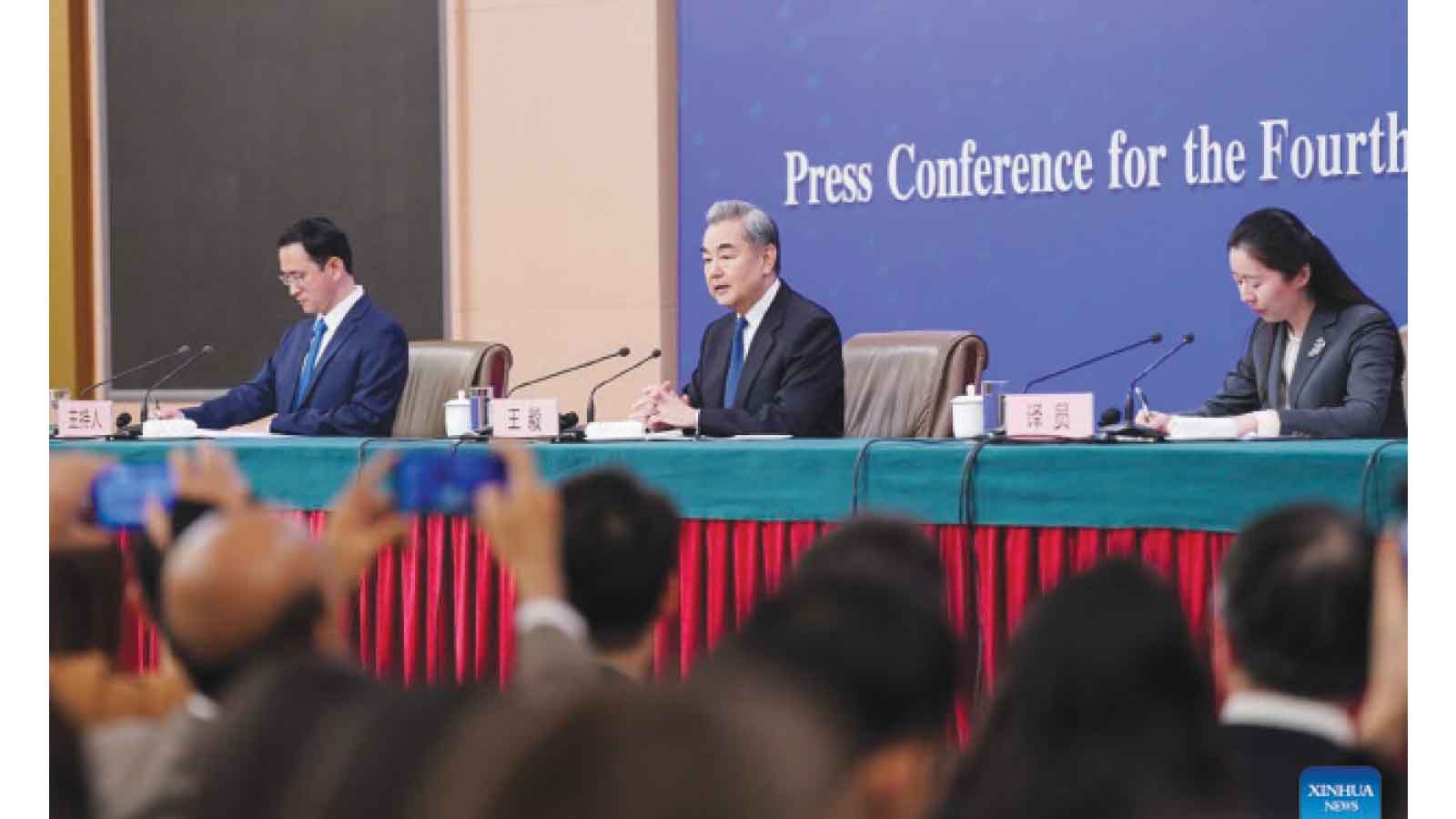
Kuda Bwititi in Beijing, China
EVERY spring, Beijing becomes the focal point for China’s political calendar with the convening of the “Two Sessions”.
These annual meetings of the National People’s Congress and the Chinese People’s Political Consultative Conference are largely viewed as the biggest political events of the year for the world’s second largest economy.
For 2026, they carry unprecedented weight for the whole world.
The global significance of these meetings was underscored yesterday, when China’s Foreign Minister faced a packed press conference attended by hundreds of journalists from around the world.
The questions posed reflected a planet grappling with uncertainty, especially over the US war on Iran. In an era of geopolitical fragmentation, China’s stance on such critical issues matters profoundly to the entire world.
It is estimated that over 3 000 journalists from around the world are attending the Two Sessions which are due to end this week.
As China embarks on the 15th Five-Year Plan (2026-2030), the policy signals emanating from these sessions are not only reshaping the world’s second-largest economy but also offering a “trustworthy and dependable” anchor of certainty for a turbulent world.
For Zimbabwe, a nation with ties to Beijing stretching back to the liberation struggle, this year’s Two Sessions mark a definitive shift to a hard economic strategy.
For decades, the Zimbabwe-China relationship was defined by diplomatic support and infrastructural solidarity. According to Zimbabwe’s Ambassador to China, Abigail Shonhiwa, the friendship is “very much focused on high-quality development”.
Ambassador Shonhiwa said this in an interview with CGTN last week.
This pivot aligns perfectly with the themes of the 2026 Two Sessions, where Chinese leaders emphasised “new quality productive forces” and technological self-reliance.
The Lithium connection
The most recent significant development in the bilateral relationship is Zimbabwe’s aggressive move up the mineral value chain. Just days before the Two Sessions convened, Zimbabwe implemented a ban on the export of raw lithium concentrate.
This policy is a direct bid to capture the lucrative processing phase of the global energy transition.
This is where the timing of the Two Sessions becomes critical for Harare. Chinese firms, including Zhejiang Huayou Cobalt and Sinomine, are already deploying a combined $900 million in lithium processing facilities inside Zimbabwe.
As China debates how to refine its domestic industrial overcapacity and invest overseas under the 15th Five-Year Plan, Zimbabwe is positioning itself not just as a mine, but as a manufacturing partner.
Ambassador Shoniwa emphasised that China’s “new productive forces” create opportunities for Zimbabwe to attract investments that add value to its minerals and agricultural products, rather than simply exporting raw materials.
Agriculture and market access
The Two Sessions frequently signal China’s intent to open its massive market to the world. For Zimbabwe, this has translated into tangible wins. Harare has already secured protocols to export fruit and agricultural products like citrus, blueberries and avocados to China, and is actively exploring expanded “duty-free access” to the Chinese market.
As China pivots toward domestic consumption, Zimbabwean agricultural exports stand to benefit from the country’s massive appetite for high-quality goods.
Global Implications: The 15th Five-Year Plan and World Stability
While the Zimbabwe-China relationship offers a microcosm of bilateral opportunity, the Two Sessions provide a macro view of global economic stability.
In 2026, against a backdrop of geopolitical fragmentation and uncertainty, the world is looking to Beijing for direction.
The policies agreed under the Two Sessions will determine the policies for key issues such as China’s relations with the United States, with President Donald Trump due to visit Beijing in the next few weeks.
At the press conference Minister Wang said China and the US should “commit to a spirit of mutual respect, hold the bottom line of peaceful coexistence and strive for the prospect of win-win cooperation.”
To date, the 2026 Two Sessions have set a sensible and achievable GDP growth target of between 4,5 and 5 percent for China.
While this is a moderation from historical double-digit growth, the quality of this growth is what matters to the global economy. For global markets, China remains an anchor as it is the world’s largest trading partner for more than 150 countries and contributes nearly 30 percent to global economic growth.
The 15th Five-Year Plan: A New Economic Model
The 2026 sessions are particularly significant because they launch the 15th Five-Year Plan. This is not just another policy document but it represents a fundamental shift in economic philosophy.
China is accelerating its transition from an infrastructure and export-led model to one driven by “new quality productive forces.” This includes investments in disruptive technologies such as humanoid robots, quantum computing, 6G networks, and AI.
For the world, this means China is moving away from competing solely on cost and toward competing on innovation. Experts have said that China’s technological progress – exemplified by breakthroughs in AI and electric vehicles – is affordable and quickly deployed, offering the world a different model of innovation that benefits society broadly.
Green Leadership and Global South Cooperation
As Western nations grapple with inflation and supply chain disruptions, China is doubling down on green technology. The Two Sessions have so reaffirmed commitments to reducing carbon intensity and expanding renewable energy.
This presents a win-win for the Global South. China’s mature green tech sector can provide affordable solar panels, batteries, and electric vehicles to developing nations, accelerating their own energy transitions.
Furthermore, China’s push for “high-standard opening-up” continues to pay dividends.
During the 14th Five-Year Plan period, China’s outward investment contributed over $300 billion in tax revenues to host countries. For countries in Africa, Asia, and Latin America, the policy continuity and anti-protectionist stance reiterated at the Two Sessions offer a counterbalance to global economic fragmentation.
Conclusion
The 2026 Two Sessions are more than a domestic political ritual but a strategic roadmap with global repercussions. For Zimbabwe, the shift toward “high-quality development” in China offers a pathway to industrialise its lithium sector and move beyond raw material exports.
For the rest of the world, China’s commitment to stable growth, technological innovation, and green development provides a rare element of predictability. In a world that is in turmoil, the clarity emerging from Beijing’s annual legislative meetings remains one of the most reliable forces in the global economy.