Vusumuzi Dube
ONE of the most emotional discussions you can have with a farmer in general and a livestock producer in particular, is about whether farmers are getting a fair price for their products. This is a conversation which easily veers of into insults and name calling because of its emotional nature.
The argument by the farmer or producer is that the buyer is generally giving a poor price for the commodity while the buyer argues that his/her price offering is determined by the natural forces of supply and demand.

The producer argues that he/she does all the leg work and the buyer just grabs ready products and reaps off the benefits. The buyer argues that they take all the risk out of the producer’s hands and it is that risk which they monetise to their benefit.
The aim of this submission is not to hand down a verdict as to who is wrong and who is not but to discuss the nuts and bolts of the inter relations between the producer and the buyer as well as unpack the inextricable symbiotic existence of the two sides of the same coin. Either side will never exist without the other.
The crop production value chains have a plethora of value chains which have folded or are seriously limbing because the equilibrium between producers and buyers was significantly disturbed.
Cotton is one good example of a production value chain which fell from the high performing and high paying stratospheres to near oblivion. The market end collapsed and inevitable so did the production side.
An apt demonstration that none can exist without the other. Its only in recent years that the sector is trying to revive its past glory days but it still remains a very pale shadow of its former self.
Communities in Gokwe and surrounding areas know this story better than anyone else. It is against this background that this pen calls for sanity among players within the livestock value chain so that we do not kill the proverbial goose that lays the golden eggs for us.
The driving business ethics for all involved should be towards perpetuating the existence and longevity of this important value chain.
Buyers should offer prices that motivate and stimulate livestock farmers to want to produce more and produce better quality of products. Farmers should feel incentive to go an extra mile and produce a good animal because it will reward them with a good price during marketing.
Livestock farmers feel their blood and sweat they put is not rewarded with a commensurate price at the market. It is my thesis that appropriately rewarded quality products will stimulate production of high-quality animals.
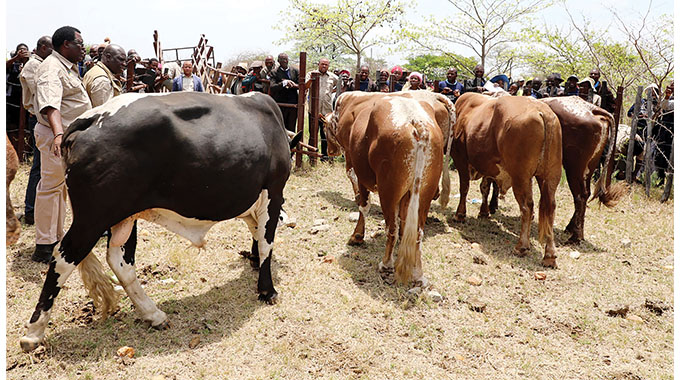
However, current settings are such that the gap between an economy quality animal and that of a commercial quality, is very marginal and discourages investment in produce of better quality. There is a saying in the livestock trading circles that “You make money when buying NOT when selling the animal”.
Put simply you should offer as low prices as possible when buying because the farmer has no bargain power, and this is the part the livestock trader can control not the upper end of the chain.
Apex buyers, which is where most livestock traders take the animals are not price takers like livestock producers, in fact they are price givers! Frustrated by the livestock producer prices, some farmers have tried occupying the upper ends of the value chain as well, through running butcheries as well.
However, we cannot all do everything in the value chain otherwise it then ceases to be a chain at all.
It is called a value chain because the various nodes of the chain hook on each other as value is transmitted across the chain and usually with gains at each node.
There simply needs to be producers, buyers and retailers, supported by other service companies and institutions for the value chain to function. If the top end suffocates the producer, eventually the whole value chain will die of asphyxiation!
Conversely, the producer should provide a good quality product which is easier to sell and reduces the burden of risk taken by the buyer.
An appreciation of the intricate interdependency of the various segments of the value chain, will do good the players in the chain so that they operate with posterity in mind not this hit and run mentality that we see from some of the players.
Uyabonga umntaka MaKhumalo.
Mhlupheki Dube is a livestock specialist and farmer. He writes in his own capacity. Feedback [email protected] cell 0772851275


 Online Reporter