

 admin
admin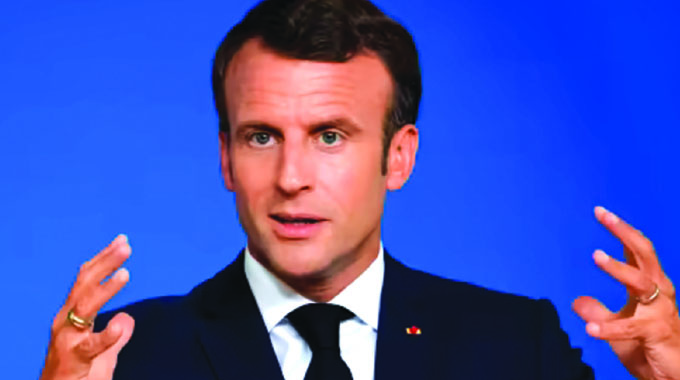
Gibson Nyikadzino
Correspondent
Recent events in France where police brutally suppressed peaceful and democratic protests against President Emmanuel Macron’s government’s decision to force through pension reforms without a vote in parliament exhibit how democracy is such an imperfect phenomenon.
Such brutal crackdown was defended by government sympathisers as the “maintenance of peace and order”.
Another form of protest occurred in the Islamic Republic of Iran last year, in which police were deployed to maintain peace and order, but in the eyes of the French and the West, the actions of the Iranian government amounted to “authoritarianism and dictatorship”.
These interpretations are classic acts of the beauty of perspectives and world views, but above all, coming from the West, this is only a politicisation of vocabulary.
Similarly, where the US is using ‘lawfare’ as a weapon to persecute former President Donald Trump, the Biden administration has resorted to defend the persecution by prosecution as a way to seek “justice”.
It is now clear that Donald Trump shook the powerful deep-state mafia controlling the political landscape in the US, and now he is their prey and hunting ground.
The deep-state mafia has accumulated huge profits under the military industrial complex and the pharmaceutical industry following the Covid-19 pandemic. It is his time to pay.
The idea of these anecdotes is to open a way to the idea that there is no single way of doing things and there is no template that can be dictated to states to do things “correctly”, but that things are done in the framework of the state’s interests, whether core, objective and long-term interests.
As from above, the idea informing the argument in this week’s instalment is premised on the declaration by President Mnangagwa from his “None But Ourselves” weekly column, that Zimbabwe will not be compelled to invite election observer missions from countries that do not reciprocate in that regard.
It does not mean Zimbabwe has an ‘anti’ attitude towards those countries that will not be invited.
While there are many arguments to support that declaration from a nation-state interaction at the global level, two key arguments should be seen as congruent in coming up with that idea.
As the architecture and face of Zimbabwe’s foreign policy trajectory, President Mnangagwa’s idea is one that has traction and informed by evaluating the ongoing reality in the world led by the BRICS countries, at a time the Western bloc is clutching only on political arrogance.
Secondly, quantitative and qualitative assessments on the previous observer missions by ‘other’ countries, not only in Zimbabwe, but in Africa, give critical insights on how convenient it is for those countries to want to intervene in the processes of Africa’s democracy.
Coups then, elections now
In trying to understand Zimbabwe’s position hinted by President Mnangagwa, it is possible to conclude that the history of some nations in Africa is not one that brings democratic stability, but foments chaotic scenes that burden people.
Between 1958 and 1999, the French government militarily intervened in Africa more than 45 times, to topple African leaders, to kill, to loot and plunder Africa’s resources without care and remorse for the “rising continent”.
This political interference led to the deaths of key African figures who also pioneered the path of decoloniality.
April 7 marks the 29th anniversary of the 1994 genocide against the Tutsi in Rwanda. There is a giant footprint on the involvement of the French government in that demise.
Events of instability the French caused in the Ivory Coast when it sponsored soldiers to humiliate, detain and arrest then President Laurent Gbagbo in April 2011.
Such interventionist methods from France and other countries from the West are authoring the misfortunes we continue to witness in Africa today. This is not care for Africa’s democracy.
Because of the historical ties that have existed between Africa and Europe, the latter should not worry about the idea to want to interfere in Africa under the civilisational and electoral banner.
Like any other country, Zimbabwe’s democratic journey is not quite smooth, and for over four decades it remains a work in progress as the US’ remains one even 246 years later.
Since the advent of multi-party democracy in most of Africa from 1990, at least 88 percent of elections observed by Western nations have received negative feedback, as not free and fair.
These are the same countries that do interfere in Africa’s elections and in their reports condemn our processes to find a pretext for further interference.
It is about ‘them’
When there is conflict in Africa, for example what is happening in the DR Congo’s North Kivu, in the Central African Republic (CAR) and Libya, among other troubled parts, the response of European actors is generally inaction.
There are a number of explanations for this, including the absence of strategic and economic interests and the Euro-centric belief that conflict in Africa is an inevitable occurrence that does not call for intervention.
When European actors do decide to get involved, it is usually more out of a sense of their security and prestige than it is for the stability of the continent. This is the character of states that are keen on observing Zimbabwe’s elections.
No more Messiah ship
The subjective application of international norms and conventions to the favour of Western nations ought to be exposed.
When some of what the West does is highlighted, it helps to determine why they can be invited or are not invited to observe elections.
Values informing political choices by Zimbabwe and those from the West are different.
There are media reports that have in the past few days emerged in which the European Union (EU) and British parliamentarians have shown enthusiasm to observe Zimbabwe’s elections.
While it may happen that the EU is invited, but this is also the same bloc that at one point expressed support to the opposition when it initiated economic sabotage tactics influenced by the “Kudira Jecha” (Spoil the Party) idea; it is the same bloc that when the police moved in to maintain law and order in Nyatsime when opposition destroyed property, the EU saw that as growing authoritarian trends in Zimbabwe.
Morality should govern how Zimbabwe determines which countries are observing the elections.
The West is clear that it is not governed by morality, but by interest. The inclination of their interests is visible and that jeopardy ought to be contained.
The old doctrine of messiah ship which said what the West says should happen is now being counter-checked and replaced by the belief in equality between nations.
No state should be threatened or compelled to do what it does not wish.
Who observes Zimbabwe’s elections is determined by Zimbabweans as informed by their sovereign interests.
While one may disagree with the views outlined, it is sadly difficult for the same people to agree that they want Zimbabwe’s elections to be observed by states that want to punish other nations for interacting with Russia, or for not supporting some UN resolutions that favour the West.
There exists a Western connivance that is detrimental of the interests of Africa, and also Zimbabwe.
Such overtures should be rejected to protect the interests of Zimbabwe.
In a bid to promote and advance sustainable democracy in Zimbabwe, peers can review the process.
Zimbabweans, remember we are one. This is homeland!



 Online Reporter