
Rumbidzayi Zinyuke
Health Buzz
The first signs are often so subtle that they are easy to ignore.
A slight stiffness in the fingers after waking up, an aching knee that refuses to bend properly, swollen joints that make everyday tasks more difficult, or persistent pain that seems worse on cold mornings.
At first, many people blame the discomfort on ageing, hard physical work or the winter chill.
But as weeks turn into months, the pain becomes part of daily life, climbing stairs takes longer, carrying groceries becomes a struggle and even opening a bottle of water or buttoning a shirt requires effort.
By the time many people seek medical attention, the disease has already begun damaging their joints.
These symptoms are not simply an inevitable part of growing older.
They may be early warning signs of rheumatism, a group of diseases affecting the joints, muscles and connective tissues that is emerging as one of the world’s leading causes of disability.
Although often overlooked in Zimbabwe, rheumatic diseases affect millions of people globally, causing chronic pain, reduced mobility and, in severe cases, permanent disability.
Health experts say greater awareness, early diagnosis and timely treatment are critical to preventing irreversible joint damage and helping people maintain productive, independent lives.
Umbrella term
Rheumatism is not a single disease but an umbrella term used to describe more than 100 conditions that affect the joints, muscles, bones and connective tissues.
These include rheumatoid arthritis, osteoarthritis, gout, lupus, ankylosing spondylitis and rheumatic fever.
While some forms are associated with ageing, others affect children, young adults and people in the prime of their working lives.
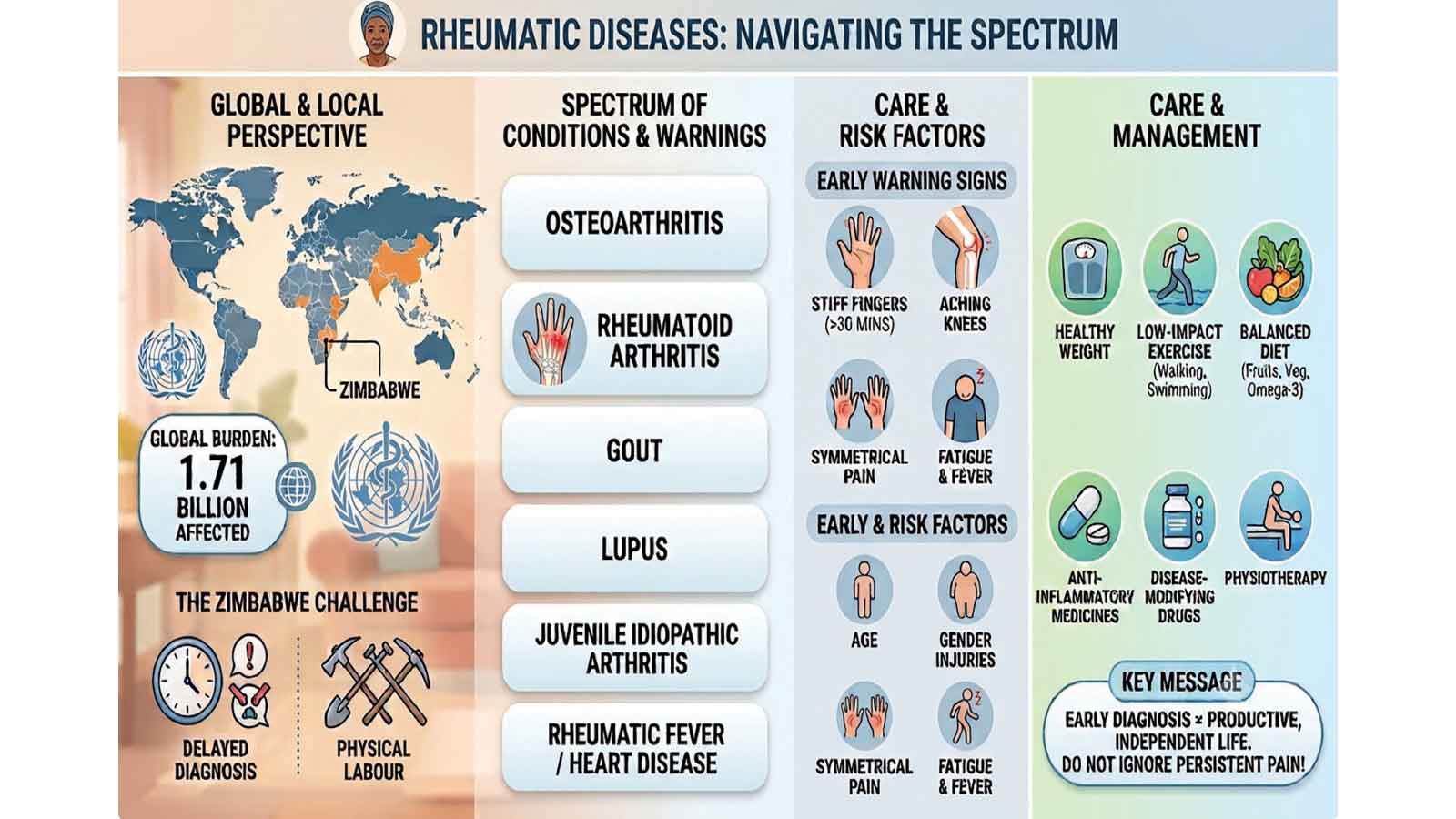
According to the World Health Organisation (WHO), musculoskeletal conditions are the leading contributor to disability worldwide, affecting about 1,71 billion people.
The health body estimates that more than 528 million people are living with osteoarthritis, while around 18 million people have rheumatoid arthritis globally.
These conditions account for millions of years lived with disability every year, limiting people’s ability to work, attend school and participate fully in family and community life.
The burden is particularly significant in low- and middle-income countries where access to specialists and diagnostic services is often limited.
The WHO warns that as populations age and obesity levels rise, the number of people living with musculoskeletal disorders is expected to increase substantially in the coming decades.
Zimbabwe currently has no comprehensive national registry for rheumatic diseases, making it difficult to determine their true prevalence. However, health workers report seeing growing numbers of patients presenting with arthritis, gout and autoimmune diseases.
However, it is believed that the burden is far greater than hospital statistics suggest because many people either self-medicate or attribute their symptoms to old age, strenuous manual labour or changes in the weather.
The misconception that rheumatism only affects elderly people continues to delay diagnosis.
While osteoarthritis becomes more common with advancing age because of the gradual wearing away of cartilage, autoimmune conditions such as rheumatoid arthritis frequently develop between the ages of 30 and 60. Lupus often affects even younger adults, particularly women of child-bearing age.
One of the greatest challenges is recognising the warning signs before permanent damage occurs.
Early symptoms may include persistent joint pain, swelling, tenderness, prolonged morning stiffness lasting more than 30 minutes, fatigue, unexplained fever and reduced movement in affected joints.
Some people may notice symmetrical pain affecting both hands or both knees, while others develop painful swelling in the wrists, ankles or feet.
Because these symptoms often develop gradually, many people continue with their normal routines, relying on over-the-counter painkillers or home remedies instead of seeking medical attention.
Without treatment, however, inflammation continues damaging cartilage, ligaments and bone. Over time, joints may become permanently deformed, making simple activities such as writing, cooking, bathing or walking increasingly difficult.
Rheumatoid arthritis is one of the most disabling forms of rheumatism. Unlike wear-and-tear arthritis, it is an autoimmune disease in which the body’s immune system mistakenly attacks healthy joint tissue.
Persistent inflammation gradually destroys cartilage and bone, causing chronic pain and irreversible joint deformities.
The disease does not stop at the joints. It can also affect the heart, lungs, eyes and blood vessels, increasing the risk of cardiovascular disease and other life-threatening complications.
Increased likelihood
Osteoarthritis, the most common form of arthritis globally, occurs when the protective cartilage cushioning the ends of bones gradually wears away. Although ageing remains the biggest risk factor, obesity, previous injuries and occupations involving repetitive heavy lifting or kneeling also increase the likelihood of developing the condition.
For many Zimbabweans working in agriculture, mining, construction and the informal sector, years of physically demanding work may contribute to joint degeneration later in life.
Another increasingly common condition is gout, a painful form of arthritis caused by the accumulation of uric acid crystals inside joints. The disease typically causes sudden attacks of intense pain, redness and swelling, often beginning in the big toe before affecting other joints.
Changing diets, increasing obesity, diabetes, kidney disease and hypertension are contributing to rising cases of gout worldwide.
Foods rich in purines such as red meat and certain seafood, excessive alcohol consumption and sugary beverages may increase the risk among susceptible individuals.
Women face unique challenges when it comes to rheumatic diseases. Autoimmune disorders including rheumatoid arthritis and lupus occur far more frequently in women than in men.
Although the exact causes remain unclear, researchers believe hormonal changes, genetics and environmental factors all play a role.
Children are not immune either
Juvenile idiopathic arthritis affects thousands of children globally and may interfere with normal growth, physical activity and school attendance if left untreated.
Persistent joint swelling, limping or unexplained pain in children should always be assessed by a healthcare professional.
Another serious but preventable condition remains rheumatic fever, which develops following untreated streptococcal throat infections. Rheumatic fever can permanently damage the heart valves, leading to rheumatic heart disease.
According to the WHO, about 40 million people worldwide live with rheumatic heart disease, with the overwhelming majority living in low- and middle-income countries.
Hundreds of thousands of people die from complications every year despite the disease being largely preventable through early treatment of strep throat with antibiotics.
Medical experts stress that although most rheumatic diseases cannot be cured, they can be effectively managed if diagnosed early.
Modern treatment has transformed the outlook for many patients. Anti-inflammatory medicines help relieve pain and swelling, while disease-modifying anti-rheumatic drugs slow disease progression and prevent irreversible joint destruction. Physiotherapy and occupational therapy help patients maintain strength, flexibility and independence, while surgery may be required for severely damaged joints.
Lifestyle changes also play an important role in reducing the burden of rheumatic diseases.
Maintaining a healthy weight reduces pressure on the knees, hips and spine, while regular low-impact exercises such as walking, swimming and cycling improve joint flexibility and muscle strength. A balanced diet rich in fruits, vegetables, whole grains and omega-3 fatty acids may help reduce inflammation, while avoiding smoking lowers the risk of developing rheumatoid arthritis and improves treatment outcomes.
Managing other non-communicable diseases such as diabetes, hypertension and kidney disease is equally important because these conditions often worsen rheumatic illnesses or increase the risk of complications.
Perhaps the most important message is knowing when to seek medical attention.
Experts say persistent joint pain lasting more than six weeks, swollen joints, prolonged morning stiffness, repeated attacks of severe joint pain, unexplained fatigue or joints that become increasingly difficult to move should never be dismissed as normal signs of ageing.
Early diagnosis allows doctors to begin treatment before irreversible damage occurs, helping patients preserve mobility and maintain a better quality of life.
While diseases such as diabetes, hypertension and cancer have become central to public health campaigns, arthritis and other rheumatic diseases remain relatively neglected despite being among the leading causes of disability worldwide.
Improving awareness
As the country strengthens its response to non-communicable diseases, improving awareness, expanding access to early diagnosis and ensuring the availability of essential medicines for rheumatic conditions will become increasingly important.
Pain should never be accepted as an unavoidable consequence of growing older.
Whether it begins as stiff fingers, swollen knees or aching hips, persistent joint pain is often the body’s way of signalling that something is wrong.
Recognising those warning signs early, seeking medical attention and adopting healthier lifestyles could spare thousands of Zimbabweans years of unnecessary pain, disability and diminished quality of life.
Feedback: [email protected]