admin
admin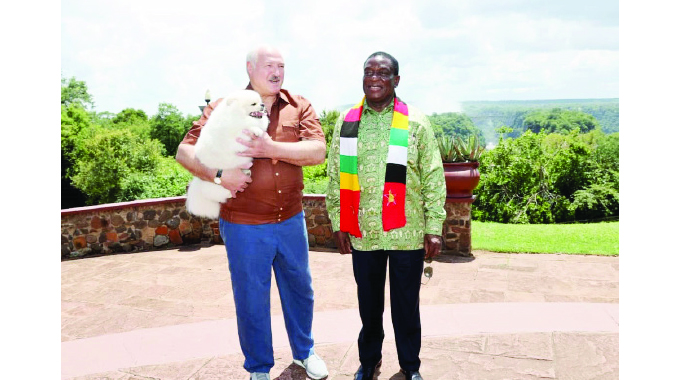
Ranga Mataire, Group Political Editor
As expected, some in opposition and civil society were riled by the recent State visit to Zimbabwe by the President of Belarus, His Excellency Alexander Lukashenko.
However, to the majority of Zimbabweans, the visit by the Belarusian leader represented another milestone by the Harare administration in reintegrating the country into the community of nations after years of isolation.
The visit by President Lukashenko was a reciprocal visit following one undertaken by President Mnangagwa to Belarus in 2019. It also came at a time when both countries are under American sanctions albeit for different reasons.
Zimbabwe has been under American sanctions for over two decades while Belarus had sanctions slapped on it for its support of Russia in the Ukraine war.
There is what is called the law of attraction in international relations that is a universal pull factor for States’ interaction. Zimbabwe and Belarus share mutual interests in terms of their development trajectory and their perception of the current global political developments. But let’s first look at why the opposition was rattled.
Why opposition was rattled
Some opposition political parties and activists were rattled by the visit by President Lukashenko because cementing diplomatic ties with any European country goes against the agenda of ostracizing Zimbabwe. In other words, the visit flies in the face of local Western henchmen whose agenda is to project Zimbabwe as a pariah State.
It is also not in the opposition interests to welcome a leader who has been vilified by their benefactors (the Americans) for aligning with Russia and refusing to be a political poodle of the superpower.
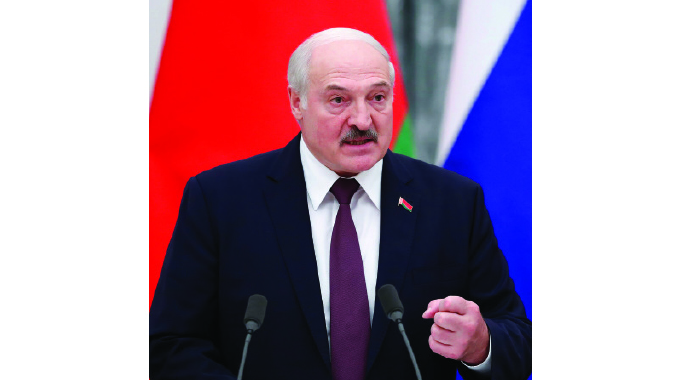
President Alexander has been at the helm of his country since 1994 when it declared its independence. While some former territories that declared independence from the Soviet Socialist Republic have gone on to have an adversarial relationship with Russia, Belarus has maintained good relations with Moscow.
This has not gone very well with America whose main interest is to see a weakened Russia surrounded by unfriendly neighbours.
The fervent portrayal of President Lukashenko in some local private media as an authoritarian is a borrowed narrative from the West. The negative chorus that came out from some online publications was synonymous with poodles responding to the master’s instigation or instructions.
Any normal Zimbabwean would surely not have a gripe with the leader of a European country seeking to heighten diplomatic ties with a Zimbabwe seeking to modernize its country by establishing win-win partnerships.
Why Belarus?
Guided by the dictum of “friends to all and enemies to none,” Zimbabwe has generally maintained a fairly neutral stance and has declared that “It is Open for Business.”
It is this stance that saw President Mnangagwa undertake a State visit to Minsk- in 2918 to engage his counterpart. What informed that visit is the need to establish solid diplomatic ties for the facilitation of mutual economic development of the two countries.
Before the dismantling of the Soviet Union, Belarus was the industrial hub. Even today, Belarus is known world-wide as home to the biggest dump truck used in mining. In short, its strength lies in the manufacture of heavy duty machinery for mining and roads and has a strong manufacturing base especially of buses and agriculture equipment.
As a country undergoing an agrarian revolution anchored on mechanisation, its most ideal that Zimbabwe partners with a country that has a proven record of manufacturing agricultural equipment. It’s commonsensical for Zimbabwe to strike development deals with a country that understands its challenges and appreciates its vision.
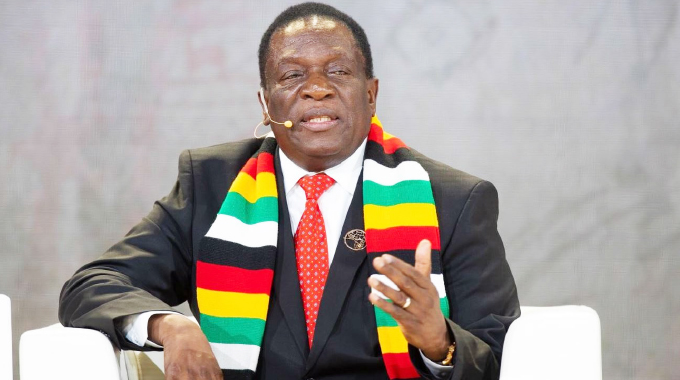
It must be understood that relations between the two countries have their roots way back when President Mnangagwa was still Vice President. The then Vice President Mnangagwa visited Minsk on January 17, 2015 where he met President Lukashenko and went on to sign a Memorandum of Understanding with Prime Minister Andrei Kobyakov.
It was during that visit that the Belarusian leader expressed his readiness to make sure Harare and Minsk are united in their quest to bust Western sanctions. Then Vice President Mnangagwa echoed the same sentiments saying “the Belarus President was fully aware of the plethora of challenges Zimbabwe was facing, mostly from the Americans and European Union (EU).”
The need to bust Western sanctions appears to be the main magnetic factor bringing the two States together.
A transport hub
One of the fundamental projects at the centre of Belarus-Zimbabwe diplomatic relations is one that would make the latter a regional and logistical hub. The two countries agreed to link the Atlantic and Indian oceans by constructing a road and rail network across southern Africa and through Zimbabwe. The construction of this road and rail network would be under a Zimbabwe-Belarus-China tripartite arrangement. This project clearly shows the level of trust between the two countries as it will place Zimbabwe at the centre of the transport network in the region.
Mining
Besides the road and network project, Belarus has a lot of experience in exploring and extracting mineral resources. Its state-owned company Belorusneft currently produces oil and gas in Russia, Venezuela and Ecuador. Belarusian mining companies are also actively involved in the extraction of potassium in Turkmenistan. The ongoing heightened cooperation with Zimbabwe is therefore not surprising as this is part of what Minsk calls “30/30/30” programme aimed at diversifying Belarusian exports where a third of exports go to Russia, a third to EU and another third to the rest of the world. Belarusian experience in mining would be helpful to Zimbabwe’s mining industry.
Congruence in policies
There are other areas of cooperation that the countries have inked agreements on and these include the construction industry, transport and in agriculture. Discussions are ongoing on the establishment of an assembly plant for the production of Belarusian agriculture and mining vehicles in Zimbabwe and establishing joint agricultural enterprises in meat and milk processing.
There is no doubt that given the two countries’ similar predicaments, they share a strong bond enhanced by the goals of withstanding the pressures from other competing international actors. The two countries are thus motivated by the congruence in the countries’ foreign and domestic policies.
The international system is an archaic one that calls for alignment with like-minded states. In Belarus, Zimbabwe has found an ally bound by mutual domestic interests.


 Online Reporter