admin
admin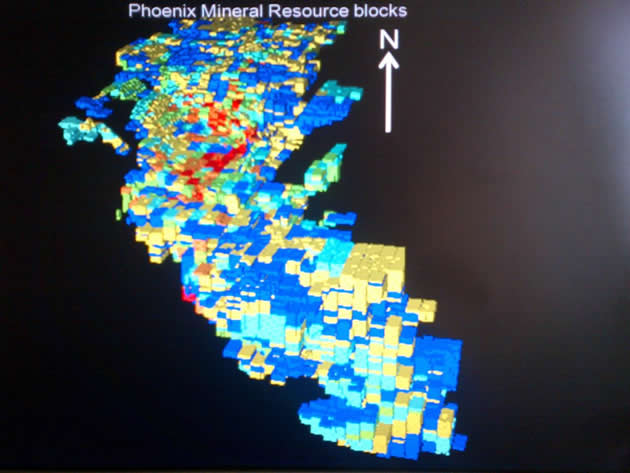

WHEN I was asked to put some of my thoughts about Bulawayo down on paper, I was humbled but I did not imagine the kind of impact the discussions in the past 12 weeks would have on changing the depth and breadth of political discussion around Bulawayo issues.
For those who have taken the baton and are now running with various issues that I have raised, I say good luck. It is time to put the pen down on this matter and roll up the sleeves. There is no amount of theory that will get things going but only putting into practice what we speak about is the only next step.
On many occasions, I have made the point that the fortunes of Bulawayo Metropolitan Province are directly linked to its ability to collaborate with its neighbouring provinces of Matabeleland North, Matabeleland South and the Midlands. Secondarily, these fortunes are of course linked to the whole Zimbabwean economy.
In my analysis, comments and discussions on this issue in the past weeks, it has become clear that there needs to be a very deliberate linking of the development plans of these provinces and the onus is on Bulawayo to make the effort. With the vast resources and certain geographic advantages I have written about in the past 12 weeks, Bulawayo particularly needs Matabeleland North and South more than those provinces need Bulawayo.
In fact, the days of Bulawayo’s prosperity were during its time as the political and administrative capital of Matabeleland. There was alignment and prosperity partly because there was no break in local chain of command in all spheres of economic and political administration.
The current situation where Mat North and South have been weaned from the clutch of Bulawayo is good but it requires a more delicate and deliberate collaboration in development plans.
With such a realisation, many that I have spoken to, like me, will therefore spend lots of effort on getting this collaboration going by engaging in projects that realise this provincial continuum rather than talk of Bulawayo as if it can survive on its own.
As a parting shot, it is not to say that whilst the largely rural and resource-rich neighbouring provinces are well endowed it is going to be easy to develop them. Indeed, it is a huge task and requires extremely serious planning and innovative financing arrangements amongst other things.
I will end this series therefore by highlighting some curious imbalance in the development of resources along the Zimbabwe-Botswana border. This area is of course in the two Mat provinces and relatively important to Bulawayo in terms of possible economic spin-offs.
There are many instances of massive developments and plans to develop the border area in Botswana and very little discernible activities on the Zimbabwean side. It is not a long shot to imagine that whatever Botswana is developing a few meters from Zimbabwe within its side of the border can also be developed on our side.
The most striking activity that I found when looking at these areas on Google Earth is the presence of very intense mining activity on the Botswana side of the border. I will use an example of a mine near Mphoengs on the Zimbabwean side and about 1km from the Zimbabwean border line into Bostwana.
The Phoenix Mine (Tati Nickel) produces 7-20 000 metric tonnes of platinum, 6-13 000 metric tonnes of copper, 19-75 000 ounces of nickel 100 000 ounces of palladium per year. It has estimated reserves of 920 500 000kgs valued at 1 439 449 270 United States dollars.
With such a valuation, I find it difficult to think that some of these deposits are not on our side just over 1km away.
The other mines along the border on the Botswana side are Selkirk Nickel and Copper Mine, Mupane Gold Mine, Vermaak Gold Mine, Matsiloje Portland Cement, Oliphant Dam and Matshelagabedi Power Station which produces about 70MW of electricity. There is even a large irrigation project which stretches for about 12km and it is only 3km into the Botswana side using a common river near Pandamatenga area with respect to the Zimbabwean side.
It is unclear what hurdles we have had in Zimbabwe for not developing these resources to similar scale as our neighbouring country has managed to do only a few kilometres into their side. How much of these mineral resources occur on the Zimbabwean side? Which direction are the underground tunnels in Botswana going — further into Botswana or into Zimbabwe?
I have asked these questions and received no answers but I think the people and legislators of Mat North and South should certainly look into this. I would rather be conservative about the range of answers to these questions. However, with what we know of DeBeers activity in Marange for all those years, I should be forgiven in advance for being suspicious.
Just how many billions of dollars are the villagers of Mangwe, Bulilima, and Tsholotsho and other areas as far north west as the Zambezi River walking on as they skip the border to go and work on the Botswana side?
I believe that there are countless examples of underdevelopment in these provinces and the border resources have just been used as an example of how huge imbalances can be starring us in the face. It is now incumbent on both the private and public sectors to solve these puzzles for the benefit of the economy of Zimbabwe.
Dr Mazithulela’s column will return after a brief break when it will focus on technological advances that can propel development in Zimbabwe as a whole.


 Online Reporter