Online Reporter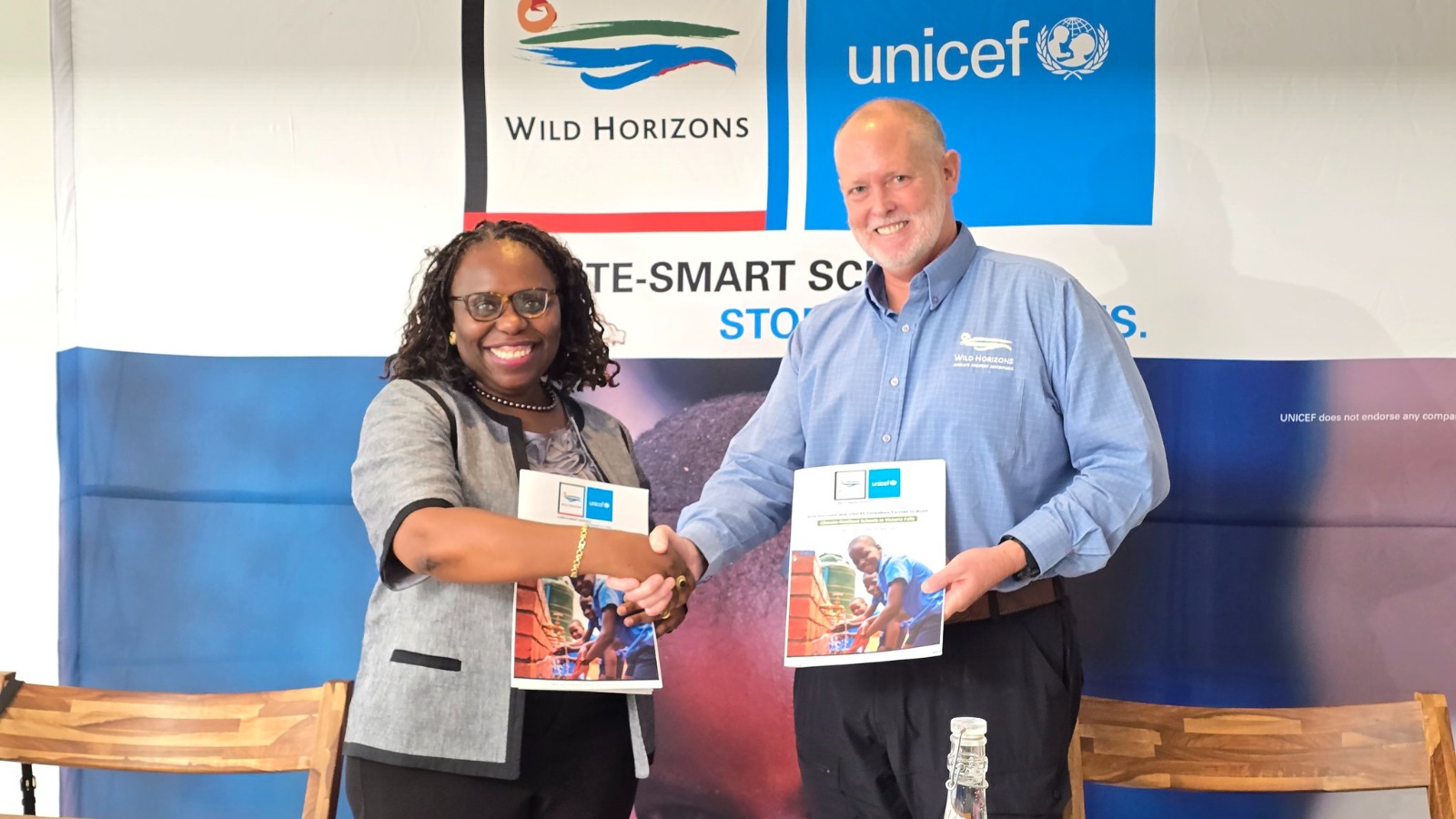
Bongani Ndlovu, Deputy Echo Editor
UNICEF Zimbabwe and Wild Horizons have joined forces to build climate-resilient schools in and around Victoria Falls, Matabeleland North province.
The two organisations signed a Memorandum of Understanding (MoU) that will see the installation of solar-powered, multi-sectoral water systems in three schools — Mkhosana Adventist, Ndlovu, and Sizinda — improving access to clean water, renewable energy, and climate-smart infrastructure for hundreds of children and teachers.
UNICEF Zimbabwe Representative, Etona Ekole, said the partnership underscores how the private sector and development partners can work hand in hand to deliver sustainable, long-term impact for communities.
“This partnership is a powerful example of how business and development can come together to create sustainable solutions for children and their communities. By combining UNICEF’s child-focused programming with Wild Horizons’ commitment to protecting the environment and empowering communities, we are building models of climate resilience that can be scaled across Zimbabwe,” said Ekole.
Many schools in Victoria Falls have faced recurring water shortages and infrastructure challenges worsened by the effects of climate change. The new solar-powered water systems will not only provide safe drinking water but also improve sanitation, menstrual hygiene management, and school attendance — particularly for girls.
The initiative will also supply nearby health facilities, such as the Ndlovu maternity ward, with reliable clean water, enhancing maternal and child health outcomes.
To promote food security, schools will establish gardens irrigated through the solar systems, teaching learners climate-smart agriculture while improving nutrition.
Beyond the classroom, the partnership will create training and employment opportunities for young people. Wild Horizons will lead capacity-building sessions in solar and water technologies, equipping youth with green skills that are increasingly vital in Zimbabwe’s climate adaptation efforts.
Wild Horizons Chief Executive Officer said the partnership reflects the company’s deep-rooted commitment to the communities surrounding its operations.
“Wild Horizons is built on the foundation of community. This partnership with UNICEF allows us to expand that commitment—ensuring healthier schools, stronger families, and a greener future. Together we can create a model of resilience that inspires far beyond Victoria Falls,” he said.
The project complements the Ministry of Primary and Secondary Education’s Clean Green Zimbabwe Initiative and supports the country’s broader climate adaptation goals. It also ties into the Zambezi River Basin regional initiative, which serves more than 41 million people across eight countries.
If successful, the model could be expanded to the 44 schools already supported by Wild Horizons and replicated across other provinces, strengthening UNICEF’s ongoing partnerships with global agencies such as KOICA, the UK’s FCDO, TUI Care Foundation, and Welthungerhilfe (WHH).
Through this collaboration, children in Victoria Falls will not only learn in safer and healthier environments but also grow up equipped with the knowledge and skills to thrive in a changing climate.