Chronicle Editor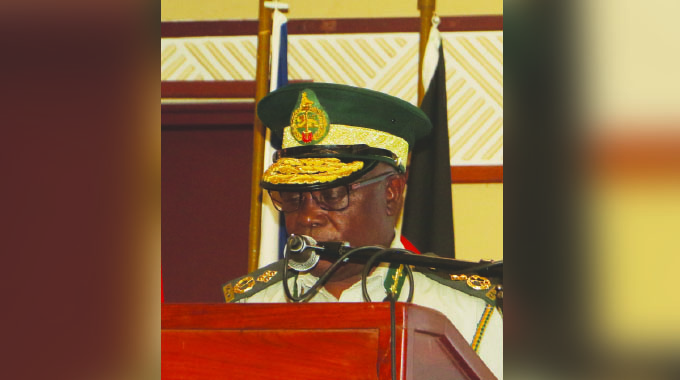
Nelias Shiri, Chronicle Correspondent
UNIFORMED forces have recommended the adoption and development of integrated public health interventions to curtail drug and substance abuse, as well as eradicating HIV and Aids, among other diseases, to ensure the attainment of an upper middle-income economy by 2030.
This emerged during the three-day 11th edition of the Zimbabwe Uniformed Forces Health Services Annual Conference, which ended in Victoria Falls on Tuesday.
Commander of the Zimbabwe Defence Forces, General Philip Valerio Sibanda, acknowledged the distressing effects of drugs and substance abuse and HIV/Aids in the country and across southern Africa while delivering his opening address.
He implored all health stakeholders, including family, institutional and community structures to work hand-in-glove to win the prevailing drug and substance abuse war.
In closing remarks, Zimbabwe Prisons and Correctional Service (ZPCS) Commissioner-General, Moses Chihobvu, commended health professionals for exchanging professional and scientific knowledge to address pressing health challenges caused by drugs and substances in Zimbabwe and beyond.
The conference ran under the theme “Vision 2030: Drug/Substance Abuse and HIV/Aids Must Fall”, and delegates noted with concern that abuse of drugs is a menace in Zimbabwe and other countries with young people mostly affected.
Comm-Gen Chihobvu hailed the uniformed forces’ health practitioners for exploring holistic and collaborative approaches to address challenges emanating from the malicious use of dangerous drugs and substances. He said drug abuse poses a threat to socio-economic development and the achievement of Vision 2030.
“I understand that you have also managed to interact with leading professionals in the field of health, tertiary institutions and suppliers of health equipment, medicines, surgical and sundry services, sharing significant insights and concerns on these two twin health challenges,” said Comm-Gen Chihobvu.
“You have also learnt the uneven impact of HIV on people who use drugs, the nexus between substance use and HIV transmission and barriers faced by individuals with substance use disorders in accessing lifesaving prevention and treatment services.
“It’s not a secret that HIV and Aids, and substance abuse do not only pose a significant threat to achieving Zimbabwe’s Vision 2030, but also stifles the operations of our uniformed forces as a region and the world over. Hence, we need to prioritise prevention, treatment and support initiatives tailored to our unique military context.”
Comm-Gen Chihobvu emphasised the need for continued cooperation between stakeholders to deal decisively with drugs and substance abuse, and chronic illnesses in particular. He rallied every stakeholder to take a role in the fight against various forms of crises.
“It is everyone’s responsibility to ensure a safe and secure environment as we seek to safeguard national interests. This can only be achieved if we continue to collaborate through these conferences where we share knowledge and experience.
“Through such national and regional collective efforts, we will provide effective support to the affected, curb the spread of HIV and Aids, curb substance use, and achieve the mission of this gathering,” he said.
The conference was attended by a cross-section of sectors, including security, academia, health as well as local and foreign experts.
These include the Zimbabwe National Army, Air Force of Zimbabwe, Zimbabwe Republic Police, Zimbabwe Prisons and Correctional Services, tertiary institutions, Ministry of Health and Child Care, Cities of Harare, Bulawayo and Victoria Falls health representatives.
The foreign health delegates were from Namibia, South Africa, Botswana, Kenya, Tanzania and Malawi.
Presentations and discussions focused on key challenges such as drugs and substance abuse, HIV and Aids and the impact on security and the economy.
It was resolved that recommendations made should be speedily implemented for the country to win the war against drugs and HIV and Aids.
Participants also concurred on the impact of drugs and substance abuse on HIV and Aids and criminal activity, hence the need for measures and innovations to eradicate these twin health challenges.
The delegates called on stakeholders in the health services sector, community, institutions and families to work together and collaborate with the Government to mitigate this national public health challenge.



 Online Reporter