

 Chronicle Editor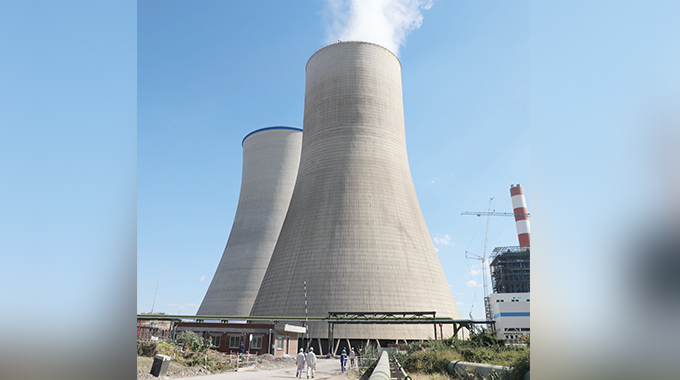
Nqobile Tshili, [email protected]
Government has promised the public that the severe power outages experienced in recent times will ease up over the coming weekend.
Hwange Unit 7, which was undergoing maintenance, is expected to be operational once again, bolstering power generation and alleviating the issue.
The country has been grappling with extensive load shedding, with residential areas experiencing blackouts lasting up to 14 hours every day due to reduced power production.
To mitigate the effects on the economy, power utility ZESA spared the industrial sector from long outages. Unfortunately, the prolonged power cuts have also put unwelcome strain on Bulawayo’s water supply, resulting in the breakdown of pumps and aggravating existing freshwater shortages in a region where taps run dry for entire days at a time.
Energy and Power Development Minister, Edgar Moyo, told Chronicle that the broken Hwange Unit 7, capable of generating 300MW, had added to the country’s power woes triggered by diminished electricity production associated with the low water levels at Kariba Hydro-Power Station. He cautioned, however, that the repair of Unit 7 won’t completely solve the issue, as the country and the region still have a large power deficit.
“Power cuts have always been there but the intensity has gone up in the past two to three weeks because we lost Unit 7 in Hwange as a result of a severe tube leak,” Minister Moyo said.
“It is being attended to and we are looking forward to getting it up this weekend between November 2 and November 3. This is what intensified our power deficit but we are going to see an improvement although that does not mean we will not have power cuts. It means the intensity will be reduced.”
Minister Moyo said to address issues relating to technical faults within the power generation stations, there will be a scheduled maintenance programme for Unit 7 next month.
He said the planned maintenance programme is unlikely to affect power generation as it will occur during industry’s annual break when power consumption is low.
“In mid-December, we are going to begin our annual class maintenance programmes of Units 7 and 8. We will start with Unit 8, which will take us into mid-January but the advantage during this period is that it will be the annual shutdown for industry,” said the Minister.

“This means our peak demand is going to come down, therefore, reducing the power supply gap. In February up to March, we are looking to do class maintenance for Unit 7, which is a compulsory maintenance exercise.
“We are unlikely to suffer severe power cuts then because it is our expectation from the simulations that have been done by the Zambezi River Authority and Meteorological Services Department that we would have received some inflows into Kariba.”
Minister Moyo said from January, power generation is expected to increase and reduce load shedding. The country is also recording increased investments in new power generation plants, which will further ease electricity shortages into the New Year with one of them being the rehabilitation of Hwange Units 1 to 6.
“There are new projects that have started to the capacity of 2 500MW by the end of 2025. These projects include several thermal power stations, one of which is going to be driven by Jindal.
“Jindal is going to power Hwange Units 1 to 6 and, therefore, increase the capacity of production from the current 400MW and 800MW. We hope this will be completed by the end of next year,” said Minister Moyo.
He said very soon there will be a ground-breaking for a new power station in Hwange, which will produce 150MW in its initial production while generation will increase to 700MW at full production.
“We also have Afrochine Smelting, which is another subsidiary of Dinson (Iron and Steel Company), and they are already generating 100MW. These are new power projects.
“Others that have come on board like Zimplats, which has already put 35MW as of two weeks ago and will be extending to 100MW. We already have 50MW from Dinson in Manhizhe, which is a thermal power station.
“There is also another one coming in Beitbridge. So, we have a lot of projects, some of which will be commissioned this year and others will be commissioned by the end of next year. But the total new capacity will be around 2 500MW,” said Minister Moyo.
He said while the country requires at least 2 000MW, generation had dropped to between 800MW to 900MW. Minister Moyo said there is a need for industry to adopt energy-efficient industrial equipment, which in turn will reduce the cost of production. He said his ministry conducted a survey whose results showed that most industries were using power-intensive equipment compared to their regional counterparts.
“Industry is currently complaining that it is enduring heavy power cuts, increasing the cost burden on them, but it’s a two-way factor and there is also an issue of energy efficiency that they have to embrace,” said Minister Moyo.
“Most of their equipment, from the survey that we conducted about two years ago and updated last year, it was clear that most of the equipment that they are using is not energy efficient. They are using more energy for a unit of production than they should.”
He said companies need to retool and buy equipment, which is more energy efficient than what they have now because that is what is also increasing their cost of production.
Minister Moyo said the recently adopted Energy Efficiency Policy will compel institutions and individuals to be more conscious of their power usage. He urged industry to also play an important role in complementing the Government in generating power for use.
“We should not be pointing fingers at each other but we should be working together towards a solution. It is no longer easy for Zesa to make long-term investments for generation capacity because we have had a long legacy of a non-cost-reflective tariff.
“We have a legacy debt; our transmission system has been affected over the years because we have not been able to fund that. We are putting up power lines and working on a backlog so we encourage that we work together and it will be cheaper for them to have captive power,” said Minister Moyo.
He called on power consumers to also pay bills saying the power utility company is owed over US$140 million, which is crippling its operations.
“Those paying in US dollars owe over US$140 million and we also encourage farmers who have just harvested their wheat to pay because we had to sacrifice those who were paying for power to ensure food security. We expect a boom in our revenues now that they have harvested so that we attend to power faults,” he said. — -@nqotshili



 Blessing Chizhande
 Online Reporter